Free Delivery: 


Our facilities are now open for visits. Please contact your PIC or email us at contact@custommadepackaging.com to request a visit.
Free Delivery:
Home – Blogs – Mailer Box Sizes: How to Choose the Right Size for Your Products
 – Blogs
by Custom Made Packaging Team – October 24, 2026 · 10 min read
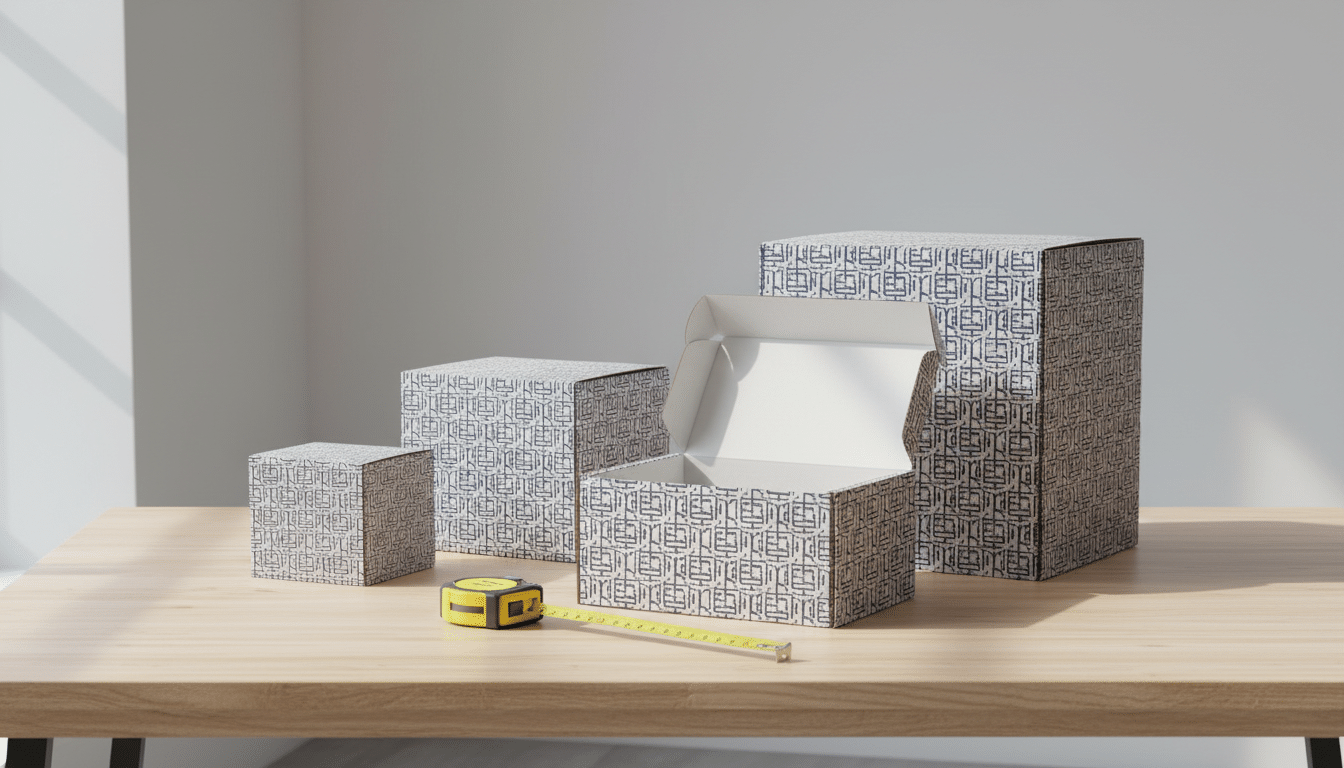
Choosing the right mailer box size sounds simple until you are staring at a ruler, three products and a shipping quote that is higher than you expected. A box that is too big wastes material, lets products slide around and pushes up your shipping costs. A box that is too small crushes corners, strains the closure or will not shut at all.
This guide walks you through everything you need to get it right the first time: how mailer boxes are measured, how to measure your products, how much space to leave for different packing methods, typical sizes for common product types, how size affects shipping costs, and which material suits which size.
Box size is one of the few packaging decisions that affects protection, presentation and cost all at once. Getting it right improves all three; getting it wrong quietly costs you on every single order.
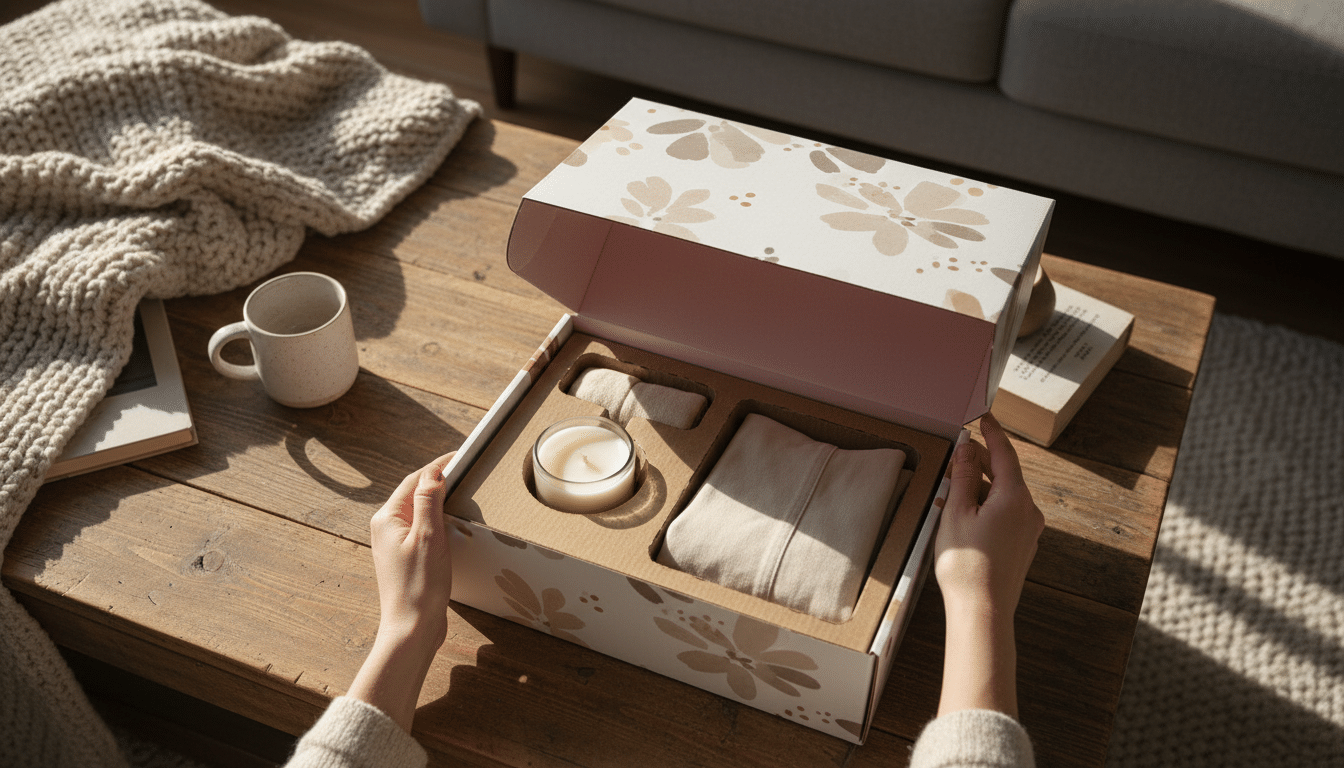
Packaging dimensions are almost always written as Length × Width × Depth (sometimes called Height), in that order. Mixing up the order is one of the most common reasons a box arrives the wrong shape, so it is worth getting the convention right.
| Dimension | What it measures | Example (10 × 8 × 3) |
|---|---|---|
| Length | The longer side of the box opening | 10 inches |
| Width | The shorter side of the box opening | 8 inches |
| Depth | Height from the base to the closed lid | 3 inches |
The most important detail is that custom boxes are sized by their inside dimensions. The cardboard walls add thickness on the outside, so a box with an inside size of 10 × 8 × 3 inches will measure slightly larger on the outside. Always give your supplier inside dimensions so your product fits, and use outside dimensions only when you calculate shipping costs or plan how many boxes fit on a pallet or shelf.
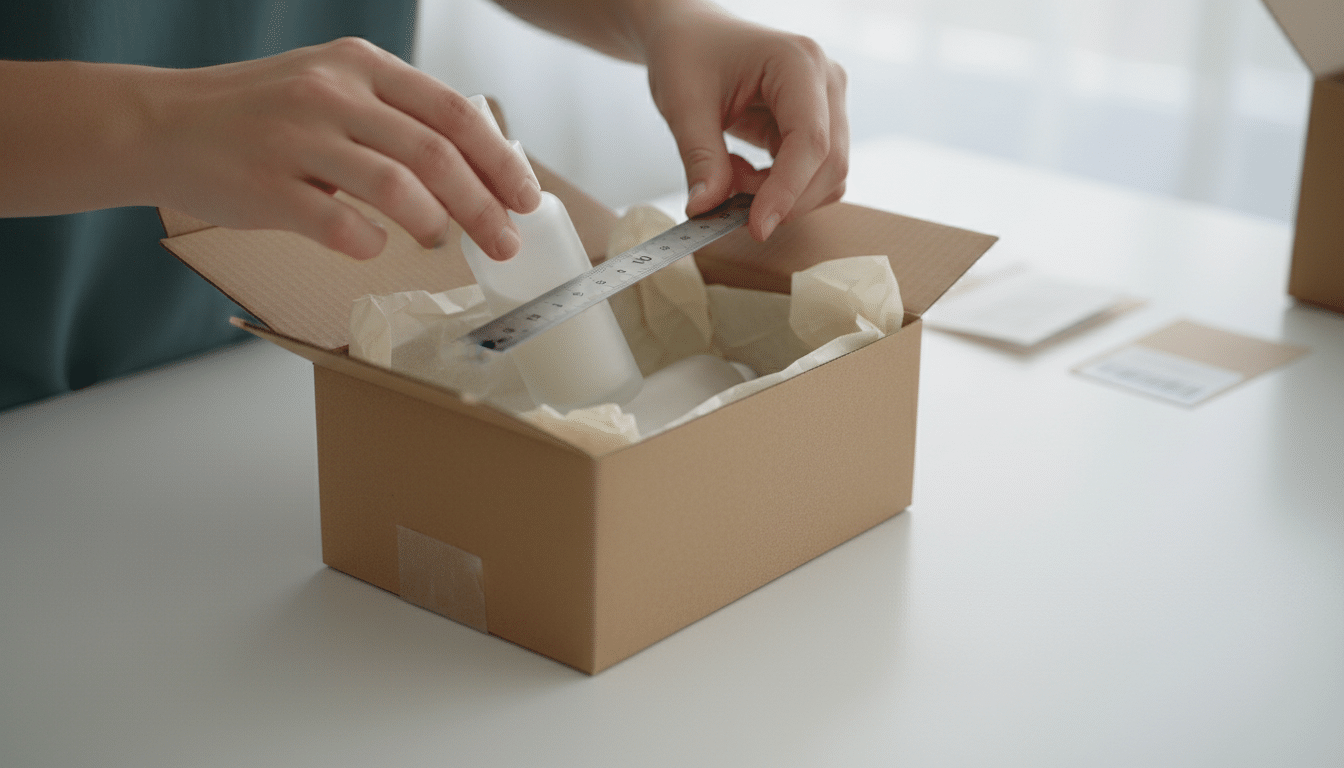
The right allowance depends on how you pack. A snug fit looks premium and protects well for sturdy items, while fragile products need room for cushioning. Use these as starting points and confirm them with a sample:
| Packing method | Allowance per dimension | Best for |
|---|---|---|
| Snug fit, no filler | About 1/8 inch (3 mm) | Boxed products, books, flat items, sturdy goods |
| Tissue paper wrap | About 1/4 inch | Apparel, accessories, gift sets |
| Crinkle paper or light void fill | About 1/2 inch | Mixed items, subscription boxes |
| Bubble wrap or protective wrap | About 1/2 to 1 inch, more for fragile items | Glass, ceramics, candles in jars |
| Custom insert | Size the box to the insert | Multi-piece kits, premium sets, fragile products |
Every brand’s products are different, which is why custom sizing exists, but these rough size bands are a useful starting point when you are planning a range:
| Size band (inside, inches) | Typical products |
|---|---|
| Small: around 6 × 4 × 2 | Jewelry, skincare minis, candles in tins, phone accessories |
| Medium: around 9 × 6 × 3 | Cosmetics sets, candles in jars, supplements, small apparel items |
| Large: around 12 × 9 × 4 | Folded T-shirts and hoodies, subscription boxes, gift sets |
| Extra large: 14 × 10 × 4 and up | Shoes, bundled apparel, larger gift and PR kits |
Treat these as examples, not limits. With custom mailer boxes, you specify exact dimensions so each box fits your product rather than forcing your product into a stock size.
Clothing compresses, so shallow boxes work well. A depth of 2 to 4 inches suits most folded garments. If you sell several sizes, base the box on your largest common size so you do not need a separate box for each. For soft goods that do not need rigid protection, poly mailer bags are a lighter, cheaper alternative.
Bottles and jars roll and tip, so pair a snug box with an insert that holds each item upright. If products already sit in their own retail cartons, such as cosmetic boxes, measure the cartons rather than the bottles.
Glass jars need cushioning on every side, including above the lid. Leave room for wrap or use a fitted insert, and choose a stronger board for heavier jars. Brands that sell one candle at a time often use dedicated candle boxes inside the mailer.
Contents change from month to month, so size for your largest typical assortment and use a little crinkle fill for flexibility. One well-chosen size keeps branding consistent and simplifies stock.
Dimensional weight is calculated by multiplying a box’s outside length, width and height, then dividing by a carrier divisor (commonly 139 for US domestic retail rates with UPS and FedEx). If the result is higher than the actual weight, you pay for the dimensional weight, and carriers round it up to the next pound.
| Box (outside, inches) | Dimensional weight | Billed for a 1 lb product |
|---|---|---|
| 12 × 10 × 6 | about 5.2 lb | 6 lb |
| 12 × 10 × 4 | about 3.5 lb | 4 lb |
| 10 × 8 × 4 | about 2.3 lb | 3 lb |
On a single order the difference is small; across a year of shipments it can be significant. Trimming even one inch of depth is often the quickest win, because shallow mailer boxes still protect flat or folded products well. Smaller boxes also stack more densely, so you fit more per shelf and per pallet.
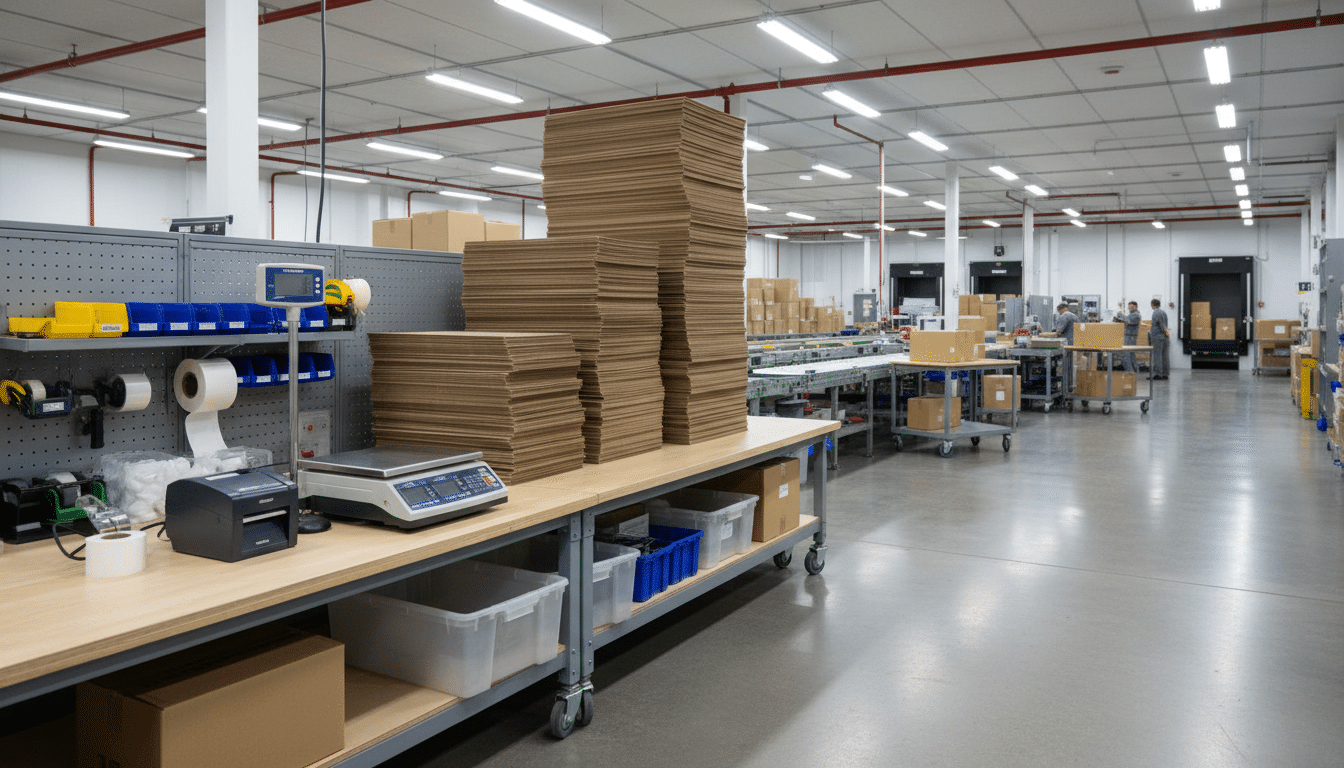
Larger and heavier boxes need stronger material. Most mailer boxes are made from corrugated cardboard, which has a wavy middle layer called the flute. The flute size decides how thick, strong and printable the board is.
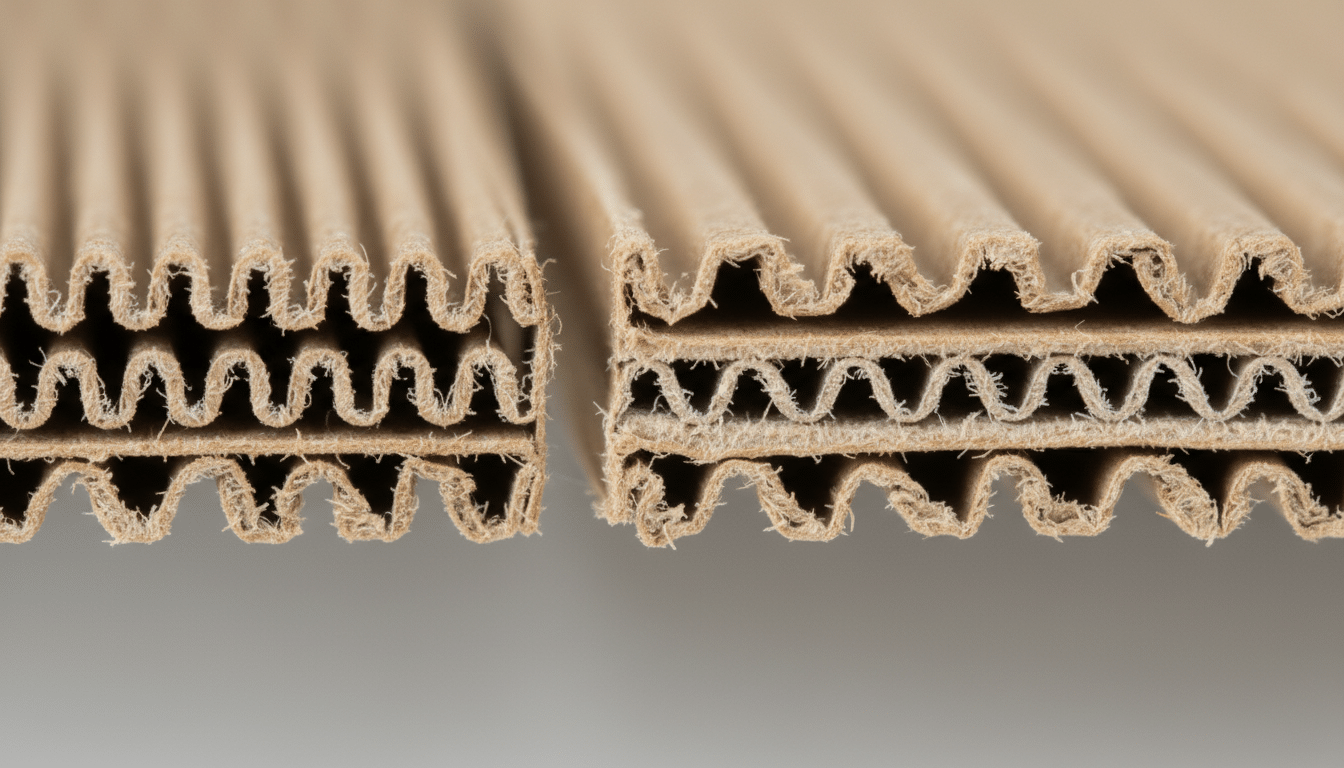
| E-flute | B-flute | |
|---|---|---|
| Thickness | Thin, about 1/16 inch | Thicker, about 1/8 inch |
| Print surface | Smooth, excellent for detailed print | Good, slightly less crisp |
| Strength | Good for light to medium products | Better crush resistance |
| Best box sizes | Small and medium mailers | Large mailers, heavy or fragile items |
If sustainability is a priority, kraft boxes made from recyclable kraft stock work well in most mailer sizes and give a natural, eco-forward look.
Size also shapes your design. Small boxes have limited space, so keep the outside simple with a bold logo and save details for the inside. Large boxes give you room for patterns, messages and social handles. Remember that printing inside the box is available for mailer boxes, which is a great way to surprise customers the moment they open the lid. Our design team checks every file for bleed and resolution before production, so artwork fits your exact dimensions.
Pro tip: If your products come in several sizes, measure the largest item in each group. Two or three well-chosen box sizes usually cover a whole product range and are far easier to manage than a different box for every SKU.
Give your packaging supplier inside dimensions so your product fits. Use outside dimensions when working out shipping costs or storage space.
About 1/8 inch per dimension for a snug fit, around 1/4 to 1/2 inch for tissue or void fill, and more for bubble wrap around fragile items.
There is no single standard, but medium sizes around 9 × 6 × 3 inches and large sizes around 12 × 9 × 4 inches cover many e-commerce products. A custom size that fits your product is almost always the better choice.
Often, yes. When dimensional weight is higher than the actual weight, carriers charge for the box size, so reducing dimensions can move a parcel into a lower billed weight.
Yes. Custom Made Packaging offers custom mailer boxes from a minimum order of 30 boxes, starting from $0.90 per box, with free design support and free shipping.
We make custom mailer boxes for brands across the United States and Canada, with free shipping to both countries. Because US businesses usually work in inches and pounds while Canadian businesses and carriers often work in centimeters and kilograms, here are the common size bands in both units:
| Size band | Inside size (inches) | Inside size (centimeters) |
|---|---|---|
| Small | 6 × 4 × 2 | 15.2 × 10.2 × 5.1 |
| Medium | 9 × 6 × 3 | 22.9 × 15.2 × 7.6 |
| Large | 12 × 9 × 4 | 30.5 × 22.9 × 10.2 |
| Extra large | 14 × 10 × 4 | 35.6 × 25.4 × 10.2 |
US carriers such as UPS and FedEx calculate dimensional weight in inches and pounds, commonly dividing length × width × height by 139 for domestic retail rates. USPS also applies dimensional pricing to larger parcels. Keeping your mailer box as compact as possible is one of the simplest ways for e-commerce brands from New York to California to lower shipping costs.
Canadian carriers usually quote volumetric weight in metric: length × width × height in centimeters divided by a carrier-specific divisor (5,000 and 6,000 are common), compared against the actual weight in kilograms. Check your carrier’s current rate guide, then size your boxes so the volumetric weight stays close to the real weight. If you sell from Ontario, Quebec, British Columbia or anywhere else in Canada, ordering custom sizes in centimeters works just as well. Simply send us your inside dimensions in whichever unit you prefer.
Ready to size your boxes? Request a quote with your dimensions in inches or centimeters, and we will deliver your custom mailer boxes anywhere in the USA or Canada with free shipping.
Get the custom quote starting from our MOQ of 30 boxes to any order volume. There will be no charges for shipping and we ensure the lowest prices with highest quality possible.