Free Delivery: 


Our facilities are now open for visits. Please contact your PIC or email us at contact@custommadepackaging.com to request a visit.
Free Delivery:
Home – Blogs – Custom Packaging for Small Business: 2026 Guide
 – Blogs
by Custom Made Packaging Team – October 25, 2026 · 15 min read
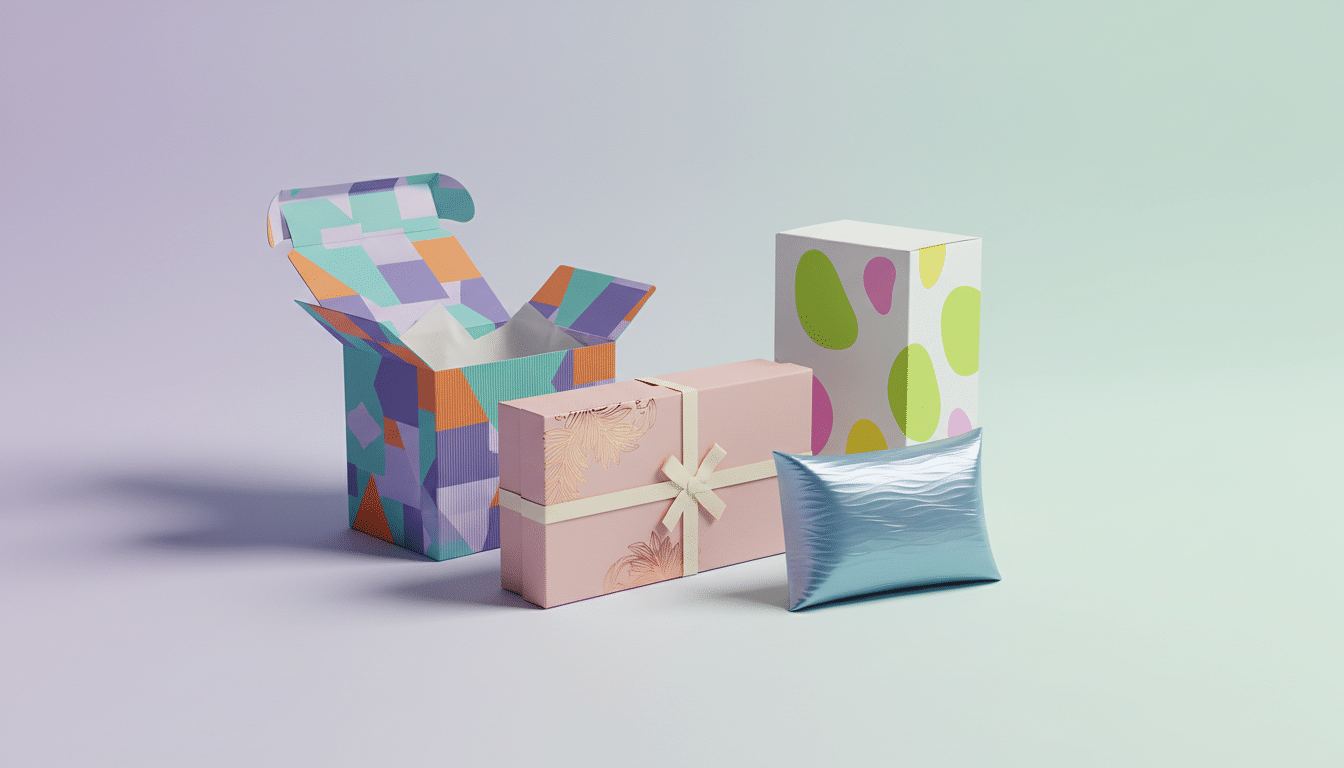
Custom packaging for a small business is no longer reserved for big brands with big budgets. Today you can order branded boxes in your exact size from as few as 30 units, with prices that start under a dollar per box for many styles. The real question is not whether you can afford custom packaging, but which type, material and print options give your products the best protection and presentation for the money.
This guide answers that question in plain language. You will learn which box styles suit which products, how to choose board and finishes, what actually drives the price per unit, how to design a box step by step, how packaging size affects shipping costs, and what labeling and shipping differences matter when you sell in the United States and Canada.
Whether you run an online candle shop in Texas, a skincare startup in Ontario or a coffee roastery selling to cafés on both sides of the border, you will finish this article with a clear plan, a checklist and realistic expectations for cost and lead time.
Table of contents: What custom packaging is · Is it worth it? · Types of custom packaging · Materials · Printing and finishes · Cost factors · How to design · Ideas by industry · Shipping costs · USA and Canada · Common mistakes · How to order · FAQ
Custom packaging is any box, bag or wrap that is made to your specifications instead of bought off the shelf. That usually means three things are customized: the size (built around your product’s inside dimensions), the structure (mailer, tuck end, rigid, pillow and so on) and the print (your logo, colors, patterns and product information on the outside and, if you like, the inside).
Stock boxes are cheap per unit at high volumes and available immediately, but they rarely fit your product well and they say nothing about your brand. Custom boxes cost a little more per unit at low volumes, yet they reduce void fill, protect better, ship more efficiently and turn every delivery or shelf placement into a piece of marketing. For a small brand competing with much larger ones, that first physical impression is often one of the few places you can look every bit as polished as the big players.
Custom packaging also includes the supporting pieces around the box: printed inserts that hold products in place, branded packing tape, custom labels and stickers, tissue paper and thank-you cards. Small businesses often start with one hero box and add these extras as the brand grows.
For most product businesses the answer is yes, as long as you match the investment to your stage. Here is how to think about it:
When is it not the right time? If you are still changing your product dimensions every few weeks, or you ship only a handful of orders per month, a stock box with a custom label or branded tape is a smart, low-cost bridge. Once your product and sales volume settle, moving to a fully printed custom box is the natural next step. With low minimums, many brands make that move earlier than they expect.
Choosing the right structure is the most important decision you will make, because it determines protection, presentation and price at the same time. The table below compares the styles small businesses order most, with starting prices per unit:
| Packaging type | Best for | Ships on its own? | Starting price |
|---|---|---|---|
| Mailer boxes | E-commerce, subscription boxes, apparel, gift sets | Yes | $0.90 |
| Product (folding carton) boxes | Retail shelves, cosmetics, supplements, small goods | Usually inside a shipper | $0.80 |
| Kraft boxes | Eco-minded brands, food, handmade goods | Depends on style | $0.50 |
| Rigid boxes | Luxury gifts, jewelry, premium skincare, PR kits | Usually inside a shipper | $3.00 |
| Cosmetic boxes | Serums, creams, lipsticks, perfume | Inside a shipper | $0.30 |
| Poly mailer bags | Clothing and soft goods | Yes | $0.30 |
| Pillow boxes | Small gifts, jewelry, favors, accessories | Inside a shipper | $0.60 |
| Food-safe packaging | Bakeries, confectionery, takeout | Local delivery or inside a shipper | $0.50 |
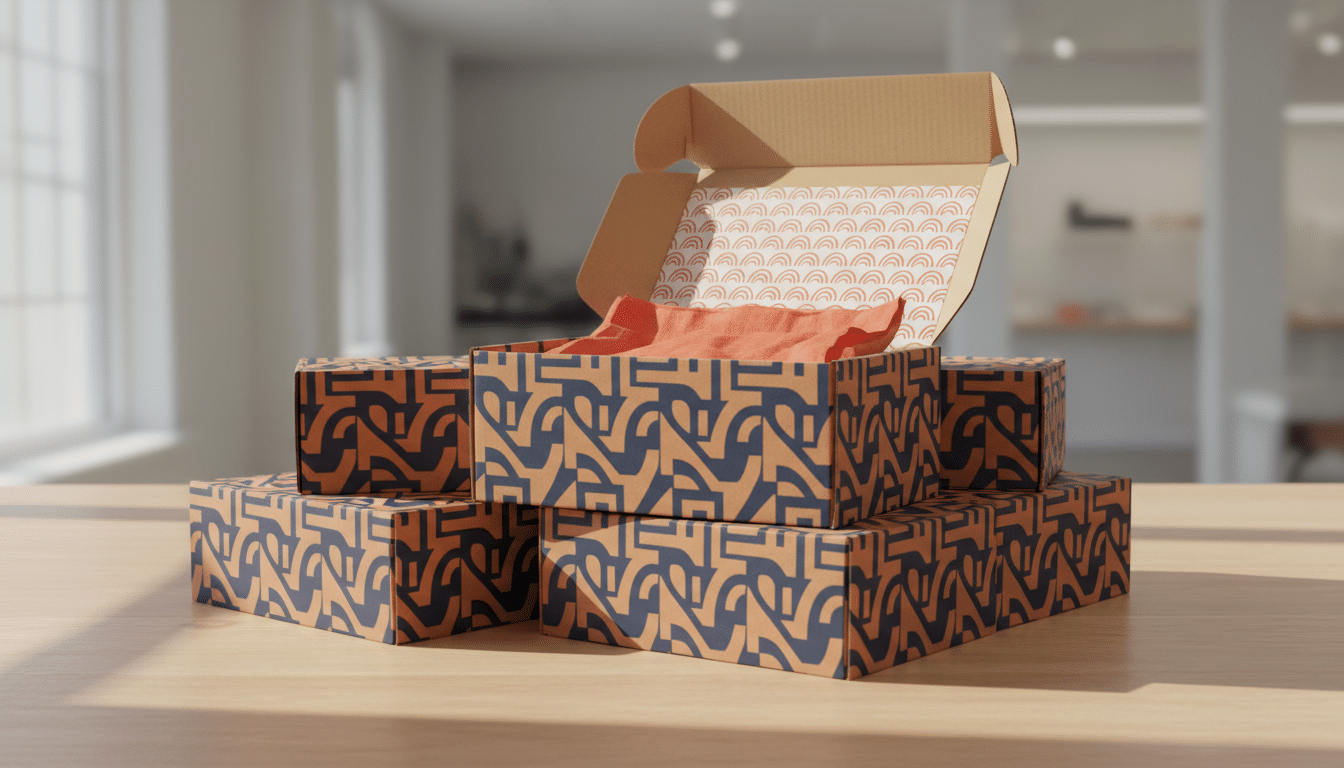
Custom mailer boxes are made from corrugated board with a tuck-in lid and dust flaps. They are strong enough to ship without an outer carton, assemble without tape and can be printed inside and out. If you sell online, this is usually the best place to start. Our mailer box sizes guide shows exactly how to measure and size them.
Custom product boxes are folding cartons made from paperboard. They print beautifully, ship flat and take up little storage space, which makes them ideal for retail and for brands with several SKUs. Most need an outer shipping carton when sent through the mail.
Rigid boxes use thick chipboard wrapped in printed or specialty paper. They do not fold flat, cost more to make and store, and deliver a luxurious, keepsake feel. If you are weighing the two, read our comparison of rigid boxes vs folding cartons.
Custom poly mailer bags are light, inexpensive and water resistant, perfect for clothing that does not need crush protection. Kraft boxes have a natural brown look that customers associate with sustainability, and they are among the most affordable printed boxes you can order.
The material is what your customer touches first, and it decides how well the box survives the trip. Most small-business packaging uses one of three board families:
| Material | What it is | Strengths | Typical uses |
|---|---|---|---|
| Corrugated board (E-flute) | Fluted middle layer between two liners, about 1/16 inch (1.5 mm) thick | Light, strong, smooth print surface | Small and medium mailer boxes |
| Corrugated board (B-flute) | Thicker flute, about 1/8 inch (3 mm) | Better crush resistance for heavier items | Large mailers, glass, heavier products |
| Paperboard (SBS or kraft) | Single-ply carton board | Crisp printing, folds flat, low cost | Product boxes, cosmetic boxes, food cartons |
| Chipboard (rigid) | Thick, dense board wrapped in printed paper | Premium feel, very sturdy, reusable | Luxury gifts, jewelry, PR and influencer kits |
As a rule of thumb, light products under about 2 lb (0.9 kg) ship well in E-flute mailers, while heavier or fragile goods such as candles in glass jars or ceramic mugs benefit from B-flute. If your product sits on a shelf, a paperboard carton gives you the sharpest print for the lowest cost. For items that need to stay put, add an insert.
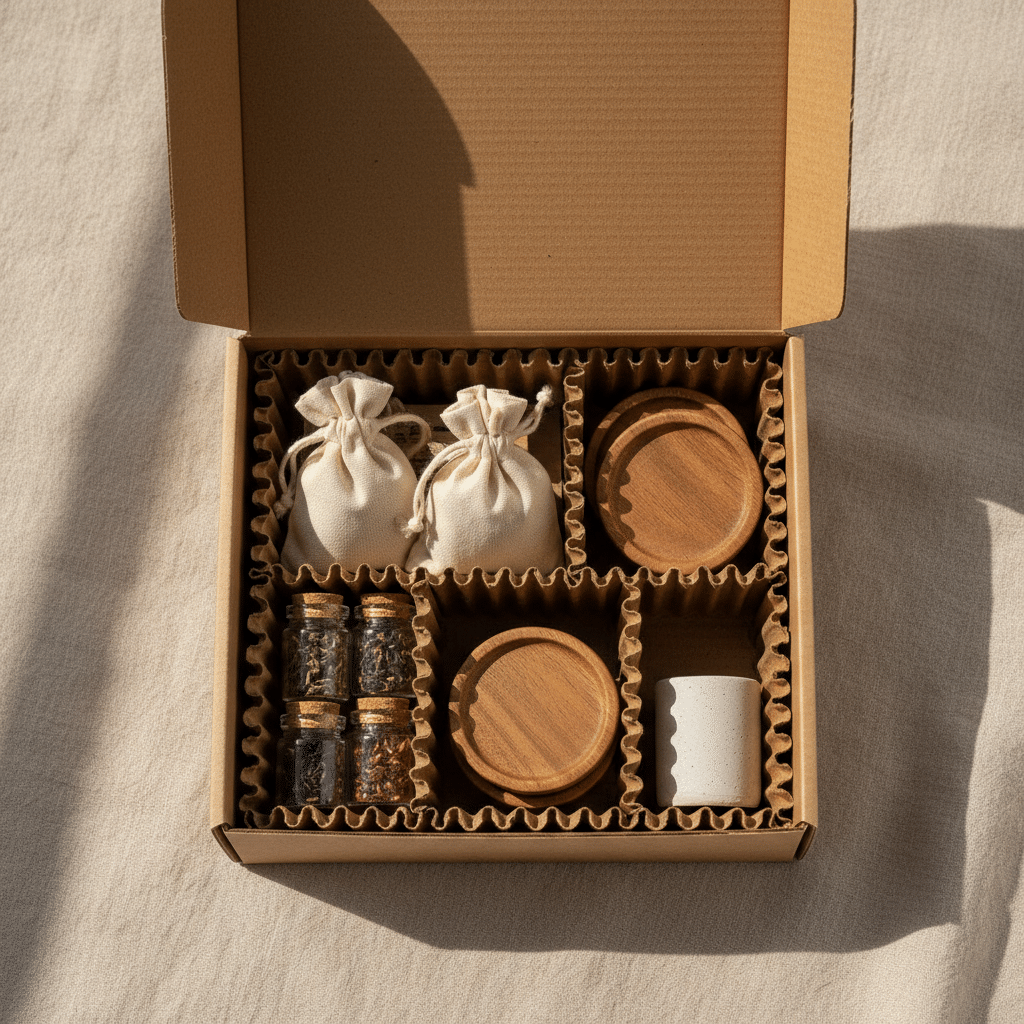
Inserts hold each item in its own cavity, protect fragile pieces and make multi-product kits look organized. Cardboard inserts are recyclable and cost-effective; foam inserts offer more cushioning for delicate items. Learn more in our guide to packaging inserts.
Customers in both the US and Canada increasingly look for packaging they can recycle at home. Paper-based boxes are widely accepted in curbside recycling programs, though rules vary by city and province, so check local guidance before making specific claims on your box. Practical ways to keep packaging greener include choosing kraft board, using paper tape instead of plastic, avoiding mixed materials that are hard to separate, and right-sizing so you ship less air and less filler.
You do not need every finish in the catalog to make an impression. A strong logo, a confident color and one well-chosen special effect usually beat a crowded design. Here is how the common options compare:
| Option | What it does | Cost impact | Good for |
|---|---|---|---|
| One- or two-color print | Logo and simple graphics in solid colors | Lowest | Kraft boxes, minimalist brands |
| Full-color CMYK print | Photos, gradients and detailed artwork | Moderate | Most product and mailer boxes |
| Inside printing | Pattern or message revealed on opening | Moderate | Mailer, kraft, CBD and product boxes |
| Matte or gloss lamination | Protects print and changes the feel | Low to moderate | Retail and cosmetic packaging |
| Spot UV | Glossy highlight on selected areas | Moderate | Logos and accents on matte boxes |
| Foil stamping | Metallic gold, silver or colored detail | Higher | Premium beauty, jewelry, gifts |
| Embossing or debossing | Raised or pressed texture | Higher | Logos on rigid and luxury boxes |
A cost-smart approach many small brands use is a plain or lightly printed exterior with a bold printed interior. The outside stays clean and affordable, and the inside delivers the surprise when the customer lifts the lid. If you need exact brand colors to match across boxes, labels and tape, ask about Pantone (PMS) color matching when you request your quote.
There is no single price for custom packaging, because every box is quoted on its own specifications. Starting prices with Custom Made Packaging range from $0.30 per unit for cosmetic boxes and poly mailers to $0.90 for mailer boxes and $3 for rigid boxes. Your final price depends on the factors below:
| Price factor | Why it matters | How to save |
|---|---|---|
| Quantity | Setup costs are spread over more units, so price per box drops as volume grows | Order the quantity you will use in 3 to 6 months rather than the bare minimum |
| Size | Bigger boxes use more board and ink | Measure carefully and size to the product |
| Box style | Rigid and specialty structures take more material and labor | Use rigid boxes only where the premium feel pays off |
| Material and thickness | Thicker flutes and specialty papers cost more | Match board strength to product weight |
| Printed sides | Inside plus outside printing adds a print pass | Print the inside only if it adds real value to the unboxing |
| Finishes | Foil, embossing and spot UV add steps | Pick one signature finish instead of three |
| Inserts and add-ons | Extra die-cut parts | Use cardboard inserts for most products |
| Turnaround | Rush jobs are prioritized in production | Plan reorders early to use standard timing |
Suppose you sell a single skincare serum online. A practical first setup could be a printed cosmetic box for the bottle, a small mailer box to ship it, and a roll of branded tape or a sticker to seal it. Rather than guessing at numbers, request a quote for two or three quantity tiers (for example 100, 250 and 500 units). Comparing the tiers side by side shows how quickly the unit price drops and helps you choose the sweet spot between cash flow and cost per box.
Remember to think about total landed cost, not only the box price. Free shipping on your packaging order, no charge for design support and fewer damaged orders all affect what custom packaging really costs your business.
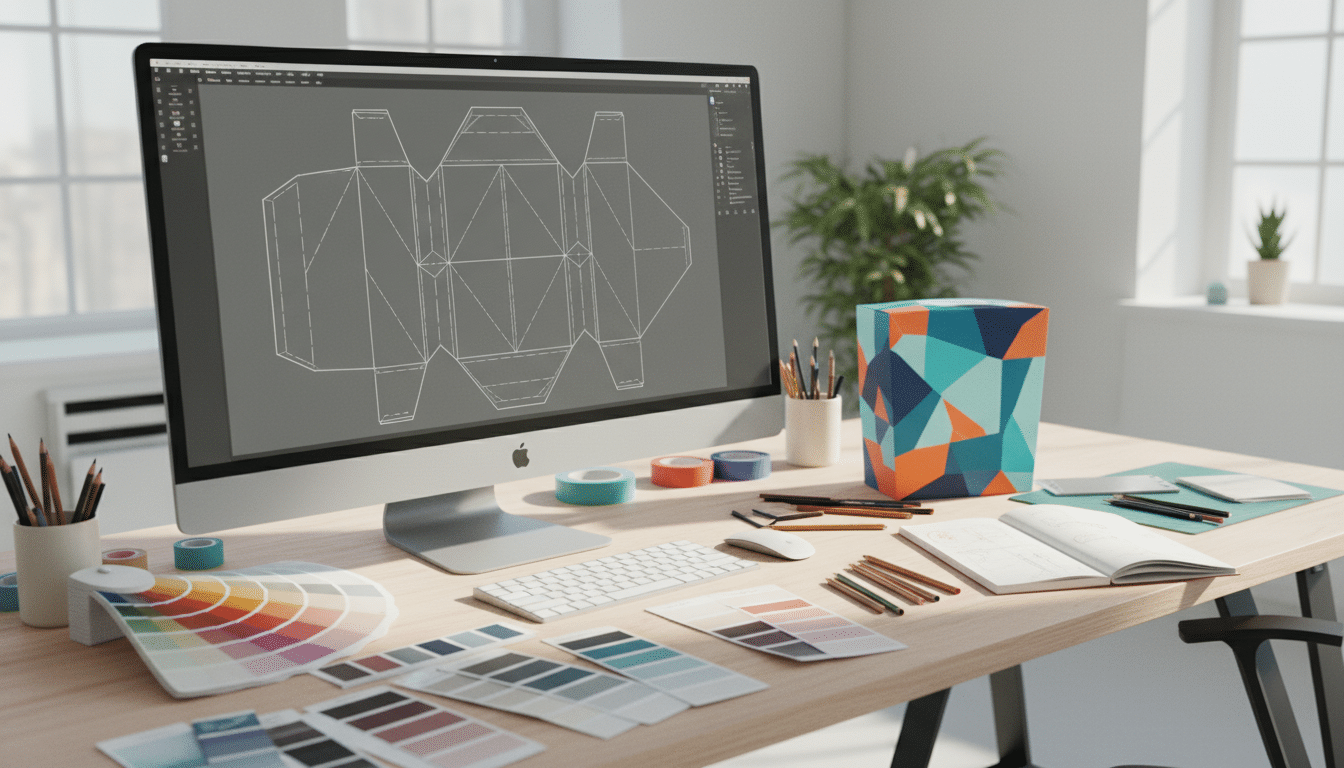
You do not need to be a designer to get great results, but following a clear process saves revisions and money. Use this checklist:
Short on design time? Our team provides free design support with every order, and you can also hire a professional packaging designer to create custom design boxes from scratch.
Pro tip: Design one master box and change only a color band, sticker or label for each product variant. You keep a single dieline and print setup, reorder faster and still give every SKU its own identity. This is one of the easiest ways for a small business to scale a product line without multiplying packaging costs.
The best packaging for a candle maker is not the best for a coffee roaster. These pairings are a practical starting point:
Shallow mailer boxes 2 to 4 inches (5 to 10 cm) deep suit folded clothing and create a boutique unboxing with tissue paper. For lower-cost everyday orders, printed poly mailers keep weight down. Pillow boxes work well for scarves, socks and small accessories sold in stores.
Tuck end cosmetic boxes in SBS paperboard give sharp print for ingredient lists and fine branding. Add matte lamination with spot UV or foil on the logo for a premium look, and use a fitted insert for bottles and droppers. Gift sets and launch kits often move up to rigid boxes.
Glass jars need cushioning on all sides. Pair individual candle boxes with a B-flute mailer or use a die-cut insert. Include safety and burn instructions on the box or an insert card.
Choose food-safe packaging for anything that touches food directly, and keep grease and moisture in mind. Window boxes show off baked goods, and kraft packaging fits artisan coffee and tea brands. Food labeling rules are strict in both countries, so confirm your label content with current FDA or Canadian Food Inspection Agency guidance.
Product boxes for bottles and jars need ample space for required panels such as supplement facts or product licence details, plus a barcode. Bath and body brands often choose bath bomb boxes with windows or inserts that keep each piece from crumbling.
Use one mailer size that fits your largest typical assortment, print the inside with a seasonal message or QR code, and keep the outside consistent so subscribers recognize the box instantly.
Carriers charge for space as well as weight. In the US, UPS and FedEx bill many parcels by dimensional weight: outside length × width × height in inches divided by a divisor (commonly 139 for daily rates), rounded up to the next pound. USPS applies its own dimensional pricing to larger parcels. You pay whichever is higher, the actual weight or the dimensional weight.
| Outside box size | Volume | Dimensional weight (÷139) | Billed for a 1 lb (0.45 kg) item |
|---|---|---|---|
| 14 × 10 × 6 in (35.6 × 25.4 × 15.2 cm) | 840 cu in | about 6.0 lb | 7 lb |
| 12 × 9 × 4 in (30.5 × 22.9 × 10.2 cm) | 432 cu in | about 3.1 lb | 4 lb |
| 10 × 7 × 3 in (25.4 × 17.8 × 7.6 cm) | 210 cu in | about 1.5 lb | 2 lb |
The same 1 lb product can be billed as 2 lb or 7 lb depending only on the box. Over hundreds of orders, a right-sized custom box can pay for itself. Divisors and rules change, so always confirm current figures in your carrier’s rate guide.
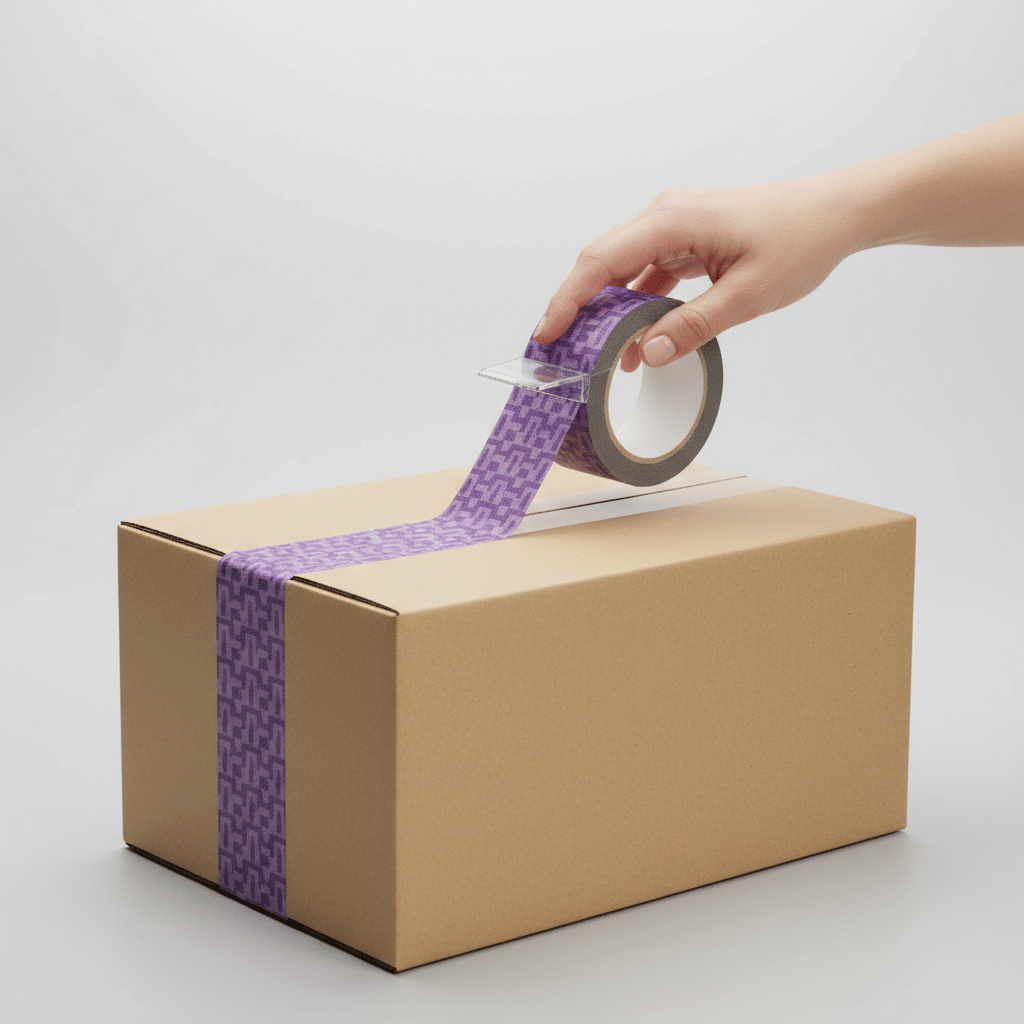
Branded tape is a low-cost way to make even a plain shipper recognizable on the doorstep, and it adds a layer of tamper evidence: if the tape is cut and resealed, it shows.
We make custom packaging for small and mid-size brands across the United States and Canada, with free shipping to both countries. The box itself can be identical in both markets, but measurements, carriers and label rules differ. Plan for these differences from the first design so you do not have to reprint later.
US brands typically spec boxes in inches and ship with UPS, FedEx or USPS, all of which use dimensional weight in inches and pounds. Many consumer products sold in the US must show net quantity in both US customary and metric units, for example “Net Wt 8 oz (227 g)”. Cosmetics, food and supplements carry additional FDA labeling requirements. Keep claims general and check current FDA and FTC guidance for your category. Many retailers also require a UPC barcode on shelf packaging.
Canadian businesses and carriers work mainly in metric. Couriers commonly calculate volumetric weight in centimeters and kilograms using a carrier-specific divisor, so confirm the figure with your carrier. Most mandatory consumer label information, such as the product identity and net quantity, must appear in both English and French, which needs more panel space than an English-only design. Food, cosmetics and natural health products also fall under Health Canada or CFIA rules. If you sell CBD, note that in Canada it is regulated as cannabis under strict plain-packaging rules, so branded CBD boxes are not an option there.
| What matters | United States | Canada |
|---|---|---|
| Common units | Inches and pounds | Centimeters and kilograms (inches still widely understood) |
| Main carriers | UPS, FedEx, USPS | Canada Post, Purolator, UPS, FedEx |
| Dimensional weight | L × W × H in inches ÷ carrier divisor, in lb | L × W × H in cm ÷ carrier divisor, in kg |
| Label language | English | Most mandatory information in English and French |
| Net quantity | US customary and metric on many consumer goods | Metric required on most consumer goods |
| Main regulators (general) | FDA, FTC | Health Canada, CFIA, Competition Bureau |
| CBD packaging | Branded CBD boxes are common; rules vary by state | Regulated as cannabis; plain packaging required |
| Shipping of your box order | Free | Free |
Selling in both countries? Design a bilingual layout from the start and print one version for both markets. It simplifies inventory and is usually cheaper than two separate print runs. Regulations change, so confirm current rules for your product category before you finalize artwork.
Have a question before you start? Contact our packaging team and we will help you choose the right style from more than 100 box options.
Poly mailer bags, cosmetic boxes and labels start from about $0.30 per unit, and kraft boxes from $0.50. A simple one- or two-color print on kraft board is one of the most affordable ways to get a branded box. Larger quantities lower the price per unit further.
Custom Made Packaging accepts orders from 30 boxes. That makes it practical to test a new design, launch a limited edition or package a small product line without large upfront spending.
You receive a 2D and 3D mockup within 48 hours of ordering. After you approve the design, standard production takes 10–15 business days and rush production 8–12 business days, plus transit time.
Usually, yes. Right-sized custom boxes reduce damage and void fill, can lower dimensional-weight shipping charges and make your brand memorable at unboxing. If volumes are very low, start with a stock box plus a custom label or branded tape.
Not necessarily. If you have a vector logo and brand colors, our free design support can place your artwork on the correct dieline. For a full custom concept, you can hire a professional packaging designer through our design service.
For most prepackaged consumer products sold in Canada, mandatory label information such as product identity and net quantity must appear in both English and French. Some exceptions exist, so check current federal and provincial rules for your product type.
Yes. Custom Made Packaging includes free shipping on box orders anywhere in the United States and Canada, so the price you are quoted is not inflated by freight charges.
Vector files such as AI, EPS, SVG or high-resolution PDF work best for logos and text. Images should be at least 300 dpi in CMYK, with 1/8 inch (3 mm) bleed around the dieline.
Get the custom quote starting from our MOQ of 30 boxes to any order volume. There will be no charges for shipping and we ensure the lowest prices with highest quality possible.