Free Delivery: 


Our facilities are now open for visits. Please contact your PIC or email us at contact@custommadepackaging.com to request a visit.
Free Delivery:
Home – Blogs – Cosmetic Boxes in Canada: 2026 Packaging Guide
 – Blogs
by Custom Made Packaging Team – October 27, 2026 · 16 min read
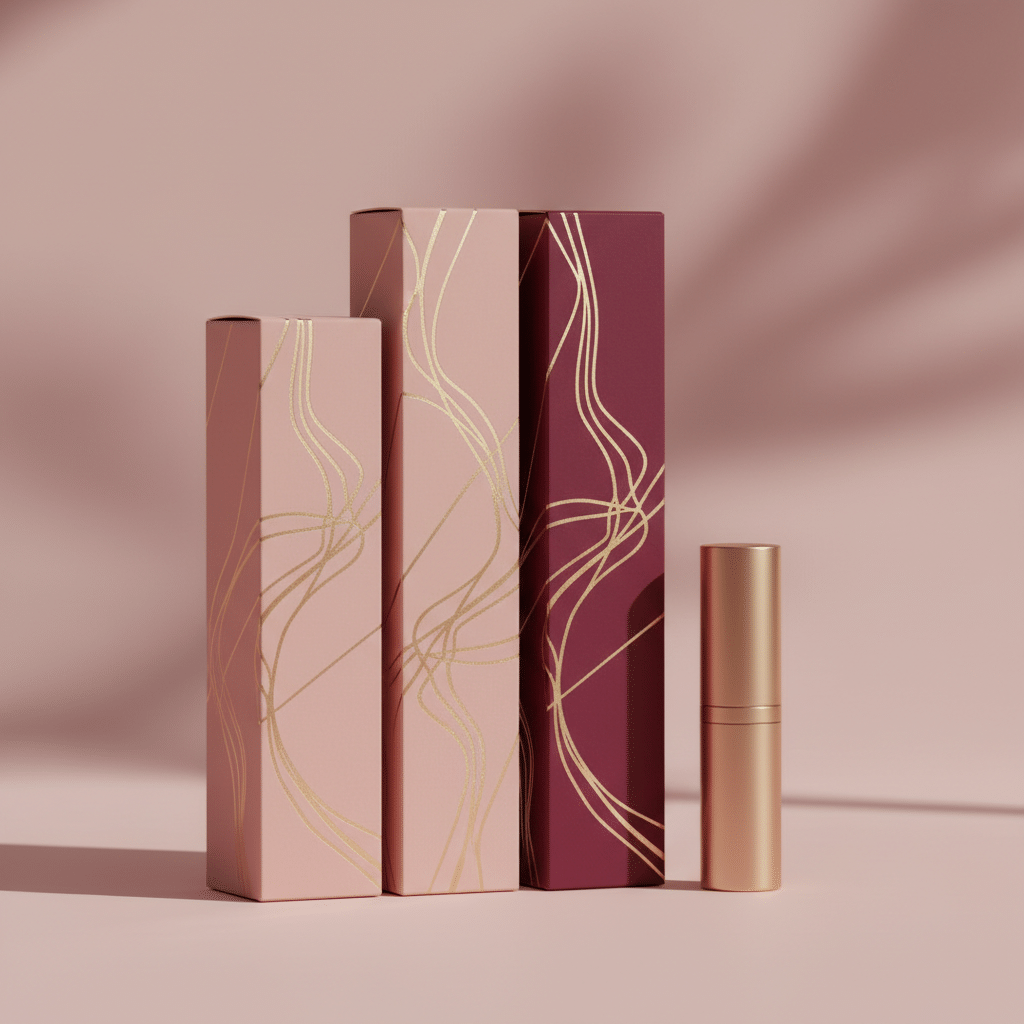
Cosmetic boxes in Canada have to do two jobs at once: sell your product on a crowded shelf or social feed, and carry the bilingual English and French label information that Canadian rules expect on most beauty products. The good news is that both jobs fit comfortably on a well-planned folding carton. The key is to decide your box style, board and label layout together, before artwork starts, rather than squeezing French text onto a design that was built for English only.
In this guide you will learn which cosmetic box styles and materials suit skincare, makeup, haircare and fragrance, how to plan panels for bilingual labeling, what finishes are worth paying for, how volumetric weight works when you ship in Canada, and which factors drive the price of custom cosmetic boxes. We also compare what matters for brands selling in Canada with brands selling in the United States, so you can design one box that works on both sides of the border.
Whether you are a new indie skincare label in Toronto launching your first serum or an established makeup brand in Vancouver or Montreal refreshing a full line, the steps below will help you order packaging that looks premium, protects the product and avoids expensive reprints.
Table of contents: Why Canada needs its own plan · Cosmetic box styles · Materials and board · Canadian labeling basics · Designing bilingual boxes · Finishes · Shipping cosmetics in Canada · Sustainability · USA vs Canada · Cost factors · Checklist · Mistakes to avoid · How to order · FAQ
A cosmetic box designed for a single-language market usually has one large front panel for branding and a back panel crowded with ingredients, directions and warnings. Bring that same layout to Canada and you quickly run out of space, because most of the mandatory information needs to appear in both official languages. Brands that ignore this early often end up with tiny type, cramped panels or a separate sticker, all of which make a premium product look improvised.
Canada also has a few practical realities that shape packaging decisions:
None of this is a reason to settle for plain packaging. It simply means that the best custom cosmetic boxes for the Canadian market are planned around the label content first and the decoration second.
Most retail cosmetic packaging is made as a folding carton: a printed paperboard box that ships flat and folds into shape. Within that family, the closure and base style decide how the box looks on shelf, how fast it is to pack and how much weight it can hold.
| Box style | How it closes | Best for | Watch out for |
|---|---|---|---|
| Reverse tuck end | Top and bottom tucks on opposite sides | Serums, lotions, foundation, perfume | Light products only; the base can open under weight |
| Straight tuck end | Both tucks on the same side | Lipstick, mascara, small tubes | Front panel stays clean, but the back gets the flaps |
| Auto-lock (crash-lock) bottom | Pre-glued base pops into place | Heavier jars, glass bottles, kits | Slightly higher cost; faster packing |
| Sleeve and tray | Printed sleeve slides over a tray | Palettes, gift sets, premium launches | Needs accurate sizing so the sleeve does not slip |
| Display box | Tear-away or fold-back front | Lip balms, minis and retail counter units | Plan the tear line so branding survives |
| Rigid two-piece or magnetic | Lid and base or magnetic flap | Fragrance, luxury skincare, PR kits | Higher unit cost and larger shipping volume |
For a deeper comparison of carton and rigid construction, read our guide to rigid boxes vs folding cartons. If you are launching a gift set or influencer kit, custom rigid boxes give a heavier, more luxurious feel, while everyday retail SKUs are usually best in cartons.
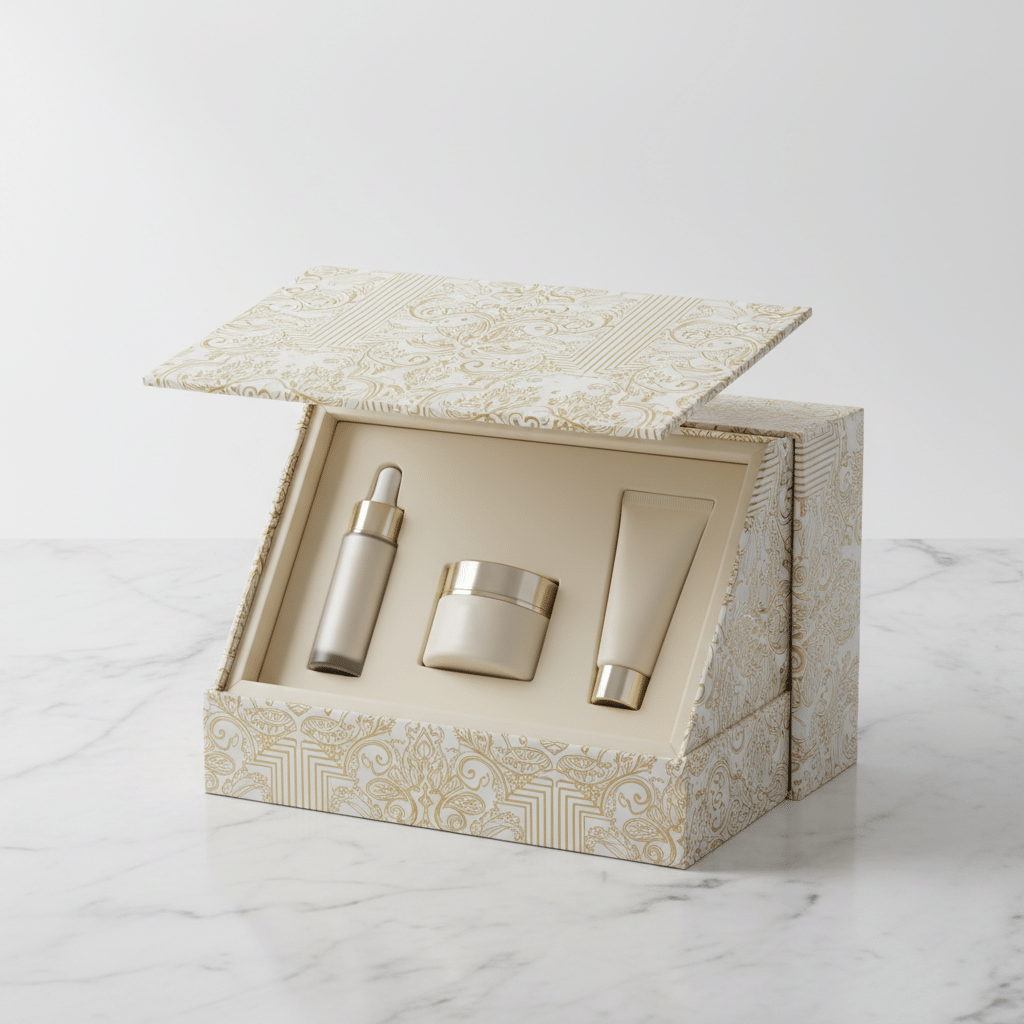
The board you choose affects print quality, rigidity, recyclability and price. For retail cosmetic boxes, solid bleached sulfate (SBS) paperboard is the most common choice because its bright white surface reproduces color and fine type very well, which matters when you are printing small bilingual ingredient lists.
| Material | Typical thickness | Look and feel | Good fit |
|---|---|---|---|
| SBS paperboard | 14–18 pt (about 0.36–0.46 mm) | Bright white, crisp print | Most skincare and makeup cartons |
| Heavier SBS paperboard | 20–24 pt (about 0.51–0.61 mm) | Stiffer, more premium hand-feel | Glass bottles, perfume, larger jars |
| Kraft paperboard | 16–24 pt | Natural brown, eco-forward | Clean beauty, solid soaps, refills |
| E-flute corrugated | About 1/16 in (1.5 mm) | Strong, printable, lightweight | Shipping-ready cosmetic mailers and subscription boxes |
| Rigid chipboard (wrapped) | About 1/16–1/8 in (1.5–3 mm) | Heavy, luxurious | Gift sets, fragrance, launch kits |
If your brand story leans natural or zero-waste, kraft boxes are recyclable in most Canadian curbside programs and print well with darker inks. For e-commerce brands that ship directly to customers, a printed custom mailer box can carry several retail cartons safely while doubling as the unboxing moment.
This is not legal advice, and rules change, so always confirm the current Cosmetic Regulations and Health Canada guidance before you print. That said, these are the well-established elements most Canadian cosmetic labels need to accommodate, and they directly affect how much space your box requires.
Two other points are worth knowing before you finalize a dieline. First, Health Canada requires companies to notify it about cosmetics they sell, so make sure your product information is ready alongside your packaging. Second, if your product makes therapeutic claims, such as sun protection, acne treatment or anti-dandruff, it is usually regulated as a drug or a natural health product rather than a cosmetic, and the label must carry a product number and different information. That can change your box copy significantly, so settle the classification before design.
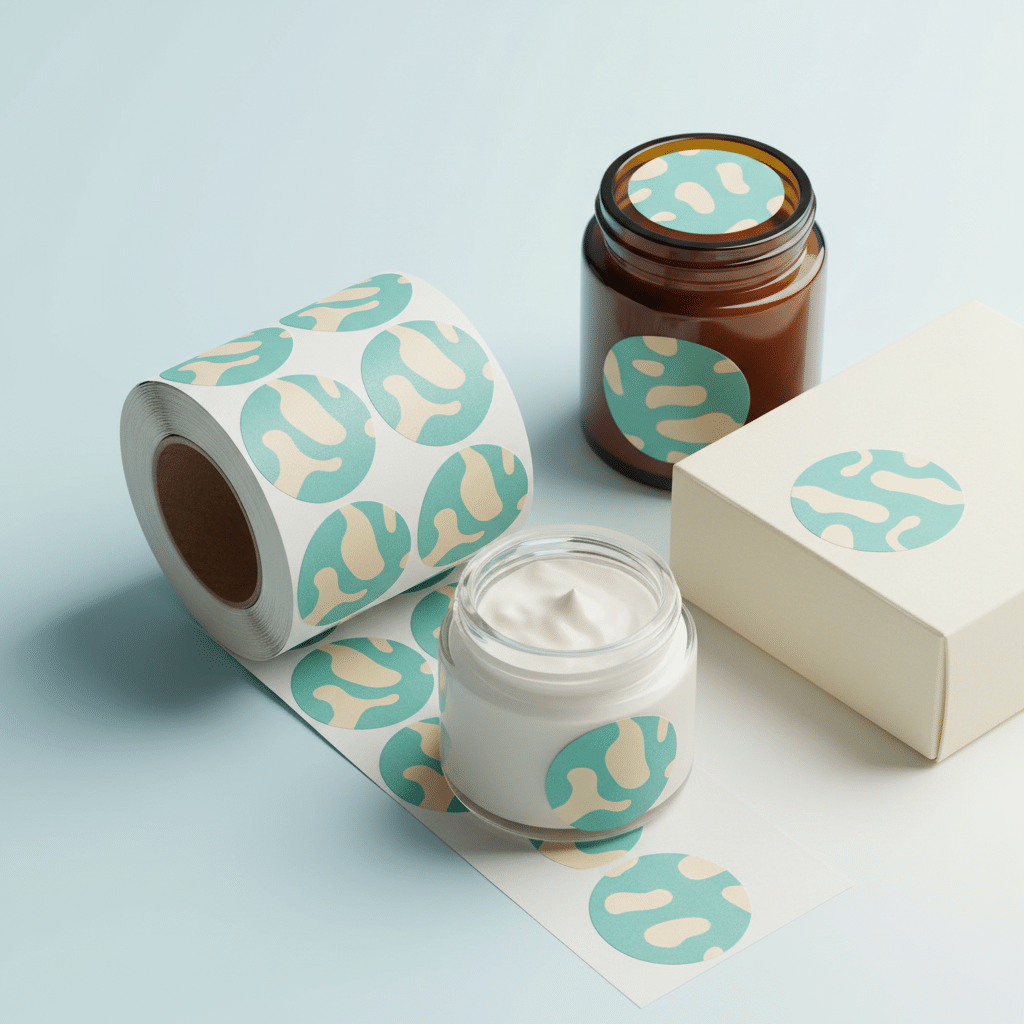
Need small-batch flexibility? Printed custom labels are useful for lot numbers, expiry dates or seasonal shade names, while the permanent bilingual information is printed directly on the carton.
Great bilingual packaging does not look like a translation exercise. It looks deliberate, with clear hierarchy and plenty of white space. These approaches work well for custom cosmetic boxes in Canada:
| Layout approach | How it works | Pros | Cons |
|---|---|---|---|
| Stacked | English line, then French line, panel by panel | Easy to read, common in Canada | Takes the most vertical space |
| Side by side | English and French in two columns | Balanced, tidy on wide panels | Hard on narrow tube or lipstick boxes |
| Split panels | One side panel in English, the other in French | Clean and premium | Front panel still needs both languages |
| Shared visual front | Brand name and icons up front; descriptors in both languages | Minimal, modern look | Requires careful copy editing |
Pro tip: Write your full bilingual copy deck in a spreadsheet before anyone opens a design file. When you know exactly how many words each panel must hold, the designer can size the box and type correctly the first time. If you do not have an in-house designer, our professional packaging designers can build the layout for you at no extra cost.
For inspiration on structure, color and print, see our guide to designing custom boxes step by step.
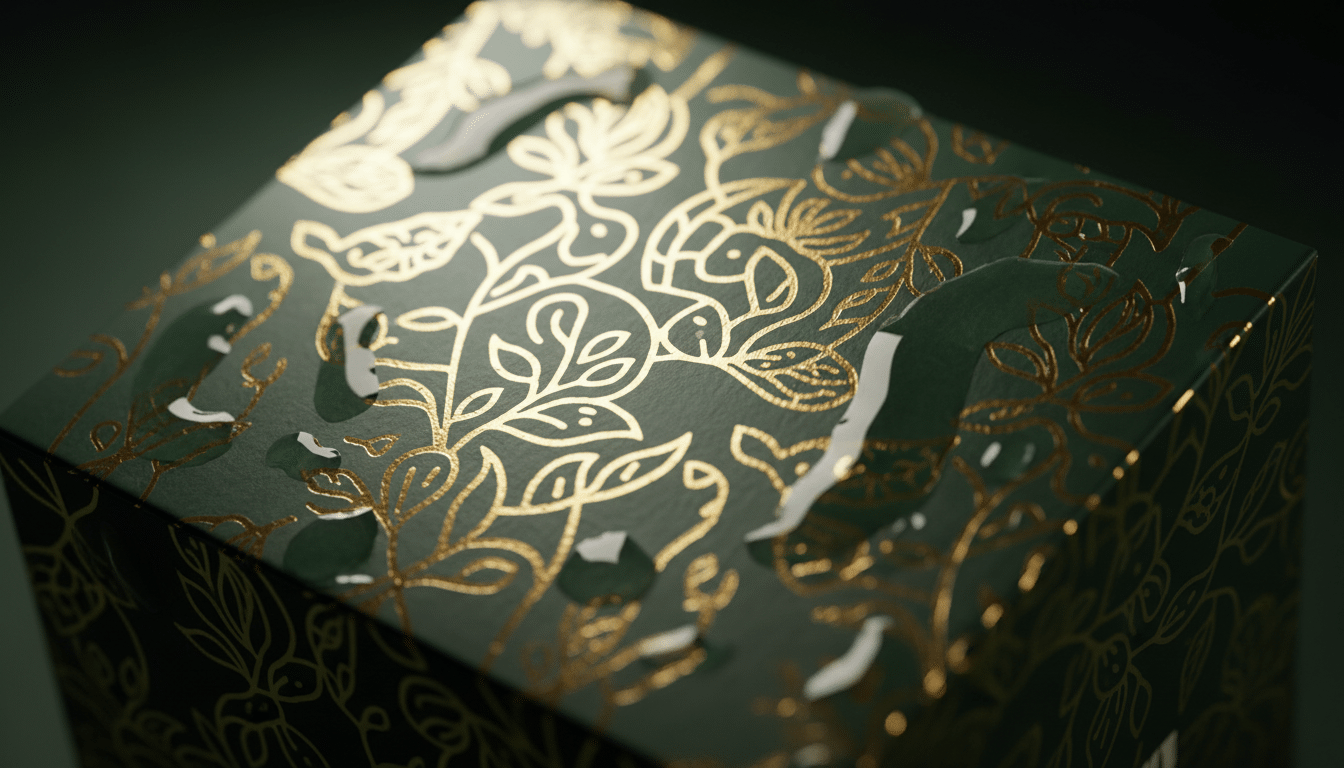
Finishes are where cosmetic packaging earns its shelf presence. The trick is to choose one or two that support your brand rather than stacking every option on one box.
| Finish | Effect | Best paired with |
|---|---|---|
| Matte or soft-touch lamination | Velvety, modern, reduces glare | Skincare, minimalist brands, dark colors |
| Gloss lamination or aqueous coating | Shine and scuff protection | Bright makeup brands, high-handling retail |
| Hot foil stamping | Metallic gold, silver, rose gold | Logos, shade names, luxury lines |
| Embossing or debossing | Raised or pressed texture | Brand marks on premium cartons and rigid boxes |
| Spot UV | Glossy highlight on a matte base | Patterns, product imagery, logos |
| Window patch | Clear film window shows the product | Lipsticks, palettes, colorful formulas |
Remember that heavy plastic laminations and some film windows can make recycling harder. If sustainability is central to your brand, consider aqueous coatings and paper-based alternatives, and keep finishes away from the panels that carry mandatory text so they stay readable.
If you sell online, your retail carton is only half of the packaging system. Glass bottles, droppers and compacts need a shipper that keeps them still, and the size of that shipper decides how much you pay per parcel.
Canadian carriers generally calculate volumetric (dimensional) weight in metric: length × width × height in centimeters, divided by a carrier-specific divisor, commonly 5,000 or 6,000. If that figure is higher than the actual weight in kilograms, you pay for the volumetric weight. Always check your carrier’s current rate guide, but the example below shows why a compact box matters.
| Shipper (outside) | Volume | Volumetric weight at ÷5,000 | Volumetric weight at ÷6,000 |
|---|---|---|---|
| 30 × 23 × 10 cm (about 11.8 × 9 × 3.9 in) | 6,900 cm³ | 1.38 kg (about 3 lb) | 1.15 kg (about 2.5 lb) |
| 25 × 18 × 8 cm (about 9.8 × 7.1 × 3.1 in) | 3,600 cm³ | 0.72 kg (about 1.6 lb) | 0.60 kg (about 1.3 lb) |
| 20 × 15 × 6 cm (about 7.9 × 5.9 × 2.4 in) | 1,800 cm³ | 0.36 kg (about 0.8 lb) | 0.30 kg (about 0.7 lb) |
For US shipments, UPS and FedEx work in inches and pounds and commonly use a divisor of 139 for domestic retail rates. Our mailer box sizes guide walks through the measuring process in detail.
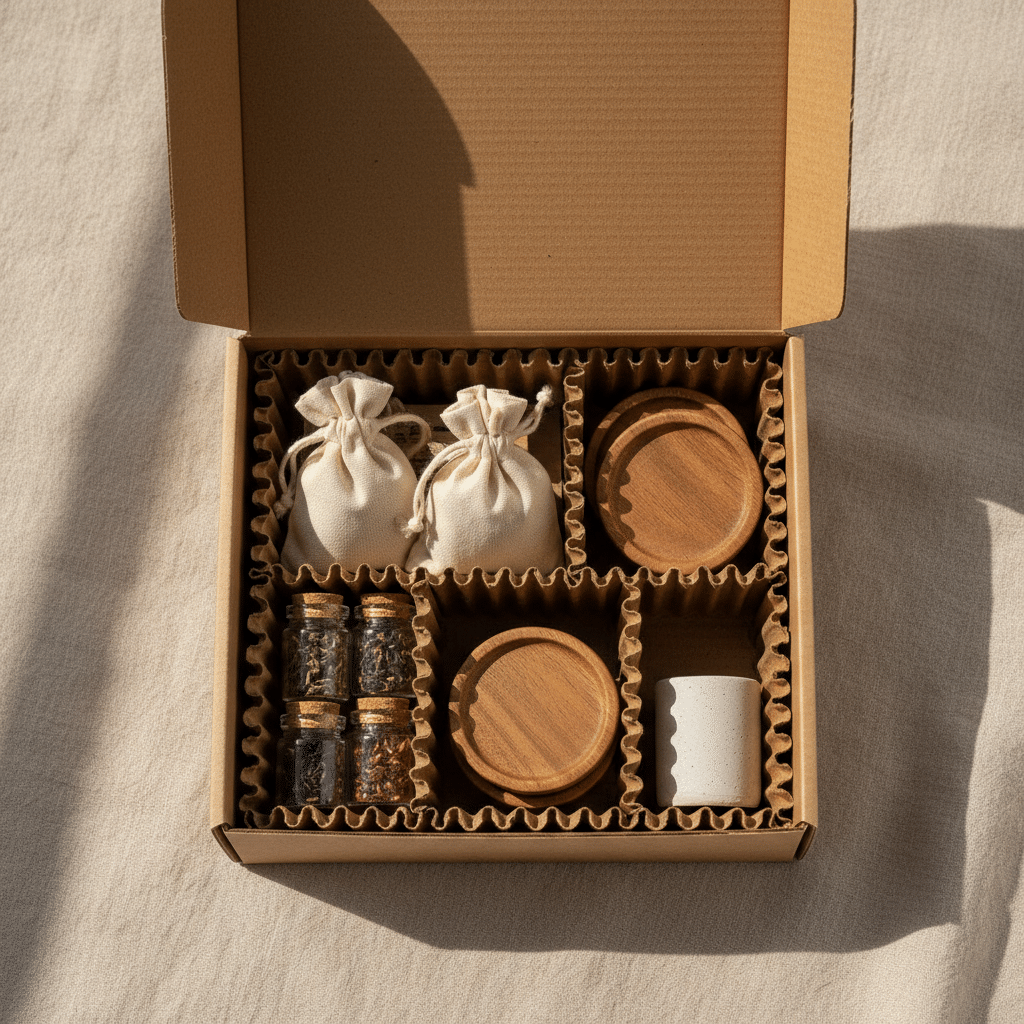
Canadian shoppers increasingly look for packaging they can recycle at home, and several provinces, including British Columbia, Ontario and Quebec, run extended producer responsibility programs that make brands responsible for the packaging they put on the market. Rules, fees and accepted materials vary by province, so check the program where you sell.
Practical ways to make cosmetic boxes easier to recycle:
Many beauty brands sell on both sides of the border. With a little planning you can often use one carton design for both markets, as long as the panels have room for everything each country expects. We make custom cosmetic boxes for brands across the United States and Canada and ship free to both countries.
US cosmetic labeling is overseen by the FDA, and the rules have been updated in recent years, so check current requirements for registration, listing and labeling. Labels are in English, ingredients appear in descending order of predominance on the outer container, and net quantity is typically shown in both US customary and metric units, such as 1.7 fl oz (50 mL). E-commerce brands shipping with UPS, FedEx or USPS should size shippers in inches and pounds to manage dimensional weight.
In Canada, Health Canada oversees cosmetics, and most mandatory label text needs to appear in English and French. Net quantity is declared in metric units, ingredients are listed using INCI names, and fragrance allergen disclosure rules have been updated. Canadian carriers usually quote volumetric weight in centimeters and kilograms. Brands in Quebec, or selling into Quebec, should also review provincial French-language requirements.
| What matters | United States | Canada |
|---|---|---|
| Regulator | FDA | Health Canada |
| Label language | English | English and French for most mandatory information |
| Net quantity | US customary and metric (e.g. 1.7 fl oz / 50 mL) | Metric (e.g. 50 mL) |
| Ingredient names | Common or INCI-style names in descending order | INCI names |
| Shipping units | Inches and pounds; divisor commonly 139 | Centimeters and kilograms; divisor commonly 5,000 or 6,000 |
| Design implication | More space for brand storytelling | Plan 20–30% more copy space for French text |
| Free shipping from Custom Made Packaging | Yes | Yes |
A combined approach works well for many brands: a bilingual carton that shows net quantity in both US customary and metric units, so one SKU can serve both markets. Confirm each country’s current requirements before you finalize the artwork.
Custom cosmetic boxes from Custom Made Packaging start from $0.30 per box, with a minimum order of just 30 boxes. Your final price depends on the factors below. For a full breakdown with examples, see our cosmetic boxes cost guide.
| Cost factor | Lower cost | Higher cost |
|---|---|---|
| Quantity | Larger runs spread setup costs | Very small runs cost more per box |
| Size | Compact cartons | Large or deep boxes use more board |
| Board | 14–18 pt SBS or kraft | 24 pt SBS, corrugated or rigid chipboard |
| Box style | Tuck end cartons | Auto-lock bases, sleeves, rigid and magnetic boxes |
| Printing | Outside only, simple colors | Full coverage, inside printing, many colors |
| Finishes | Aqueous coating | Foil, embossing, spot UV, windows |
| Inserts | None or simple paperboard | Custom die-cut or multi-cavity inserts |
| Turnaround | Standard 10–15 business days | Rush 8–12 business days |
A bilingual layout itself does not add printing cost, but it can push you toward a slightly larger box if panels are crowded. Planning copy early is the cheapest way to avoid that.
Prefer to talk it through first? Contact our team and we will help you choose the right style, board and finish for your cosmetic line.
In most cases, yes. Most mandatory label information on cosmetics sold in Canada, such as the product identity, net quantity, directions and warnings, must appear in both English and French. Ingredient lists use INCI names, which are generally the same in both languages. Check current Health Canada guidance and Quebec rules for your specific product.
For most retail skincare and makeup cartons, SBS paperboard between 14 and 18 pt gives crisp print and good rigidity. Heavier products such as glass perfume bottles suit 20–24 pt board or a rigid box, while kraft paperboard suits natural and eco-focused brands.
Custom cosmetic boxes start from $0.30 per box at Custom Made Packaging, with a 30-box minimum. The final price depends on quantity, size, board, box style, printing coverage, finishes and inserts.
Often, yes. A bilingual English and French carton that shows net quantity in both US customary and metric units can work for both markets. Confirm each country’s current labeling requirements before you finalize the artwork.
The ingredient list normally goes on the outer packaging, usually on a back or side panel, so shoppers can read it before buying. If the box is very small, some alternatives such as a tag or leaflet may be allowed, so check the rules that apply to your product.
Reverse tuck end cartons are the most popular choice for serums, creams and lotions because they are affordable and fast to pack. For heavier glass jars, an auto-lock bottom adds strength, and for gift sets a rigid magnetic box with an insert gives a premium feel.
You receive a 2D and 3D mockup within 48 hours. After you approve the design, standard production takes 10–15 business days and rush production takes 8–12 business days, with free shipping to the USA and Canada.
A sample is strongly recommended, especially for bilingual layouts and glass containers. It lets you check the fit, the color and how readable your small print is before you commit to a full run.
Get the custom quote starting from our MOQ of 30 boxes to any order volume. There will be no charges for shipping and we ensure the lowest prices with highest quality possible.