Free Delivery: 


Our facilities are now open for visits. Please contact your PIC or email us at contact@custommadepackaging.com to request a visit.
Free Delivery:
Home – Blogs – How Much Do Mailer Boxes Cost? 2026 Pricing Guide
 – Blogs
by Custom Made Packaging Team – October 27, 2026 · 15 min read
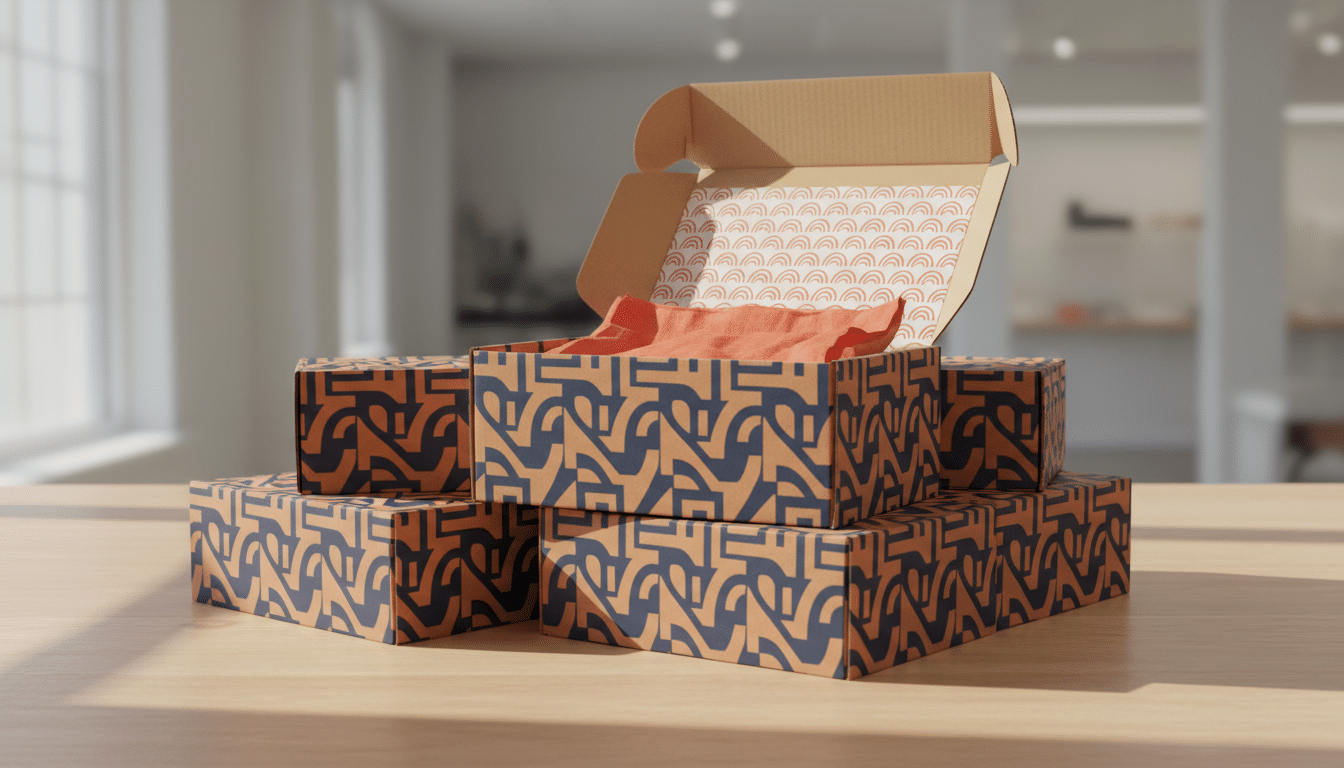
How much do mailer boxes cost? Custom printed mailer boxes start from about $0.90 per box at Custom Made Packaging, and the final price per unit depends mainly on five things: the size of the box, the board you choose, how much of the box is printed, any premium finishes, and how many boxes you order. A small, one-color kraft mailer in a larger run sits near the bottom of the range; a large, fully printed box with inside printing, foil and a custom insert sits near the top.
The box price is only part of the story, though. What you really pay is the cost per shipped order, which also includes inserts, void fill, tape, labor and, above all, the shipping charge your carrier calculates from the box’s dimensions. For e-commerce brands in the USA and Canada, a slightly more expensive box that is the right size can easily be cheaper overall than a bargain box that is an inch too big.
In this guide you will learn every factor that moves mailer box pricing, how quantity changes your unit cost, what different materials and finishes add, how to calculate your true cost per order, a step-by-step budgeting checklist, the most common pricing mistakes, and what matters specifically when you sell in the United States or Canada.
Table of contents: The short answer · 9 pricing factors · Quantity and unit cost · Materials · Printing and finishes · True cost per order · Size and shipping · Budgeting checklist · Ways to save · Mistakes to avoid · USA and Canada · Alternatives compared · How to order · FAQ
Mailer boxes, also called roll end tuck front (RETF) boxes, are self-locking corrugated boxes that fold up without tape and open like a lid. Because they combine shipping strength with a retail-style presentation, they cost more than a plain brown shipping carton but far less than a rigid gift box. For custom printed custom mailer boxes, our pricing starts from $0.90 per box.
That starting price assumes a straightforward specification. Every upgrade you add moves the price up from there, and every extra box you order spreads the fixed setup work across more units and moves it down. The table below shows where mailer boxes sit compared with other common custom packaging formats, using our current starting prices.
| Packaging type | Starting price per unit | Typical use |
|---|---|---|
| Poly mailer bags | From $0.30 | Apparel and soft goods that do not need crush protection |
| Kraft boxes | From $0.50 | Natural, eco-forward shipping and product packaging |
| Product boxes | From $0.80 | Retail cartons for individual products on shelves |
| Mailer boxes | From $0.90 | E-commerce shipping, subscription boxes, PR and gift kits |
| Rigid boxes | From $3.00 | Luxury presentation, premium gift sets |
Treat starting prices as a floor, not a quote. The fastest way to get an exact number is to send your inside dimensions, quantity and print requirements through our quote form; the rest of this guide explains what will shape that number so you can make smart trade-offs before you ask.
Every quote for custom mailer boxes is built from the same handful of inputs. Knowing which ones carry the most weight helps you spend money where customers will notice it and save where they will not.
| Factor | What changes the price | Typical impact |
|---|---|---|
| 1. Quantity | Setup work is shared across every box in the run | High |
| 2. Box size | Larger boxes use more board and take more press and die space | High |
| 3. Board grade and flute | E-flute vs B-flute, white vs kraft liner, heavier grades | Medium |
| 4. Print coverage | Outside only, inside only, or both; full flood color vs a logo | Medium to high |
| 5. Color method | Standard CMYK vs exact PMS spot colors | Low to medium |
| 6. Coatings and finishes | Matte or gloss lamination, foil, spot UV, embossing | Medium to high |
| 7. Inserts and add-ons | Die-cut cardboard inserts, partitions, sleeves, stickers | Medium |
| 8. Turnaround | Rush production instead of the standard schedule | Low to medium |
| 9. Design changes | New artwork or new sizes reset the setup work | Low (free design support) |
Two factors are worth calling out. First, size affects you twice: once in the box price and again in shipping, because carriers bill bulky parcels by dimensional weight. Second, print coverage is the easiest lever to control. A single-color logo on kraft board and a fully flooded, double-sided design are very different jobs even when the box is the same size.
Quantity has the biggest influence on unit price because custom packaging carries fixed setup work. Before a single box is produced, the job needs a dieline for your exact size, a cutting die or digital cutting setup, prepress checks on your artwork, press make-ready and color matching. Those steps take roughly the same effort whether you order 30 boxes or 3,000. On a small run, each box carries a larger share of that setup; on a larger run, the share per box shrinks.
That is why per-box pricing typically falls as quantities rise, and why the curve flattens out: once setup is spread thin, the cost of board, ink and finishing per box becomes the main driver and does not fall much further.
With a minimum order of just 30 boxes, you can start small and scale once the design and size are proven.
A sensible order quantity covers your expected shipments for a defined period, often a quarter, plus a buffer for growth and damaged stock. Estimate it like this: average monthly orders × months of cover × 1.1. A brand shipping 400 orders a month that wants three months of cover would order about 1,320 boxes. Before going bigger, check that you have dry storage space (flat-packed mailers stack well, but humidity weakens corrugated board) and that your branding will not change soon.
Most mailer boxes are made from corrugated board: a fluted middle layer glued between two flat liners. The flute size decides thickness, strength and print quality, and the liner decides the look. Choosing the lightest board that safely protects your product is one of the most reliable ways to control cost.
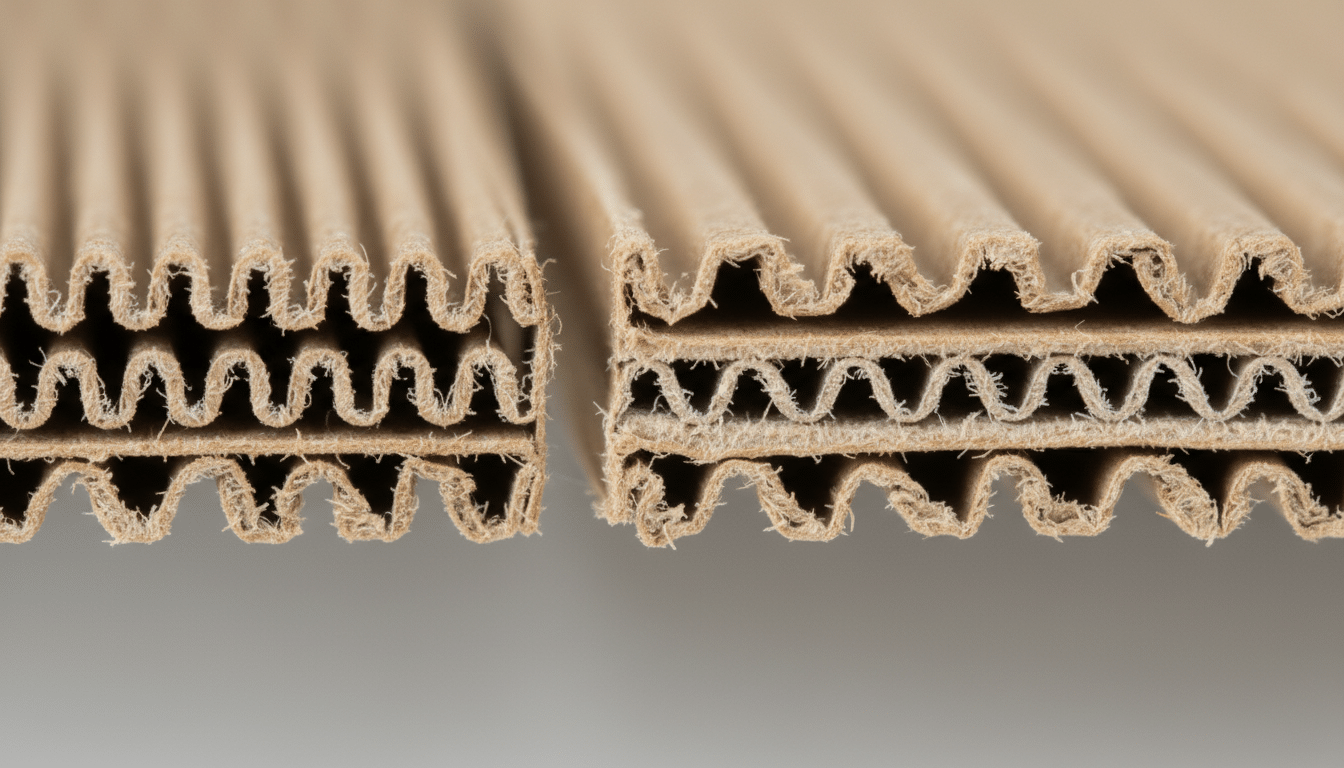
| Board option | Look and feel | Best for | Relative cost |
|---|---|---|---|
| E-flute, kraft liner | Natural brown, thin, crisp folds | Small and medium boxes, eco-focused brands | Lowest |
| E-flute, white liner | Clean white, bright print colors | Full-color branding, cosmetics, apparel | Low to medium |
| B-flute, kraft or white | Thicker walls, more cushioning | Large boxes, glass, heavier products | Medium |
| Heavier or double-wall grades | Very rigid, industrial feel | Heavy, fragile or high-value shipments | Higher |
Kraft board deserves a special mention for budget-conscious brands. Because the brown surface already looks intentional, a single dark ink color on kraft boxes can look premium without paying for full-color coverage. White board makes sense when your brand relies on bright colors, photography or pastel tones that would look muddy on brown.
Printing is where most brands either overspend or under-invest. The goal is to put money into the surfaces customers actually look at: the lid, the inside of the lid and the first view of the product.
Outside printing protects your brand in transit and on doorsteps. Inside printing creates the reveal moment when the lid opens, and it is a feature we offer on mailer, kraft, CBD and product boxes. Many brands get the best value from a simple outside (a logo or pattern on kraft) and a bold, colorful inside. It keeps the parcel discreet while making the unboxing feel special.
CMYK builds colors from four process inks and handles photographs and gradients well. PMS (Pantone) spot colors are pre-mixed inks that match a specific brand color precisely. If your logo color must be identical across every box, label and tape roll, PMS is worth it; if your design is photographic or multi-colored, CMYK is usually the more economical choice.
| Finish | What it does | Cost impact | Worth it when |
|---|---|---|---|
| Matte or gloss lamination | Protects print from scuffs and moisture | Low to medium | Boxes travel through busy carrier networks or are reused |
| Aqueous or varnish coating | Light protection and slight sheen | Low | You want some protection on a tight budget |
| Foil stamping | Metallic logo or accents | Medium | Premium beauty, jewelry or gift products |
| Spot UV | Glossy highlight on a matte surface | Medium | You want texture contrast on the lid |
| Embossing or debossing | Raised or recessed logo | Medium to high | Tactile luxury matters to your customer |
One finish applied with intent usually beats three applied everywhere. A foil logo on the lid, for example, delivers most of the premium feel at a fraction of the cost of foil plus embossing plus spot UV. If you are unsure, our team can suggest a finish plan within your budget, and you can also work with a professional packaging designer to make every printed surface count.
Smart brands compare packaging options on landed cost per shipped order, not on box price alone. A box that is cheap but needs bubble wrap, extra tape and a larger shipping charge can end up costing more than a well-designed mailer with a fitted insert. Build your own estimate with these line items:
| Cost component | What to include | How to reduce it |
|---|---|---|
| Mailer box | Unit price from your quote | Right-size, simplify print, order for a full quarter |
| Insert or protection | Die-cut insert, tissue, crinkle paper or wrap | A fitted insert can replace loose filler |
| Sealing | Tape, stickers or seals | Self-locking mailers need little or no tape |
| Printed extras | Thank-you cards, stickers, labels | Move messages to inside printing |
| Packing labor | Minutes per order × hourly cost | Boxes that fold fast and fit the product exactly |
| Outbound shipping | Carrier rate based on billed weight | Reduce outside dimensions to lower dimensional weight |
| Damage and returns | Replacements, refunds, reshipping | Correct board grade and a snug fit |
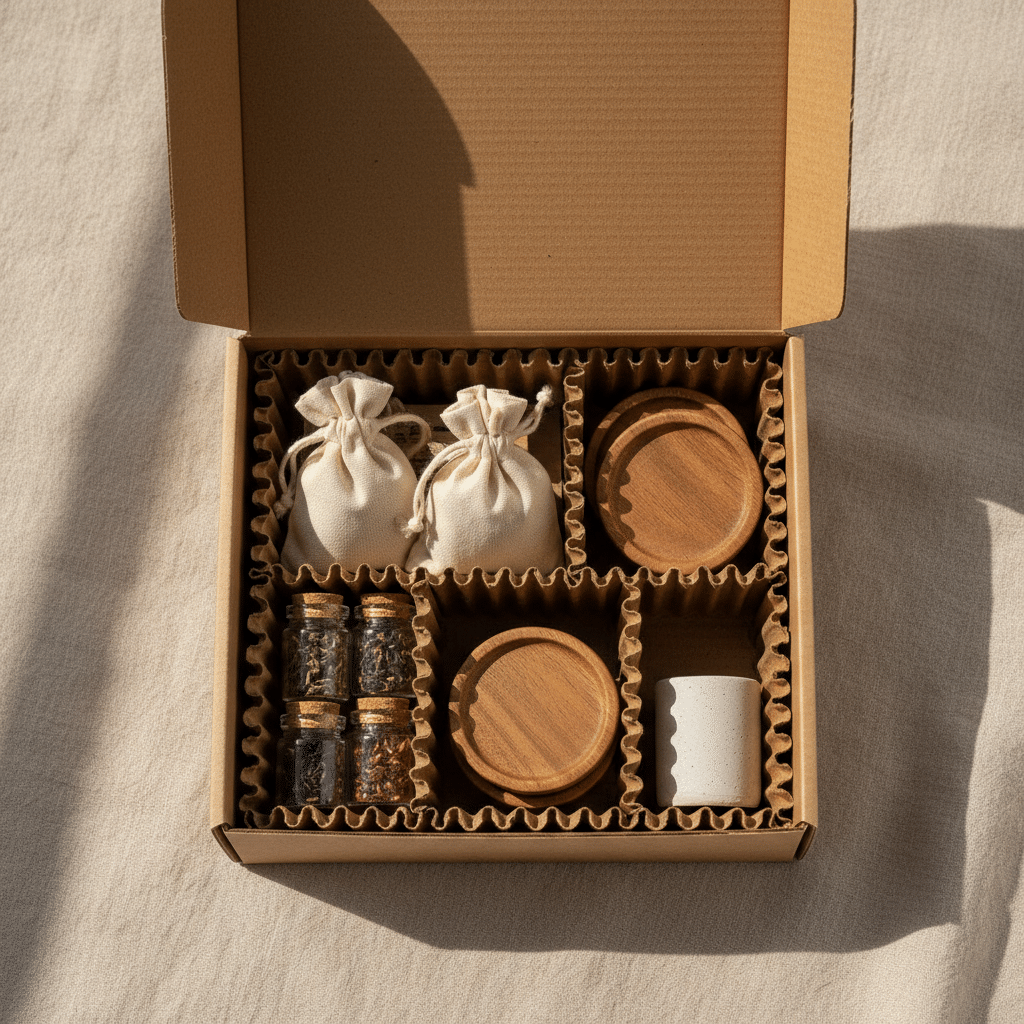
Inserts are a good example of spending more to save more. A die-cut cardboard insert holds each item in place, so you need less filler, packers work faster, and fragile products arrive intact. Our guide to packaging inserts explains the main types. Likewise, if you need tape for heavier boxes or tamper evidence, branded tapes (from $1 per roll) turn a necessary expense into extra brand exposure.
For many e-commerce brands, shipping is the largest packaging-related cost per order, and box size is the part of it you control. Carriers compare a parcel’s actual weight with its dimensional weight and bill whichever is higher.
In the United States, UPS and FedEx calculate dimensional weight by multiplying the outside length × width × height in inches and dividing by a divisor, commonly 139 for standard daily rates, then rounding up to the next pound. USPS applies dimensional pricing to larger parcels. Here is how a 1 lb (0.45 kg) product is billed in three different outside box sizes using a 139 divisor:
| Outside size (inches) | Outside size (cm) | Dimensional weight | Billed weight |
|---|---|---|---|
| 12 × 10 × 6 | 30.5 × 25.4 × 15.2 | about 5.2 lb | 6 lb |
| 12 × 10 × 4 | 30.5 × 25.4 × 10.2 | about 3.5 lb | 4 lb |
| 10 × 8 × 4 | 25.4 × 20.3 × 10.2 | about 2.3 lb | 3 lb |
Shrinking the box from 12 × 10 × 6 to 10 × 8 × 4 halves the billed weight in this example, and that saving repeats on every order. Divisors and rules change, so always check your carrier’s current rate guide or negotiated contract. For a deeper walkthrough on choosing dimensions, read our mailer box sizes guide.
Use this checklist to go from a rough idea to a confident packaging budget. It takes an afternoon and prevents most expensive surprises.
Pro tip: When you request a quote, ask for pricing at two or three quantities and for one version with and one without your most expensive finish. Seeing those numbers side by side makes it easy to decide whether foil or a larger run is the better use of the same budget.
We produce custom mailer boxes for small and mid-size brands across the United States and Canada, with free shipping to both countries, so the price you are quoted is not inflated by freight to your door. What changes between the two markets is how your outbound shipping is calculated and, in some cases, what must be printed on the packaging.
US brands usually work in inches and pounds, and UPS, FedEx and USPS all use dimensional weight for qualifying parcels. That makes compact box design the single biggest cost lever for direct-to-consumer brands. If your mailer box doubles as the retail package and carries product information, US rules generally expect the net quantity to be stated in both US customary and metric units, and certain categories such as food, cosmetics and supplements fall under FDA oversight. Keep regulated label copy on a product carton or label and confirm current requirements for your category.
Canadian carriers typically calculate volumetric weight in metric: length × width × height in centimeters divided by a carrier-specific divisor (5,000 and 6,000 are common), compared with the actual weight in kilograms. A 30 × 25 × 15 cm box (11.8 × 9.8 × 5.9 in) has a volumetric weight of 2.25 kg (about 5 lb) at a 5,000 divisor, so trimming centimeters matters just as much as it does south of the border. If your mailer box is the consumer package and carries mandatory product information, most of that information must appear in both English and French, which needs space in the layout. Health Canada oversees categories such as cosmetics and natural health products, so check current rules for your products.
| What matters | United States | Canada |
|---|---|---|
| Units for quotes | Inches and pounds | Centimeters and kilograms (inches also common) |
| Shipping weight rule | Dimensional weight in inches/lb, often divisor 139 (UPS, FedEx) | Volumetric weight in cm/kg, carrier divisors such as 5,000 or 6,000 |
| Label language | English | Most mandatory consumer information in English and French |
| Net quantity on retail packaging | US customary and metric units | Metric units |
| Regulators to check (in general) | FDA for food, cosmetics and supplements | Health Canada for cosmetics and health products |
| Delivery of your boxes | Free shipping anywhere in the USA | Free shipping anywhere in Canada |
Selling in both countries? A single mailer design usually works for both markets as long as any regulated product information lives on the product carton or a bilingual label. Our article on custom packaging for small business covers how to plan one packaging system that scales across North America.
Sometimes the best way to lower mailer box cost is to use a different format for part of your range. Here is how the main options compare:
| Option | Starting price | Protection | Unboxing experience | Best fit |
|---|---|---|---|---|
| Poly mailer bags | From $0.30 | Low (no crush protection) | Basic | T-shirts, hoodies, soft accessories |
| Mailer boxes | From $0.90 | Good to high | High | Most e-commerce products, kits, subscriptions |
| Product box inside a plain shipper | From $0.80 plus shipper | Good | Retail-ready | Brands selling online and in stores |
| Rigid box inside a shipper | From $3.00 plus shipper | High | Luxury | High-value gifts and premium sets |
Poly mailer bags are the lightest and cheapest to ship for apparel. Product boxes make sense when the same package must work on a retail shelf. If you are weighing a premium upgrade, our comparison of rigid boxes vs folding cartons explains the trade-offs, and beauty brands can see a parallel breakdown in our cosmetic boxes cost guide.
A hybrid approach also works well: a fully branded mailer box for hero products and subscription orders, and plain kraft boxes sealed with branded tape for bulk or wholesale shipments. You keep brand recognition while spending your packaging budget where the customer experience matters most.
Questions about specs before you order? Contact our team and we will help you balance price, protection and presentation.
Custom printed mailer boxes start from about $0.90 per box at Custom Made Packaging. The exact price depends on size, board, print coverage, finishes and quantity. Request a quote with your dimensions for an accurate number.
Every custom order needs setup work such as dielines, cutting setup, prepress and color matching. On a small run, that fixed work is shared by fewer boxes, so each box carries more of it. As quantity rises, the setup share per box falls.
Our minimum order is 30 boxes. That makes it practical to test a new design, launch a product or create PR kits before ordering larger quantities.
Usually, yes, especially when kraft is paired with one or two ink colors instead of full-color coverage. White board is the better choice when your brand depends on bright or pastel colors and photographic print.
Inside printing adds a printed surface, so it adds to the cost. Many brands offset it by keeping the outside simple, which gives a memorable unboxing reveal for a modest increase.
You receive a 2D and 3D mockup within 48 hours of ordering. Production takes 10 to 15 business days after design approval, or 8 to 12 business days with rush production.
Yes. Shipping is free anywhere in Canada and the USA. You can send your dimensions in centimeters or inches, and we will produce your boxes to the exact inside size.
Use the smallest box that protects your product, because UPS, FedEx and USPS bill many parcels by dimensional weight. Compare billed weights for a few box sizes, choose lightweight E-flute board where it is strong enough, and check your carrier’s current rates.
Get the custom quote starting from our MOQ of 30 boxes to any order volume. There will be no charges for shipping and we ensure the lowest prices with highest quality possible.