Free Delivery: 


Our facilities are now open for visits. Please contact your PIC or email us at contact@custommadepackaging.com to request a visit.
Free Delivery:
Home – Blogs – Candle Boxes in the USA: 2026 Packaging & Design Guide
 – Blogs
by Custom Made Packaging Team – November 4, 2026 · 14 min read
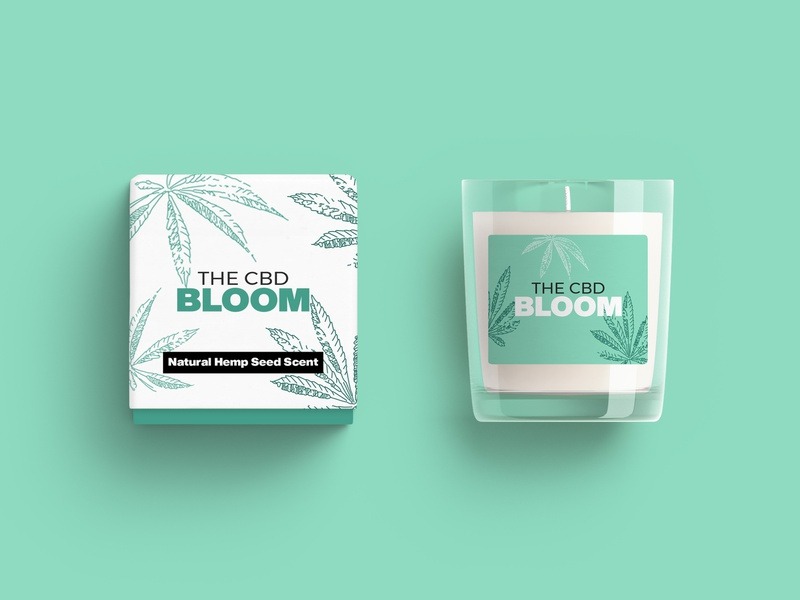
The best candle boxes in the USA do three jobs at once: they keep a heavy glass jar from cracking in transit, they stop fragrance oil and heat from ruining the packaging, and they sell the scent before a customer ever lifts the lid. For most small and mid-size candle brands, that means a sturdy folding carton or two-piece rigid box sized about 1/8 inch larger than the jar, a fitted insert, an oil-resistant coating and a clear warning label.
This guide shows you exactly how to get there. You will learn which candle box style suits jars, tins, pillars and gift sets, how to size a box for common jar sizes, which board and finishes hold up to wax and warm warehouses, what US and Canadian labels usually need to include, how to ship candles safely with UPS, FedEx and USPS, and what drives the price of custom candle packaging.
Whether you pour soy candles in your kitchen in Texas, sell coconut wax candles on Etsy and Shopify, or supply boutiques across the United States and Canada, the same principles apply. Everything below is written for growing candle brands that want packaging that looks premium without overspending.
Table of contents: Why candle boxes matter · Candle box styles · Sizes · Materials · Design ideas · Labeling · Shipping · USA and Canada · Cost · Mistakes · Checklist · How to order · FAQ
Candles are an emotional, sensory purchase. Shoppers cannot smell a candle through a screen, and in a store they often cannot smell it through a sealed lid either. The box has to tell them what the candle is like: the scent family, the mood, the quality of the wax and the care that went into it. At the same time, candles are surprisingly hard to package well. They are heavy for their size, often made of glass, sensitive to heat, and filled with fragrance oils that can bleed into paper.
There is no single best candle box. The right style depends on your price point, how the candle is sold and whether it ships in a separate outer carton. These are the styles candle brands use most often.
The classic retail candle box. Tuck end cartons ship flat, assemble in seconds and print beautifully on all sides. A reverse tuck end works well for light jars and tins; for heavier jars, ask for a crash-lock or auto-lock bottom, which holds the weight far better than a tucked flap. These are the most cost-effective custom candle boxes for brands selling in volume.
Rigid boxes are made from thick chipboard wrapped in printed or specialty paper. They do not fold flat, but they feel solid, protect glass well and are often kept long after the candle is gone. They suit luxury candles, three-wick candles and holiday collections. See our rigid boxes for styles, or compare the two main options in our guide to rigid boxes vs folding cartons.
A tray slides out of an outer sleeve, creating a slow, satisfying reveal. Drawer boxes are popular for candle and matchbook bundles, sample sets of small tins and premium gift items.
A die-cut window, with or without a clear film, lets shoppers see the jar color, the wooden wick or the wax texture. Windows work well for decorative candles, but keep them away from the bottom edge so the box stays strong.
Round paper tubes echo the shape of a jar candle and look distinctive on a shelf. They are best for brands with one or two hero sizes, because each tube diameter is tooled to a specific jar.
If you sell online, your candle needs a shipping box as well as (or instead of) a retail box. Printed corrugated mailer boxes protect glass in transit and give subscribers and online shoppers a branded unboxing. Our mailer box sizes guide explains how to size them around your candle boxes.
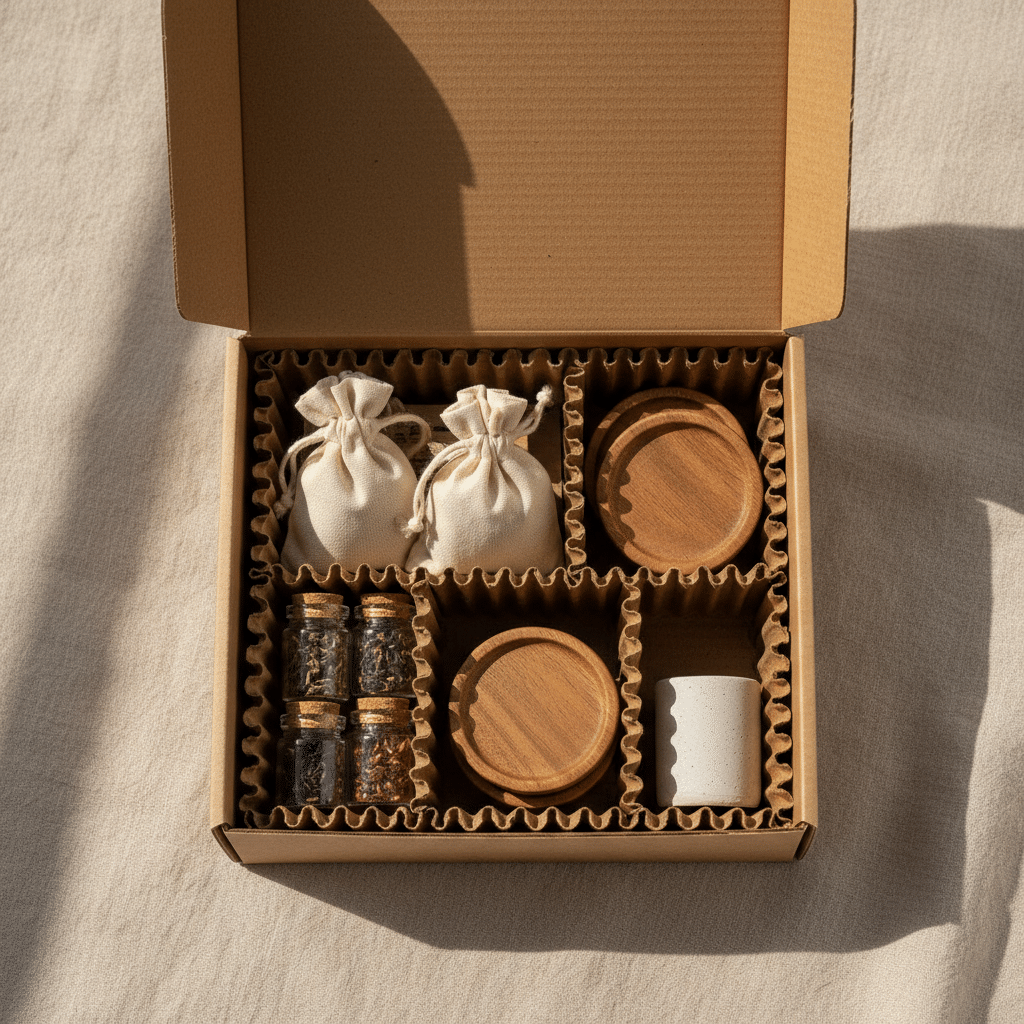
Multi-candle sets, candle and diffuser bundles and holiday trios need a box with a custom insert that holds each item in its own cavity. These sets often become a brand’s best-selling item in the fourth quarter.
| Box style | Best for | Ships flat? | Relative cost |
|---|---|---|---|
| Tuck end folding carton | Everyday jars and tins, retail and wholesale | Yes | Low |
| Crash-lock bottom carton | Heavier glass jars (10 oz and up) | Yes | Low to medium |
| Two-piece rigid box | Luxury and three-wick candles, gifts | No | High |
| Sleeve and drawer | Gift sets, tins, candle and match bundles | Partly | Medium to high |
| Window box | Decorative candles, colored glass | Yes | Medium |
| Cylinder tube | One or two signature jar sizes | No | Medium to high |
| Corrugated mailer | Shipping direct to consumers, subscriptions | Yes | Medium |
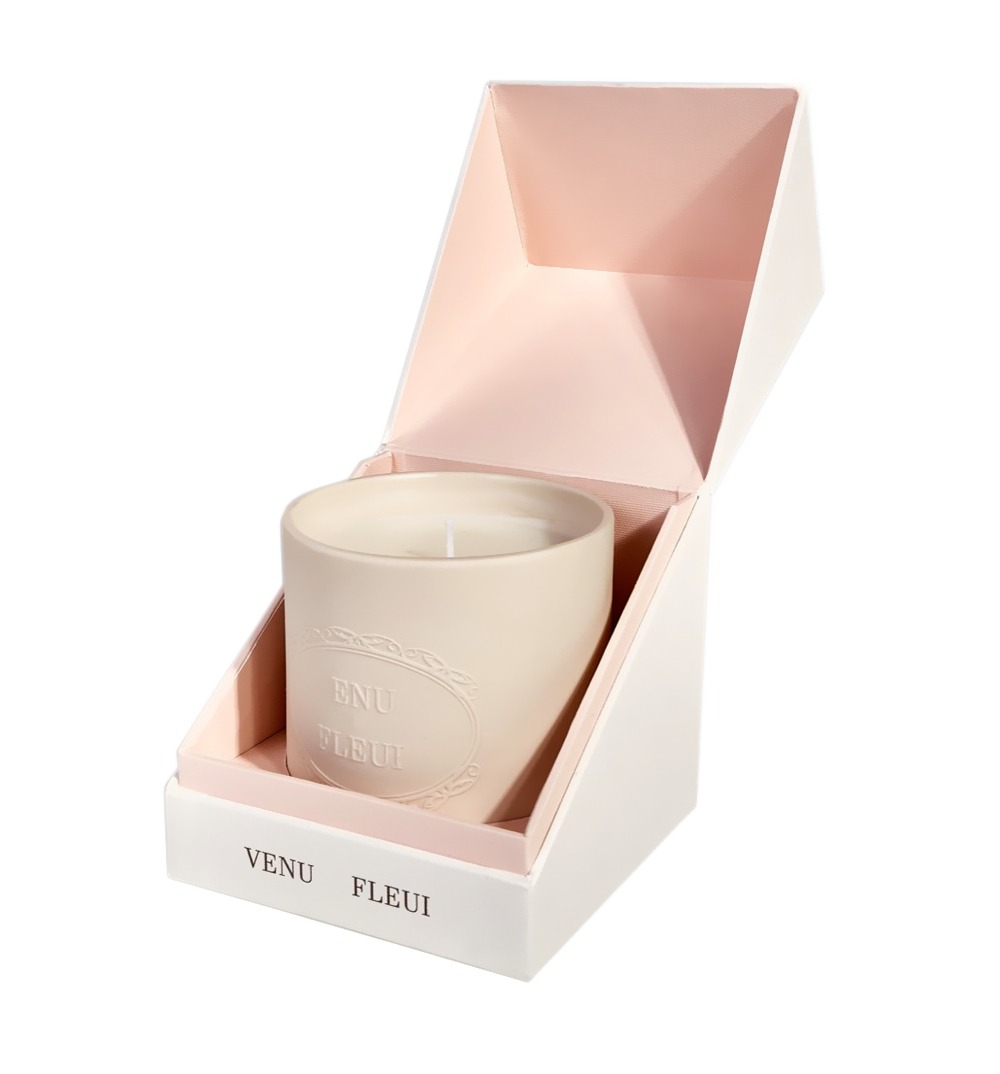
Candle containers vary widely between suppliers, so always measure your actual vessel rather than relying on a nominal size such as “8 oz.” The ounce figure describes how much wax the jar holds, not its outside dimensions, and two 8 oz jars from different glassworks can differ by half an inch in height.
The table below shows common vessel types with example dimensions and a matching inside box size. Use it for planning only, then confirm with your own measurements and a sample.
| Candle type | Example vessel size | Example inside box size (inches) | Metric (cm) |
|---|---|---|---|
| 4 oz travel tin | About 2.6 in wide × 1.6 in tall | 2.75 × 2.75 × 1.75 | 7.0 × 7.0 × 4.4 |
| 8 oz tumbler jar | About 3 in wide × 3.5 in tall | 3.25 × 3.25 × 3.75 | 8.3 × 8.3 × 9.5 |
| 10–12 oz jar with wooden lid | About 3.3 in wide × 4.2 in tall | 3.5 × 3.5 × 4.5 | 8.9 × 8.9 × 11.4 |
| Three-wick bowl candle | About 4.5 in wide × 3.5 in tall | 4.75 × 4.75 × 3.75 | 12.1 × 12.1 × 9.5 |
| Pillar candle | 3 in wide × 6 in tall | 3.25 × 3.25 × 6.25 | 8.3 × 8.3 × 15.9 |
| Votive or tealight set (6) | Varies by layout | Size to the insert | Size to the insert |
If you offer the same scent in several sizes, design one artwork system that scales across two or three box sizes. That keeps your shelf presence consistent and makes reorders simpler.
Candle packaging has to survive two things most boxes never face: the weight of glass and the chemistry of fragrance oil. Choosing the right board and coating up front prevents warped boxes, grease stains and crushed corners later.
| Material | Typical thickness | Strengths | Best candle use |
|---|---|---|---|
| SBS (solid bleached sulfate) paperboard | 16–24 pt | Bright white surface, crisp full-color print | Retail tuck end cartons for tins and jars |
| Kraft paperboard | 18–24 pt | Natural, eco look; recyclable | Soy and natural wax brands, minimalist designs |
| Rigid chipboard (wrapped) | About 1/16–1/8 in (1.5–3 mm) | Very sturdy, premium feel, reusable | Luxury jars, gift sets, holiday editions |
| E-flute corrugated | About 1/16 in | Good crush resistance, smooth print | Retail-and-ship boxes, small mailers |
| B-flute corrugated | About 1/8 in | Stronger, better for heavy multi-packs | Shipping several jars, wholesale cartons |
Uncoated paperboard can absorb fragrance oil if wax smears on the jar or a candle sweats in warm storage, leaving translucent spots on the print. A gloss or matte lamination, or an aqueous coating, adds a barrier that resists oil and moisture and also protects colors from scuffing. Kraft boxes can be coated too if you want a natural look with better resistance.
Heat is the second risk. Many container waxes start to soften well below their melt point, and a delivery truck or storage unit in a Southern summer can get hot enough to deform candles and loosen adhesives. Keep finished stock in a cool, climate-controlled space, avoid leaving boxed candles in vehicles, and consider adding a “store below 80°F (27°C)” note on wholesale cartons if your wax is soft.
A die-cut paperboard or corrugated insert holds the jar off the walls and keeps the lid in place. For gift sets, inserts separate each vessel so glass never touches glass. Learn more in our guide to packaging inserts.
Because shoppers cannot smell your candle through the box, the design has to translate scent into color, texture and words. These ideas work for brands at every budget.
If you do not have a designer, our team provides free design support on every order, and you can work with a professional packaging designer to build a full candle collection from your logo and brand colors.

Candle labeling is less complex than cosmetics or food, but there are still details buyers, retailers and regulators expect. Exact requirements depend on your product and where you sell, so treat this as a practical checklist and confirm current rules for your market.
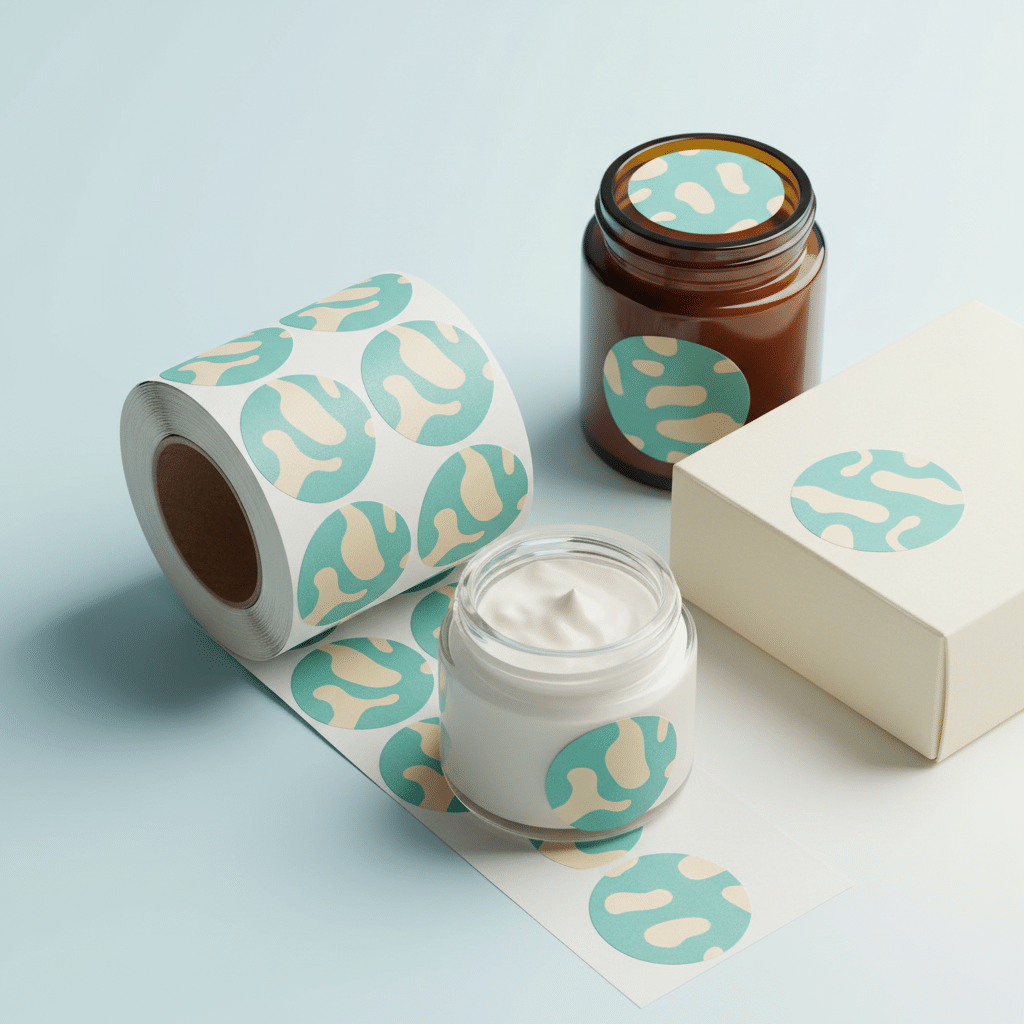
Many brands print the core warnings on the box and put a small warning sticker on the base of the jar, so the information stays with the candle after the box is thrown away. Printed custom labels are an easy, low-cost way to do this.
A retail candle box alone is rarely enough to send glass through a parcel network. Parcels are dropped, stacked and sorted by machines, so DTC candle brands should treat the retail box as the first layer and a corrugated shipper as the second.
Shipping box size matters too. UPS, FedEx and USPS can bill parcels by dimensional weight, calculated from the outside length × width × height in inches. Candles are dense, so a well-fitted box usually keeps the billed weight close to the actual weight, but oversized shippers stuffed with void fill can push costs up quickly. Our article on custom printed mailer boxes covers print and finish options for the outer box.
Pro tip: Before you place a large order, pack three or four finished candles exactly as you will ship them and send them to friends in different states. Ask them to photograph the box on arrival. This simple real-world test reveals weak corners, loose lids and heat issues far more reliably than a mockup, and it costs only a few shipping labels. A physical box sample makes the test even more accurate.
We make custom candle boxes for brands across the United States and Canada, with free shipping to both countries. The packaging itself is the same, but labels, units and carrier rules differ, so plan your artwork with your main market in mind.
Candles sold to US consumers are generally expected to carry a net quantity statement, and federal packaging and labeling rules call for it to be shown in both US customary and metric units, such as ounces and grams. Fire-safety labeling is widely based on the voluntary ASTM F2058 standard for candle fire-safety labeling, which many retailers ask their suppliers to follow. US carriers bill dimensional weight in inches and pounds, so size your shippers tightly. If you sell into specific states, check whether any state-level chemical or labeling disclosures apply to your fragrance ingredients.
Canada requires most mandatory consumer label information, including the product identity and net quantity, to appear in both English and French, with net quantity in metric units. Candles are also covered by Canadian consumer product safety rules administered by Health Canada, so check current requirements for your candle type before you finalize artwork. Bilingual text takes more space, so plan larger side panels or a back panel layout that fits both languages comfortably. Canadian carriers usually calculate volumetric weight in centimeters and kilograms, so give us your dimensions in whichever unit you prefer.
| What matters | United States | Canada |
|---|---|---|
| Label language | English | Most mandatory information in English and French |
| Net quantity | US customary and metric (oz and g) | Metric (g), imperial optional |
| Safety guidance | Voluntary ASTM F2058 labeling widely used by retailers | Health Canada consumer product safety requirements; check current rules |
| Shipping weight | Dimensional weight in inches and lb (UPS, FedEx, USPS) | Volumetric weight in cm and kg with carrier divisors |
| Design impact | More room for brand story and scent notes | Allow extra panel space for bilingual text |
| Shipping from us | Free shipping anywhere in the USA | Free shipping anywhere in Canada |
Selling in both countries? Many brands design one bilingual box that works everywhere, which keeps a single SKU in stock instead of two.
Custom candle boxes start from $0.90 per box, with orders from just 30 boxes. Your final unit price depends on a handful of factors, and understanding them helps you decide where to spend and where to save. For a broader view across box types, see our custom packaging cost guide.
| Cost factor | Effect on price | How to save |
|---|---|---|
| Quantity | Unit price drops as quantity rises | Order a full season of your best sellers at once |
| Box style | Rigid and tube boxes cost more than folding cartons | Use rigid boxes only for gift and luxury lines |
| Size and board | Larger boxes and thicker board use more material | Size tightly; use crash-lock cartons before jumping to rigid |
| Printing | Full coverage and inside printing add cost | Use a strong color field with a simple logo |
| Finishes | Foil, embossing, spot UV and soft-touch add steps | Pick one signature finish, such as a foil logo |
| Inserts and windows | Extra die-cutting and assembly | Use a simple paperboard insert for single jars |
| Number of designs | Each scent design adds setup | One layout with color variations or scent stickers |
| Turnaround | Rush production may cost more | Plan holiday orders well before Q4 |
A budget-friendly approach many small candle makers use is a single printed carton design for the whole range, with the scent name on a small round label (from $0.30). If you prefer a natural look, kraft boxes start from $0.50.
Work through this checklist in order and you will have everything you need for an accurate quote and a smooth first run.
Questions about a specific vessel or gift set? Contact our team and we will help you choose the right structure.
For most retail jar candles, a coated paperboard folding carton with a crash-lock bottom offers the best balance of protection, print quality and cost. Luxury candles and gift sets suit two-piece rigid boxes. If you ship directly to customers, add a corrugated mailer box as the outer layer.
It depends on your jar, because 8 oz describes the wax, not the glass. A typical 8 oz tumbler around 3 inches wide and 3.5 inches tall fits an inside box size of roughly 3.25 × 3.25 × 3.75 inches. Measure your own jar with the lid on and add about 1/8 inch per side.
Choose a laminated or aqueous-coated board, let candles cure and cool before boxing, wipe any wax from the jar exterior and store stock somewhere cool. An insert that holds the jar off the walls also reduces contact between the glass and the printed surface.
Secure the lid, put the jar in a snug box or insert, then place it in a corrugated shipping box with cushioning on every side. Shake-test the parcel, seal it with strong tape and avoid leaving parcels in hot depots over weekends during summer.
Most US candle brands follow the voluntary ASTM F2058 fire-safety labeling standard, which covers warnings such as never leaving a burning candle unattended and keeping it away from children, pets and anything flammable. Many retailers expect it. Include a net weight in ounces and grams and check current rules for your specific product.
In most cases, yes. Canada requires most mandatory consumer label information, such as the product identity and net quantity, in both English and French, with net quantity in metric units. Check Health Canada’s current guidance for any candle-specific safety requirements.
Custom candle boxes from Custom Made Packaging start from $0.90 per box. The final price depends on quantity, size, box style, printing, finishes and inserts. Every order includes free design support and free shipping in the USA and Canada.
Yes. The minimum order is 30 boxes, which makes it practical to test a new scent, launch a seasonal collection or try a premium gift box before scaling up. You receive a 2D and 3D mockup within 48 hours of ordering.
Get the custom quote starting from our MOQ of 30 boxes to any order volume. There will be no charges for shipping and we ensure the lowest prices with highest quality possible.