Free Delivery: 


Our facilities are now open for visits. Please contact your PIC or email us at contact@custommadepackaging.com to request a visit.
Free Delivery:
Home – Blogs – CBD Boxes for Topicals: 2026 Cream & Balm Guide
 – Blogs
by Custom Made Packaging Team – November 3, 2026 · 16 min read
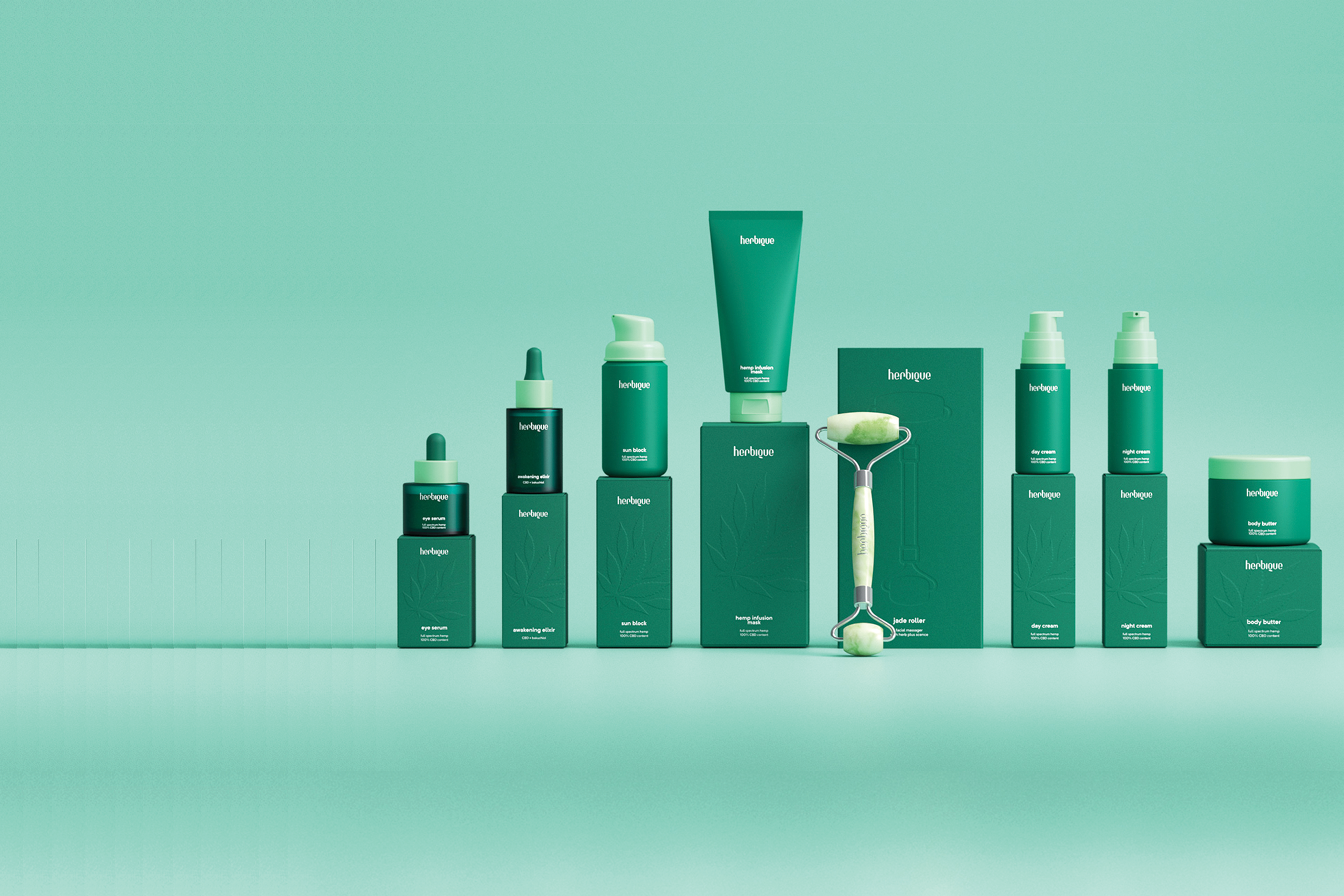
The best CBD boxes for topicals are snug-fitting folding cartons, usually a tuck end or sleeve style in 18-24 pt paperboard, sized to the jar, tube or roll-on with about 1/16 to 1/8 inch (1.5-3 mm) of clearance, with a fitted insert for glass and enough panel space for ingredients, net contents, batch details and a QR code to your lab results. Get those basics right and your cream, balm or salve arrives intact, looks premium on a shelf and gives customers the information they expect from a CBD brand.
This guide covers everything a CBD skincare or wellness brand needs before ordering: box styles matched to each topical format, typical sizes in inches and centimeters, board and finish choices, what to print on each panel, inserts and protection, cost factors, and the rules that differ between the United States and Canada. It is written for small and mid-size brands, from a new balm line selling online to an established topical range moving into retail.
If you sell from Texas, Colorado or Florida, or you run a CBD-free skincare line in Ontario or British Columbia, the same packaging principles apply, but the regulations do not. We flag those differences clearly so you can plan your packaging with confidence.
Table of contents
CBD topical boxes are the printed retail cartons that hold creams, lotions, balms, salves, roll-ons, sticks and massage oils. Unlike a tincture box, which almost always holds a tall dropper bottle, a topical box has to suit a wide range of shapes: squat glass jars, aluminum tins, squeeze tubes, deodorant-style sticks and pump bottles. That variety is why off-the-shelf boxes rarely fit well and why custom sizing pays off.
A good topical box does four jobs at once:
If you are new to the category, our overview of what kind of CBD boxes are perfect for different products is a useful starting point, and our CBD tincture boxes guide covers dropper bottles in detail.
Start with the container, not the box. Measure the widest point of each container, including the lid, pump or roller ball, and measure height with the cap on. The table below shows common container sizes and typical inside box dimensions as a starting point. Always confirm with your own containers, because two “2 oz jars” from different suppliers can differ by a quarter inch.
| Topical format | Common fill size | Typical inside box size (L × W × D) | Notes |
|---|---|---|---|
| Cream or balm jar | 1 oz / 30 ml | 2.25 × 2.25 × 1.75 in (5.7 × 5.7 × 4.4 cm) | Squat jars suit square cartons or two-piece boxes |
| Cream or balm jar | 2 oz / 60 ml | 2.75 × 2.75 × 2 in (7 × 7 × 5.1 cm) | Add an insert for glass |
| Lotion tube | 3.4 oz / 100 ml | 1.75 × 1.25 × 6.75 in (4.4 × 3.2 × 17.1 cm) | Measure flattened crimp end width |
| Roll-on bottle | 0.33 oz / 10 ml | 1 × 1 × 3.75 in (2.5 × 2.5 × 9.5 cm) | Slim tuck end; a neck insert stops rattling |
| Balm stick | 1 oz / 30 g | 1.5 × 1.5 × 3.25 in (3.8 × 3.8 × 8.3 cm) | Deodorant-style twist sticks |
| Pump bottle | 4 oz / 120 ml | 2 × 2 × 6.5 in (5.1 × 5.1 × 16.5 cm) | Lock the pump before boxing |
| Tin (salve) | 2 oz / 60 g | 3 × 3 × 1.25 in (7.6 × 7.6 × 3.2 cm) | Shallow boxes or sleeves work well |
These are examples rather than standards. The right box is the one built around your exact container, which is the main advantage of custom CBD packaging over stock cartons.
For a folding carton holding a single container, allow about 1/16 inch (1.5 mm) on width and length and about 1/8 inch (3 mm) on depth so the tuck flap closes without pressing on the cap. If you add an insert, size the box to the insert instead. For more detail on fitting products, see our guide to packaging inserts.
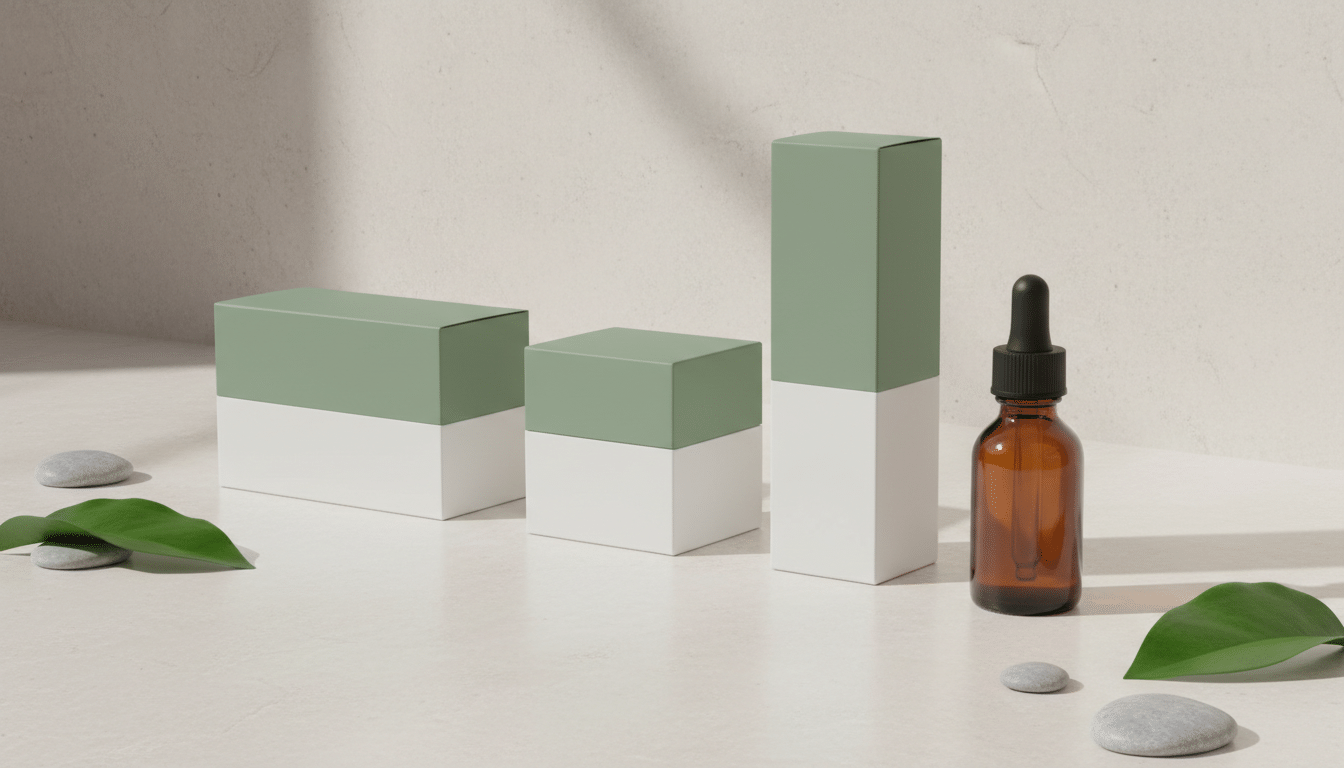
Box style affects cost, unboxing feel and how quickly your team can pack orders. These are the styles CBD topical brands use most:
| Box style | Best for | Why brands choose it |
|---|---|---|
| Reverse or straight tuck end | Tubes, roll-ons, pump bottles, sticks | Affordable, fast to pack, easy to display; the most common retail carton |
| Auto-lock (crash lock) bottom | Heavier jars and pump bottles | Base locks in place for added strength without tape |
| Sleeve and tray | Premium balms and salve tins | Slides open for a considered unboxing; good for gift sets |
| Two-piece lid and base | Luxury creams, spa lines | Feels high-end; works with paperboard or rigid board |
| Hanger tab tuck end | Roll-ons and sticks in retail | Hangs on pegs at pharmacies and checkout counters |
| Rigid box with insert | Gift sets, multi-product kits | Maximum protection and perceived value |
| Mailer box | Bundles and subscription shipments | Ships directly and doubles as the unboxing experience |
Most single-item topicals fit best in custom CBD product boxes with tuck ends, starting from $0.80 per box. Gift sets and higher-priced creams often move up to rigid boxes, from $3 per box, while brands shipping bundles direct to customers use printed mailer boxes from $0.90.
Topicals are light, so the main considerations are print quality, crush resistance during shipping and the look you want. Paperboard thickness is measured in points (pt), where 1 pt equals 1/1000 inch.
| Material | Typical thickness | Look and feel | Best use |
|---|---|---|---|
| SBS (solid bleached sulfate) paperboard | 16-24 pt | Bright white, crisp full-color print | Most CBD creams, roll-ons and tubes |
| Kraft paperboard | 18-24 pt | Natural brown, earthy, eco-forward | Botanical, organic-style and minimalist brands |
| E-flute corrugated | About 1/16 in (1.5 mm) | Sturdy, printable | Heavier jars, multi-packs, mailers |
| Rigid chipboard (wrapped) | About 1/16-1/8 in (1.5-3 mm) | Premium, gift-ready | Luxury sets and limited editions |
For a natural, plant-forward aesthetic, kraft boxes start at $0.50 per box and pair well with one or two dark ink colors. If you are shipping glass jars through parcel networks, 24 pt SBS or E-flute offers more protection than thin 14-16 pt board.
Creams, balms and massage oils can leave greasy fingerprints or stains on uncoated board. An aqueous coating, a matte or gloss lamination, or a soft-touch finish helps the box resist oil marks and handling. If you want an uncoated, papery look, keep a small stack of spare boxes for re-packing returns and display units.
Labeling requirements for CBD topicals depend on where you sell and how the product is positioned, and they change often. The list below reflects common practice for US hemp-derived CBD topicals sold as cosmetics. Use it as a planning checklist, then confirm the current federal and state rules for every market you sell in.
| Panel | What usually goes there | Design tip |
|---|---|---|
| Front (principal display panel) | Brand, product name, CBD amount, net quantity | Keep it clean; the CBD amount should be easy to spot |
| Back | Ingredients, directions, warnings, business details | Use 6-7 pt type minimum and high contrast |
| Side 1 | QR code to COA, batch number, best-by date | Leave a blank area for printed or stamped lot codes |
| Side 2 | Brand story, key botanicals, social handles | Good place for secondary messaging |
| Inside flap or inside print | Thank-you note, usage ritual, discount code | Adds delight without crowding outside panels |
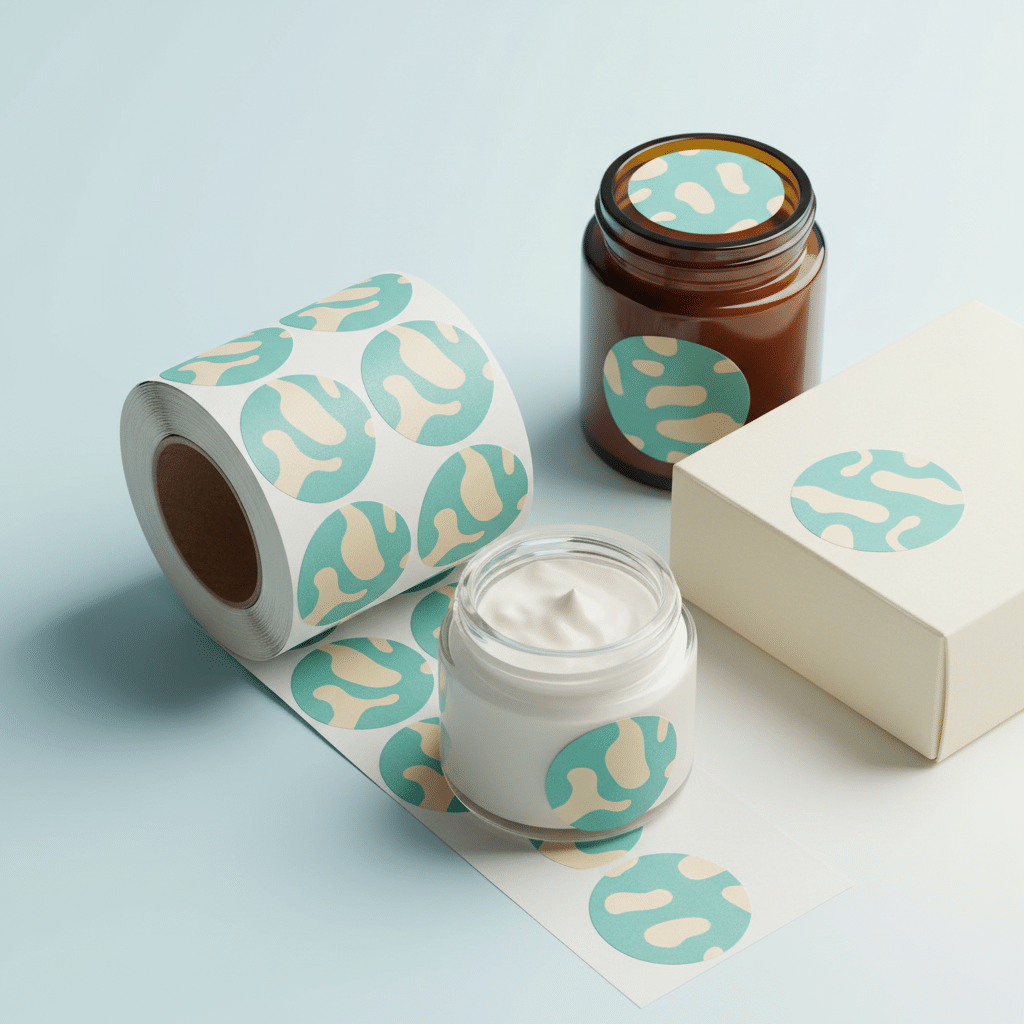
Leave a defined space for variable data such as lot numbers and dates, which are often added with a stamp, inkjet coder or custom labels (from $0.30) rather than printed into every box run. That way one box design can serve many batches.
In the United States, marketing a topical as treating, curing or preventing a condition, such as “relieves arthritis pain”, can cause the product to be treated as a drug, which carries much stricter requirements. Many CBD brands stick to cosmetic language like “soothing”, “moisturizing” or “for post-workout massage”. If you are unsure about wording, have a regulatory professional review your copy before you print.
CBD topicals sit between skincare and wellness, so the most effective designs borrow from both: clean typography and generous white space from skincare, natural colors and botanical cues from wellness. Here are ideas that work at small and large scale:
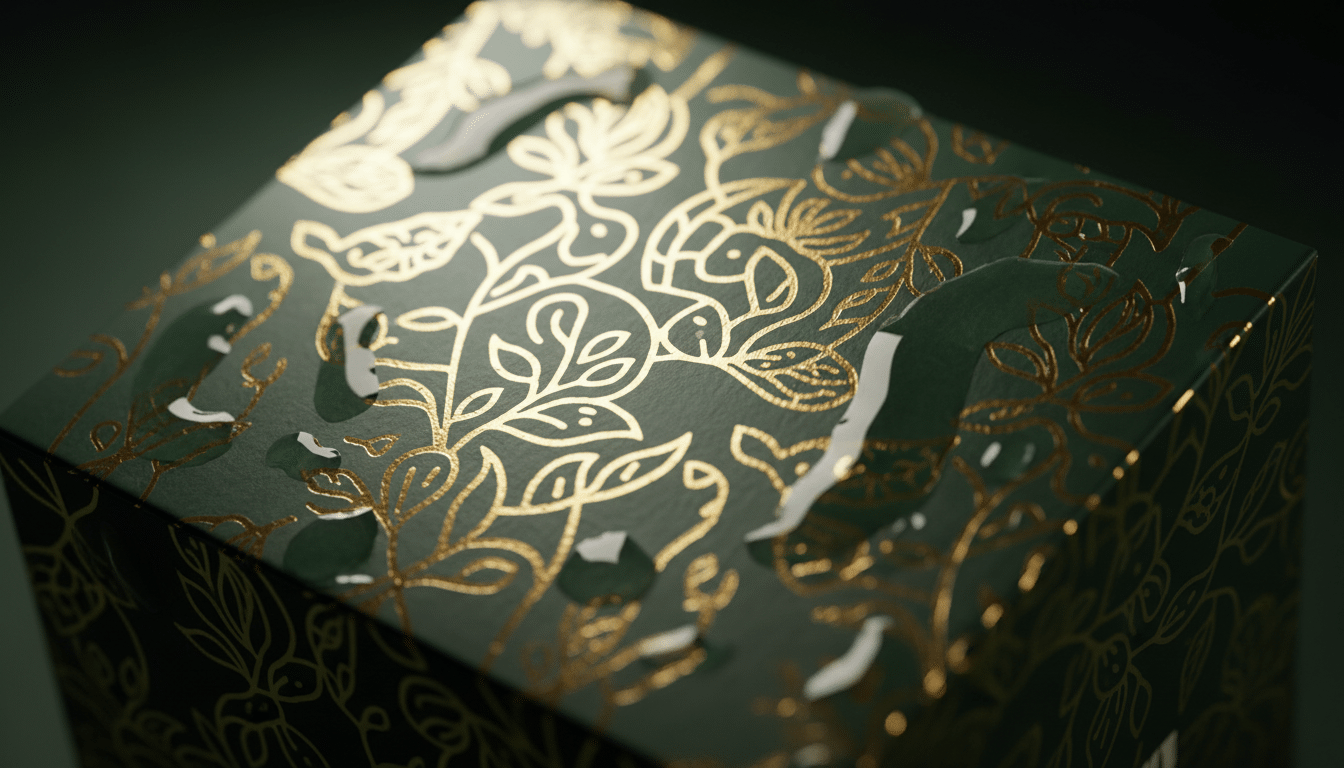
For more inspiration across categories, browse our custom design box ideas and our skincare cosmetic box guide, which covers finishes that also suit CBD creams. If you do not have a designer, our team can help, or you can hire a professional packaging designer through us.
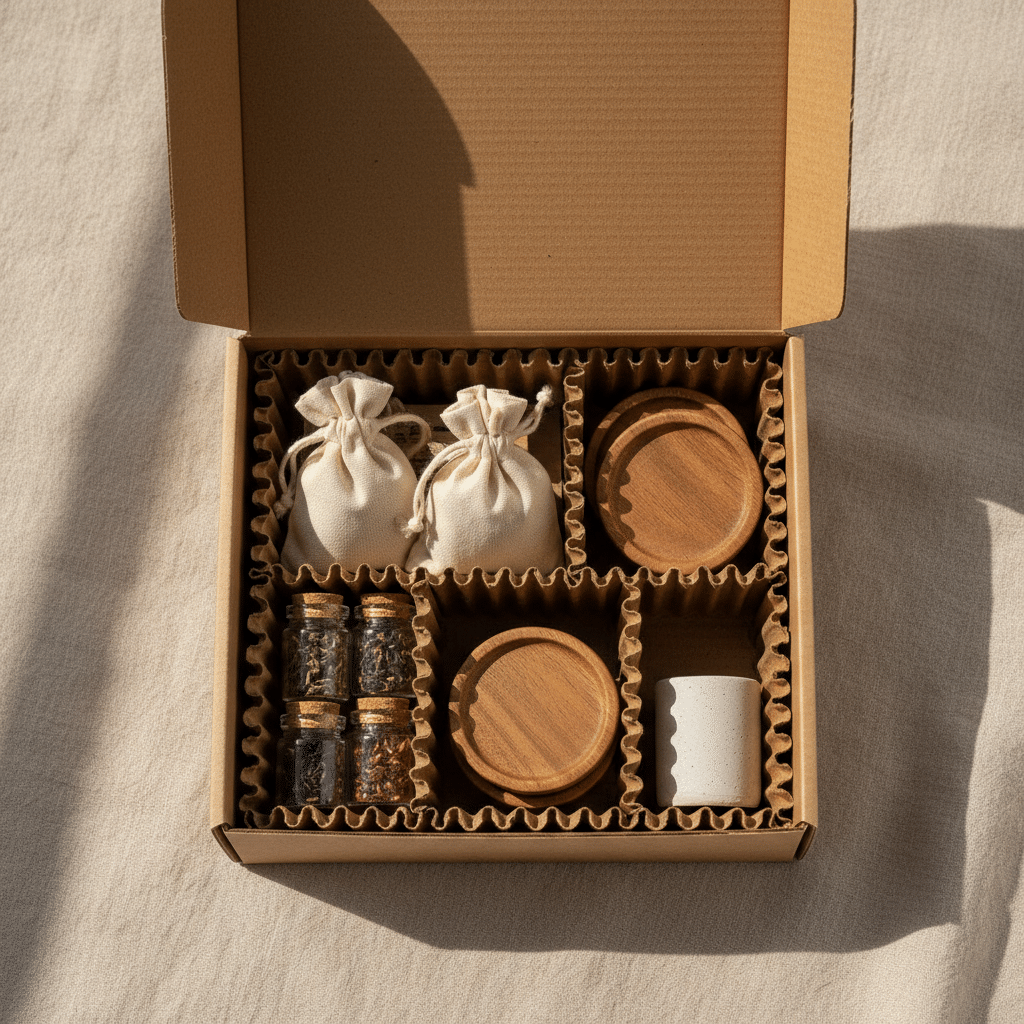
Topicals are rarely fragile on their own, but glass jars, pump heads and roller balls are. Inserts and closures solve most damage and tampering problems:
Child-resistant packaging is a common requirement for ingestible cannabis and hemp products in many states, and some states extend similar rules to other product types. Most topicals in cosmetic-style containers are not child-resistant, so check the current requirements in each state you sell into before you finalize the format.
Pro tip: Send us one filled container of every format you plan to box, with caps and pumps attached. Sizing from a real, filled product avoids the most common topical packaging problem: a carton that fits the empty jar but not the jar with its lid, shrink band and label.
Cost per box depends far more on your choices than on the product inside it. A plain kraft tuck end box and a foil-stamped rigid gift box are both “CBD boxes”, but they sit at opposite ends of the price range. For reference, our starting prices are $0.50 for kraft boxes, $0.80 for product boxes, $0.90 for mailer boxes and $3 for rigid boxes, with a minimum order of just 30 boxes.
| Cost factor | Lower cost | Higher cost |
|---|---|---|
| Quantity | Larger runs spread setup costs | Very small runs cost more per box |
| Box style | Straight or reverse tuck end | Sleeves, two-piece and rigid boxes |
| Material | Standard SBS or kraft paperboard | Thick board, rigid chipboard, specialty stock |
| Size | Compact boxes sized to the product | Oversized boxes with void space |
| One or two colors, outside only | Full color inside and out, Pantone matching | |
| Finishes | Aqueous coating | Foil, embossing, spot UV, soft-touch |
| Inserts | None, or a simple paperboard collar | Foam, multi-cavity or rigid inserts |
| Number of SKUs | One shared design with stickers | Separate print runs per strength or scent |
Two practical ways to save: design one box per container format and differentiate strengths with a colored label, and keep the box tight to the product so you use less board and pay less to ship. Our custom packaging cost guide explains each factor in more depth.
We ship custom packaging free to the USA and Canada, but CBD topicals are treated very differently in the two countries. Understanding the difference before you design saves you from printing boxes you cannot use.
Hemp-derived CBD is federally regulated under the hemp framework that began with the 2018 Farm Bill, while topicals are generally labeled like cosmetics under FDA rules, including net quantity in both US customary and metric units. Federal hemp definitions have been changing, with Congress passing a narrower definition in late 2025 and further adjustments under discussion, and individual states add their own requirements such as QR codes to lab results, specific warnings, age restrictions or registration. Because these rules change frequently, check the latest federal guidance and each state’s rules before every new print run.
For shipping, UPS, FedEx and USPS bill many parcels by dimensional weight in inches and pounds, so compact boxes keep costs down. Our guide to CBD boxes in the USA goes deeper into state-level labeling.
In Canada, CBD is regulated as cannabis under the Cannabis Act, whether it comes from hemp or marijuana. Cannabis topicals can only be produced by federally licensed processors and sold through provincially authorized channels, and they must follow strict plain-packaging rules: a single uniform background color, limits on logos and brand elements, the standardized cannabis symbol, mandatory health warnings, child-resistant containers and bilingual English and French labeling. That means branded, decorative CBD boxes are not permitted for Canadian consumers, and we do not offer them for the Canadian market.
Canadian beauty brands still use custom boxes for non-cannabis lines, such as skincare made with hemp seed oil that contains no CBD, which generally falls under cosmetic rules. For those products, remember that most mandatory consumer label information must appear in both English and French, and Canadian carriers usually calculate volumetric weight in centimeters and kilograms.
| What matters | United States | Canada |
|---|---|---|
| How CBD topicals are regulated | Hemp-derived CBD under federal hemp rules plus state laws; labeling generally follows cosmetic rules | Regulated as cannabis under the Cannabis Act |
| Who can sell | Brands, subject to state rules | Licensed processors through authorized retailers |
| Branded box design | Allowed, within state rules and without drug claims | Not allowed; strict plain packaging |
| Language | English | English and French |
| Units on the label | US customary and metric | Metric |
| Child resistance | Varies by state and product type | Required for cannabis products |
| Shipping measurement | Inches and pounds, dimensional weight | Centimeters and kilograms, volumetric weight |
This overview is general information, not legal advice. Regulations in both countries change, so confirm current requirements with the relevant authorities or a qualified advisor.
A physical sample is the only way to be sure a jar with its lid fits perfectly. Here is why a box sample is worth it.

Have questions about a specific format? Contact our team and we will help you pick the right style.
A square tuck end or auto-lock bottom carton in 18-24 pt paperboard suits most CBD cream jars. Add a paperboard insert for glass jars so they do not shift. For premium or gift products, a sleeve and tray or a rigid two-piece box gives a more luxurious feel.
Many 2 oz (60 ml) jars fit in a box around 2.75 × 2.75 × 2 inches (7 × 7 × 5.1 cm) inside, but container shapes vary. Measure your filled jar with its lid at the widest point and add about 1/16 inch on width and length and 1/8 inch on depth.
It depends on the state and product type. Child-resistant rules most often apply to ingestible products, but some states extend them further. In Canada, all cannabis products, including CBD topicals, must be in child-resistant packaging.
Common elements include the product identity, net quantity in US customary and metric units, an ingredient list, the business name and address, CBD content, batch information and often a QR code linking to lab results. States add their own requirements, so check the rules for every state you sell in.
No. In Canada, CBD is regulated as cannabis, and cannabis topicals must follow strict plain-packaging rules with limited branding, a standard cannabis symbol, health warnings and bilingual labels. They can only be sold by licensed producers through authorized retailers.
Most brands print a QR code on the box that links to the certificate of analysis for that batch, along with the batch or lot number. This keeps the box design the same while the linked results change with each batch. Many states require this or similar access to lab results.
Price depends on style, material, size, print and finishes. Our product boxes start from $0.80, kraft boxes from $0.50 and rigid boxes from $3, with a minimum order of 30 boxes and free shipping to the USA and Canada.
You will receive a 2D and 3D digital mockup within 48 hours. After you approve the design, standard production takes 10-15 business days, or 8-12 business days with rush production.
Get the custom quote starting from our MOQ of 30 boxes to any order volume. There will be no charges for shipping and we ensure the lowest prices with highest quality possible.