Free Delivery: 


Our facilities are now open for visits. Please contact your PIC or email us at contact@custommadepackaging.com to request a visit.
Free Delivery:
Home – Blogs – Corrugated Mailer Boxes: The Best 2026 Expert Guide
 – Blogs
by Custom Made Packaging Team – November 11, 2026 · 16 min read

Corrugated mailer boxes are the self-locking, fold-flat shipping boxes that most e-commerce brands in the USA and Canada use to send orders directly to customers. They are made from corrugated board, which sandwiches a wavy fluted layer between two flat liners, and that structure is what gives a box that weighs only a few ounces enough strength to survive a courier network.
If you have ever wondered which flute to choose, what ECT 32 means on a box certificate, why some boxes are white and others are kraft brown, or how much a run of 500 printed boxes should cost, this guide answers all of it. We cover construction, flute types, board grades, sizing, printing, shipping rules, pricing factors and the mistakes that cost small brands money.
By the end, you will know exactly how to specify corrugated mailer boxes for your own products, and how to order them in small quantities with free design help and free shipping anywhere in the USA and Canada.
Corrugated mailer boxes are one-piece boxes die-cut from a single sheet of corrugated board. They ship flat, fold up in seconds without tape or glue, and close with a tuck-in front flap and two side tabs. Because the lid, base and walls are all one piece, a mailer feels sturdier than a glued carton and opens like a gift rather than a shipping container.
The word corrugated refers to the material, not the shape. A sheet of corrugated board has three layers: an outer liner, a fluted (wavy) medium and an inner liner. Air trapped in the flutes acts like a cushion, and the arched shape resists crushing in the same way a bridge arch carries weight. This is why corrugated mailer boxes can protect glass jars and electronics while weighing far less than a solid paperboard box of the same size.
Nearly all corrugated mailer boxes are single-wall: one fluted layer between two liners. Double-wall board adds a second flute and third liner for heavy freight, but it is too thick to fold cleanly into a mailer style and is rarely used for direct-to-consumer orders. If your product weighs more than about 30 lb (13.6 kg), a regular slotted shipping carton is usually the better format.
Flute size is the single most important material decision for corrugated mailer boxes. A larger flute means more cushioning and stack strength; a smaller flute means a thinner box, a smoother print surface and tighter folds. Here is how the common profiles compare:

| Flute | Approx. thickness | Flutes per foot | Best for |
|---|---|---|---|
| F-flute | 1/32 in (0.8 mm) | About 125 | Small cosmetic, jewelry and subscription mailers; crisp print |
| E-flute | 1/16 in (1.6 mm) | About 90 | The standard for most corrugated mailer boxes up to medium size |
| B-flute | 1/8 in (3.2 mm) | About 47 | Larger mailers, candles in glass, supplements, heavier kits |
| C-flute | 5/32 in (4 mm) | About 39 | Regular shipping cartons, outer boxes, freight |
Choose E-flute if you want a retail look with a smooth surface for a logo or pattern and your product weighs under about 5 lb (2.3 kg). Choose B-flute when the box is larger than roughly 12 × 9 × 4 inches (30 × 23 × 10 cm), when you are shipping glass or ceramics, or when parcels will be stacked on pallets. Choose F-flute for compact premium boxes where every millimeter of wall thickness matters.
Many brands keep two flutes in their lineup: E-flute for everyday corrugated mailer boxes and B-flute for bundles and gift sets. Both are available with inside printing, so the unboxing experience stays consistent across sizes.
Two different ratings describe how strong corrugated board is. The edge crush test (ECT) measures how much stacking force a vertical edge of the board can take before it buckles, expressed in pounds per inch. The burst (Mullen) test measures how much pressure the board can take before it punctures. For parcel shipping, where boxes are stacked, dropped and squeezed, ECT is the figure most carriers and packaging engineers rely on.

| Board grade | ECT rating | Typical gross weight | Common use in corrugated mailer boxes |
|---|---|---|---|
| Light E-flute | ECT 23–26 | Up to about 15 lb (6.8 kg) | Cosmetics, apparel, small accessories |
| Standard E or B-flute | ECT 32 | Up to about 30 lb (13.6 kg) | Most e-commerce orders, subscription boxes |
| Heavy B-flute | ECT 40–44 | Up to about 50 lb (22.7 kg) | Candles in glass, multi-jar kits, electronics |
| Double-wall | ECT 48+ | 50 lb (22.7 kg) and up | Freight, outer master cartons |
Liners are described by basis weight. A 26 lb or 33 lb liner is common on light mailers, while 42 lb liners add stiffness and a cleaner print surface on heavier boxes. Virgin kraft liners are stronger per pound than recycled liners, so two boxes that look identical can have very different crush resistance. When a supplier quotes you corrugated mailer boxes, ask for the flute, the ECT rating and the liner weight together; any one of them alone does not tell you how the box will perform.
Every corrugated mailer starts as either natural brown kraft board or white-top board, where the outer liner has been bleached or coated. Both are recyclable in curbside programs across the USA and Canada, so the choice is about look, print and budget rather than sustainability.
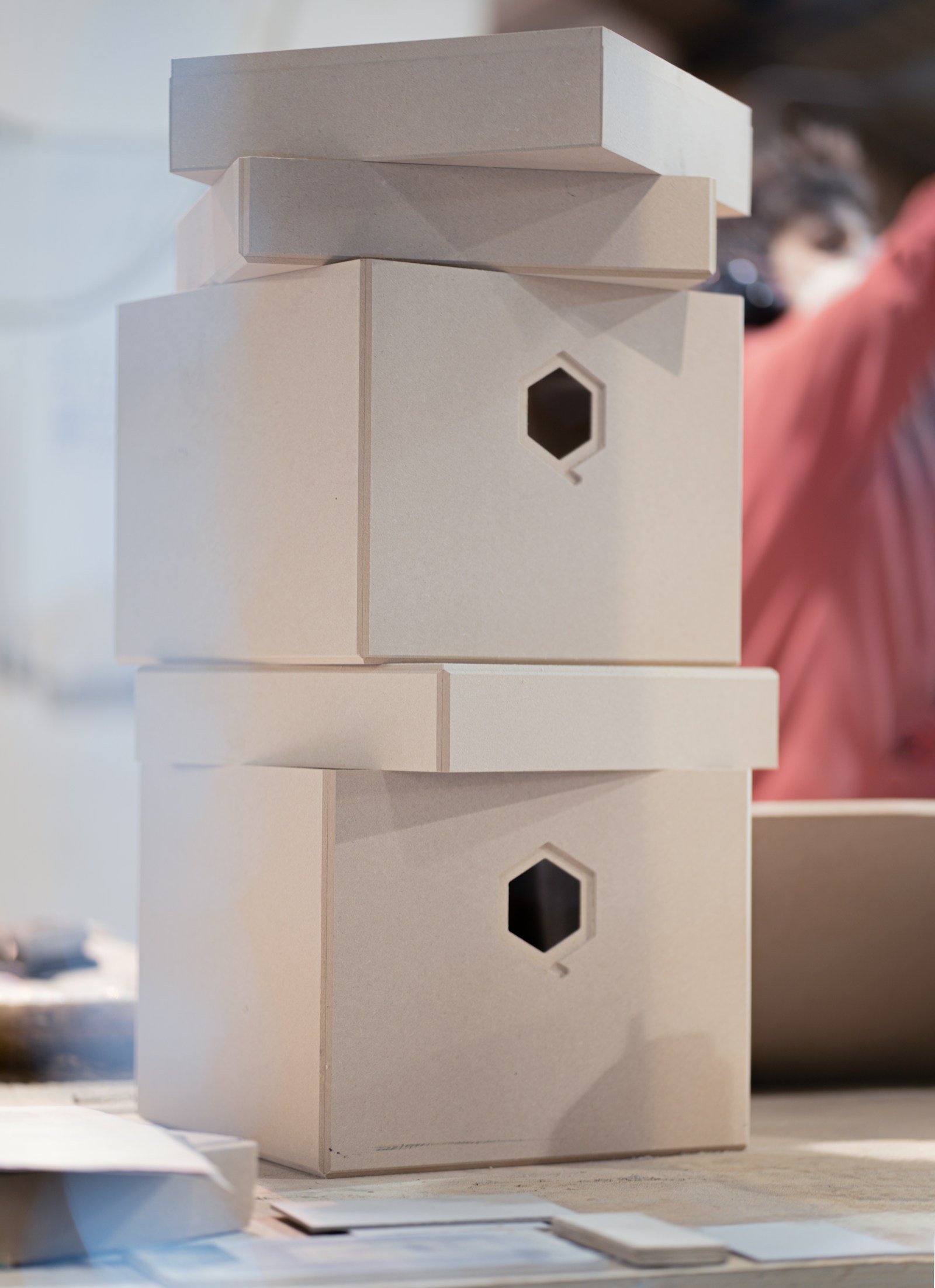
| Kraft corrugated mailer boxes | White corrugated mailer boxes | |
|---|---|---|
| Look and feel | Natural, earthy, artisan | Clean, bright, retail-style |
| Print results | Colors sit darker and warmer; black and one-color logos look sharpest | Accurate brand colors, photos and gradients |
| Inside printing | Great contrast for white or black ink inside | Full-color patterns inside look vivid |
| Cost | Lowest; no bleaching or coating step | Slightly higher per box |
| Best for | Coffee, candles, skincare with a natural story, apparel | Beauty, tech accessories, premium subscription boxes |
If you want the kraft look across more formats, see our kraft boxes range, which covers folding and product boxes in the same recycled-look stock. Brands that mostly ship soft goods and want the lowest shipping weight sometimes pair kraft mailers with poly mailer bags for single-item orders.
Box size drives three things at once: protection, presentation and shipping cost. Sizing starts with the product, not with a stock box list. Measure the length, width and depth of everything that goes inside, including inserts, tissue and cards, then add a small allowance so the lid closes without forcing it.
| Size band | Inside size (inches) | Inside size (cm) | Typical products |
|---|---|---|---|
| Small | 6 × 4 × 2 | 15 × 10 × 5 | Jewelry, lip care, phone accessories |
| Medium | 9 × 6 × 3 | 23 × 15 × 8 | Skincare sets, candles, supplements |
| Large | 12 × 9 × 4 | 30 × 23 × 10 | Apparel, subscription boxes, gift kits |
| Extra large | 14 × 10 × 5 | 36 × 25 × 13 | Shoes, bundles, PR packages |
For a deeper walkthrough of allowances, inserts and multi-SKU ranges, read our mailer box sizes guide.
Corrugated mailer boxes are printed in one of three ways. Flexographic printing applies one to three spot colors directly to the board and is economical for simple logos. Digital printing lays down full-color artwork with no plates, which makes it ideal for short runs from 30 boxes and for designs that change seasonally. Litho-laminated printing prints a coated sheet on an offset press and glues it to the corrugated board, delivering photo-quality results for premium boxes.
Artwork should be supplied as a vector dieline with 1/8 inch (3 mm) bleed, CMYK or Pantone colors and outlined fonts; our guide to custom printed mailer boxes covers file setup in detail, and our design team checks every file before production.
Pro tip: Print inside the lid rather than covering the whole box. Inside printing is where customers look first when they open the package, it costs less than full-coverage outside printing, and it keeps a kraft or white exterior looking clean after a trip through the carrier network.
Bottles and jars roll, so pair E-flute corrugated mailer boxes with a die-cut insert that holds each item upright. White board shows soft pastel brand palettes accurately, while kraft suits clean-beauty brands with a natural positioning.
Glass vessels are heavy for their size. Use B-flute, keep at least 1/2 inch (13 mm) of cushioning on every side, including above the lid, and check that the ECT rating covers the weight of a two- or three-candle set.
Folded garments compress, so shallow 2 to 3 inch (5 to 8 cm) deep mailers keep dimensional weight low. One size usually covers several garment sizes if you base it on your largest common item.
Contents change monthly, so choose one well-sized B-flute box with inside printing and use a little crinkle fill for flexibility. A consistent box is also easier to photograph for marketing.
Corrugated mailer boxes work well as outer packaging for sealed bags and tins. If food touches the box directly, the inner liner must be food-safe; ask for it in writing and follow the labeling guidance published by the relevant regulator in your country.
A well-made mailer is a shipping container in its own right. For most orders you can pack the product, close the tabs, apply a label and hand it to the carrier. Because mailers have no bottom seam, they also hold up better than glued cartons when the parcel lands on a corner.
US carriers bill many parcels by dimensional weight: outside length × width × height in inches divided by a divisor (commonly 139 for retail rates), compared against the actual weight. Canadian carriers do the same in metric, dividing cubic centimeters by a divisor such as 5,000 or 6,000 to get kilograms. In both systems a shallower box can move a parcel into a lower billed weight.
Custom corrugated mailer boxes start from about $0.90 per box with a 30-box minimum, and the per-box price falls steadily as quantity rises. The factors below move the price more than anything else:
| Factor | Effect on price | How to save |
|---|---|---|
| Quantity | Largest effect; unit cost drops sharply from 100 to 500 to 1,000 boxes | Order one size for several SKUs |
| Size | Bigger boxes use more board | Trim depth; size to the product, not the shelf |
| Flute and board grade | B-flute and higher ECT cost more than light E-flute | Match the grade to the real weight |
| Print coverage | One-color logo is cheapest; full-bleed inside and outside costs most | Print inside the lid, keep the outside simple |
| Finish | Aqueous coating is low cost; lamination, foil and spot UV add steps | Use finishes on litho boxes only when they add value |
| Inserts | Die-cut corrugated inserts add tooling and material | Use folded paper or a simple divider where possible |
| Shipping | Can be a large share of the total for bulky boxes | Choose a supplier with free shipping to the USA and Canada |
Our mailer box pricing guide walks through example quotes at different quantities. For a current price on your exact size, request a quote with your inside dimensions and artwork.
Use this step-by-step checklist on the sample or the first corrugated mailer boxes from production. It takes five minutes and catches the problems that are expensive to fix after 1,000 boxes have shipped.
We ship corrugated mailer boxes to brands across both countries with free shipping, and the material decisions are the same on either side of the border. A few practical details differ: units of measure, carrier rules and what has to appear on labels for regulated products.
US brands specify boxes in inches and pounds, and carriers such as UPS, FedEx and USPS apply dimensional pricing to larger parcels. USPS Business publishes size and weight limits for each service, and flat-rate options can favor compact mailers for heavier items. If you ship cosmetics, food or supplements, the labeling on the product itself is governed by federal rules, while the mailer is simply the shipping container and can carry any branding you like.
Canadian brands usually work in centimeters and kilograms, and Canada Post and the major couriers calculate volumetric weight in metric. Consumer product labels in Canada generally need English and French, which affects the retail package rather than the outer mailer. One important exception: CBD and other cannabis products in Canada fall under strict plain-packaging rules, so brands there should not expect branded corrugated mailer boxes for those items; we can still supply plain shipping boxes that meet those requirements.
| United States | Canada | |
|---|---|---|
| Units on the quote | Inches and pounds (we also list cm and kg) | Centimeters and kilograms (we also list inches and lb) |
| Dimensional weight | L × W × H in inches ÷ divisor (often 139) | L × W × H in cm ÷ 5,000 or 6,000 |
| Bilingual labeling | Not required for the shipping box | Not required for the outer box; product labels are usually bilingual |
| CBD packaging | Branded CBD boxes permitted; follow federal and state labeling rules | Cannabis plain-packaging rules apply; no branded CBD mailers |
| Shipping from us | Free shipping to all 50 states | Free shipping to every province and territory |
| Standard turnaround | 10–15 business days after approval | 10–15 business days after approval |
Browse the full range of styles, sizes and finishes on our custom mailer boxes page, where you can also see examples of inside printing and tear-strip closures.
Cardboard is a general term that includes paperboard, the thin solid stock used for cereal boxes. Corrugated mailer boxes are made from corrugated board, which has a fluted layer between two liners. That fluted layer is what makes corrugated board strong enough to ship products without an outer carton.
E-flute is the best all-round choice for most e-commerce mailers because it is thin, folds cleanly and prints well. Move up to B-flute for larger boxes, heavier products or glass, and down to F-flute for small premium boxes where a slim wall matters.
ECT 32 means the board withstood 32 pounds per inch of force in an edge crush test. It is the common baseline grade for single-wall boxes carrying up to about 30 lb (13.6 kg) and is suitable for the majority of corrugated mailer boxes shipped by parcel carriers.
Yes. Mailers are designed as the shipping container. Pack the product, close the tabs, add tape or a sticker over the front flap if you like, and apply the shipping label directly to the box.
Yes. Kraft and white corrugated boxes are accepted in curbside paper recycling across the USA and Canada. Water-based inks and aqueous coatings do not affect recyclability; remove any plastic tape before recycling where your local program asks for it.
Prices start from about $0.90 per box at a 30-box minimum and fall as quantity rises. Size, flute, print coverage, finish and inserts are the main factors. Free shipping to the USA and Canada keeps the landed cost predictable.
No. In Canada, CBD is regulated as cannabis and must follow plain-packaging rules, so branded CBD mailers are not permitted there. In the United States, branded CBD boxes are allowed as long as the product labeling follows federal and state rules.
Our minimum order is 30 boxes, which lets small brands test a design before committing to a larger run. Every order includes free design support and a 2D and 3D mockup within 48 hours.
Get the custom quote starting from our MOQ of 30 boxes to any order volume. There will be no charges for shipping and we ensure the lowest prices with highest quality possible.
Get a custom quote for custom boxes starting from our MOQ of 30 boxes to any order volume. Shipping is free and we ensure the lowest prices with the highest quality possible.
Request instant quote