Free Delivery: 


Our facilities are now open for visits. Please contact your PIC or email us at contact@custommadepackaging.com to request a visit.
Free Delivery:
Home – Blogs – Cosmetic Boxes: 12 Box Styles for Beauty Brands (2026)
 – Blogs
by Custom Made Packaging Team – November 1, 2026 · 15 min read
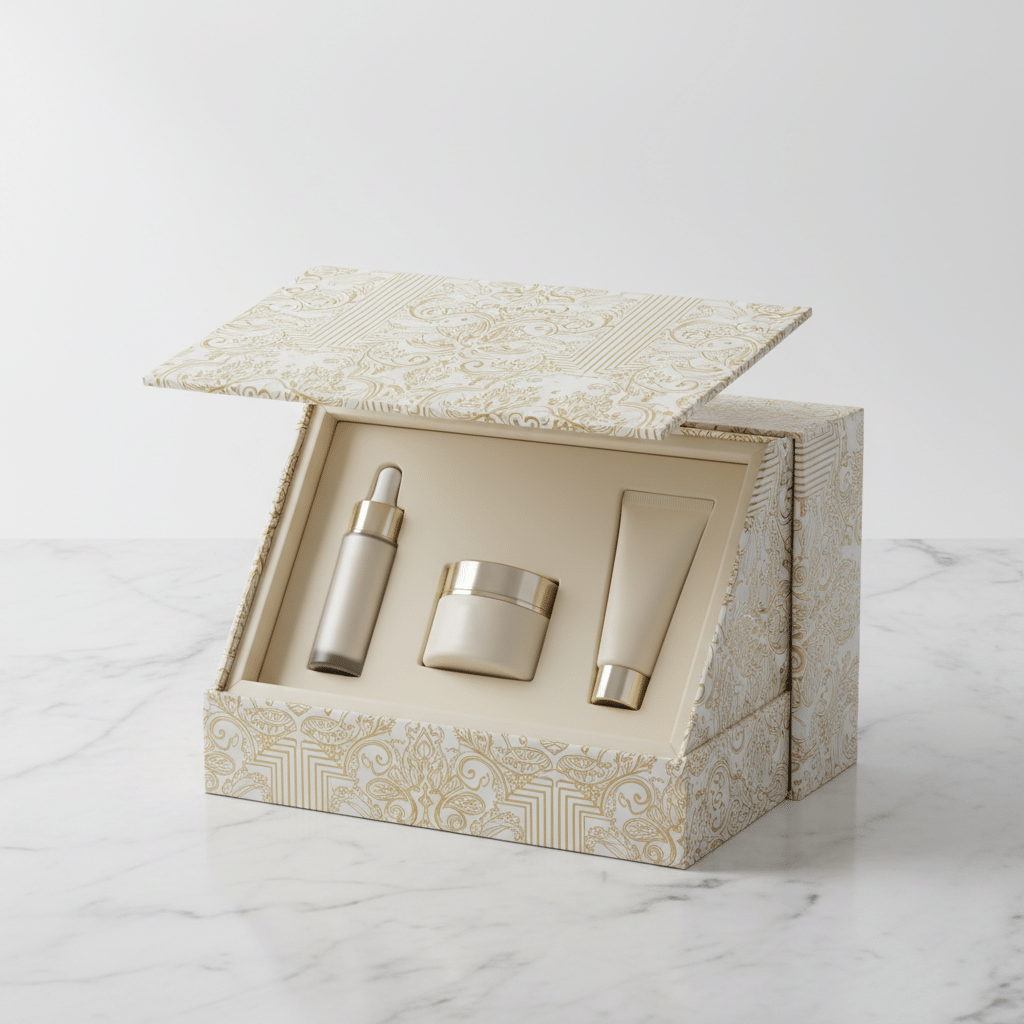
Cosmetic boxes come in a dozen common styles, and the right one depends on three things: what the product is (a lipstick, a palette, a serum or a full gift set), where it will be sold (a retail shelf, your online store or both) and how premium you want the first impression to feel. For most single beauty products, a paperboard tuck end box is the practical default; flat items like palettes and sheet masks suit sleeves and seal end cartons; and launch kits, holiday sets and high-end skincare are where rigid magnetic, drawer and lid-and-base boxes earn their higher price.
This guide compares all 12 styles side by side. You will learn how each one opens and closes, which makeup and skincare products it fits, which board grades and finishes work best, what drives the cost of each style, and the mistakes that most often cost beauty brands a reprint. We also cover what changes when you sell in the United States versus Canada, from net-quantity labeling to bilingual panels.
Whether you are an indie lip brand in Texas launching your first shade range or a skincare company in Ontario planning a retail rollout, the goal is the same: pick a style that protects the product, tells your brand story and fits your budget, then order only as many boxes as you need.
Table of contents: Cosmetic box basics · 12 cosmetic box styles · Style by product · Materials · Finishes · Inserts and windows · Retail vs e-commerce · Checklist · Cost factors · Mistakes to avoid · USA and Canada · How to order · FAQ
Almost every cosmetic box falls into one of two construction families, and knowing which family you are shopping in explains most of the differences in price, look and lead time.
A third family, corrugated board, is mostly used for shipping. Many beauty brands pair a folding carton or rigid box with a printed custom mailer box for e-commerce orders and subscription boxes. If you are weighing the first two families in depth, our comparison of rigid boxes vs folding cartons goes further into strength, cost and sustainability.
| Folding carton | Rigid box | |
|---|---|---|
| Typical material | SBS or kraft paperboard, roughly 12–24 pt | Chipboard around 1/16–1/8 inch (1.5–3 mm), wrapped in paper |
| Ships as | Flat, assembled at packing | Fully assembled |
| Feel | Light, crisp, retail-ready | Heavy, solid, luxury |
| Relative unit cost | Lowest | Several times higher |
| Best for | Single products, high-volume SKUs | Gift sets, PR kits, premium lines |
Here is the quick view of every style, followed by a closer look at how each one works and when to use it.
| Style | Family | Best beauty products | Price level |
|---|---|---|---|
| 1. Reverse tuck end | Folding carton | Serums, foundation, perfume, lipstick | $ |
| 2. Straight tuck end | Folding carton | Tall bottles, display-front cartons | $ |
| 3. Auto-lock bottom | Folding carton | Heavier jars and glass bottles | $–$$ |
| 4. Seal end | Folding carton | Palettes, flat compacts, sheet masks | $ |
| 5. Sleeve and tray | Folding carton | Palettes, brush sets, soaps | $–$$ |
| 6. Window box | Folding carton | Lip gloss, nail polish, colored products | $$ |
| 7. Pillow box | Folding carton | Minis, samples, lip balms, accessories | $ |
| 8. Display box | Folding carton | Countertop lipstick and balm displays | $$ |
| 9. Magnetic closure | Rigid | Skincare sets, fragrance, luxury makeup | $$$ |
| 10. Drawer box | Rigid | Lip kits, brush sets, PR packages | $$$ |
| 11. Lid and base | Rigid | Holiday gift sets, fragrance | $$$ |
| 12. Mailer box | Corrugated | Subscription boxes, launch kits, bundles | $$ |
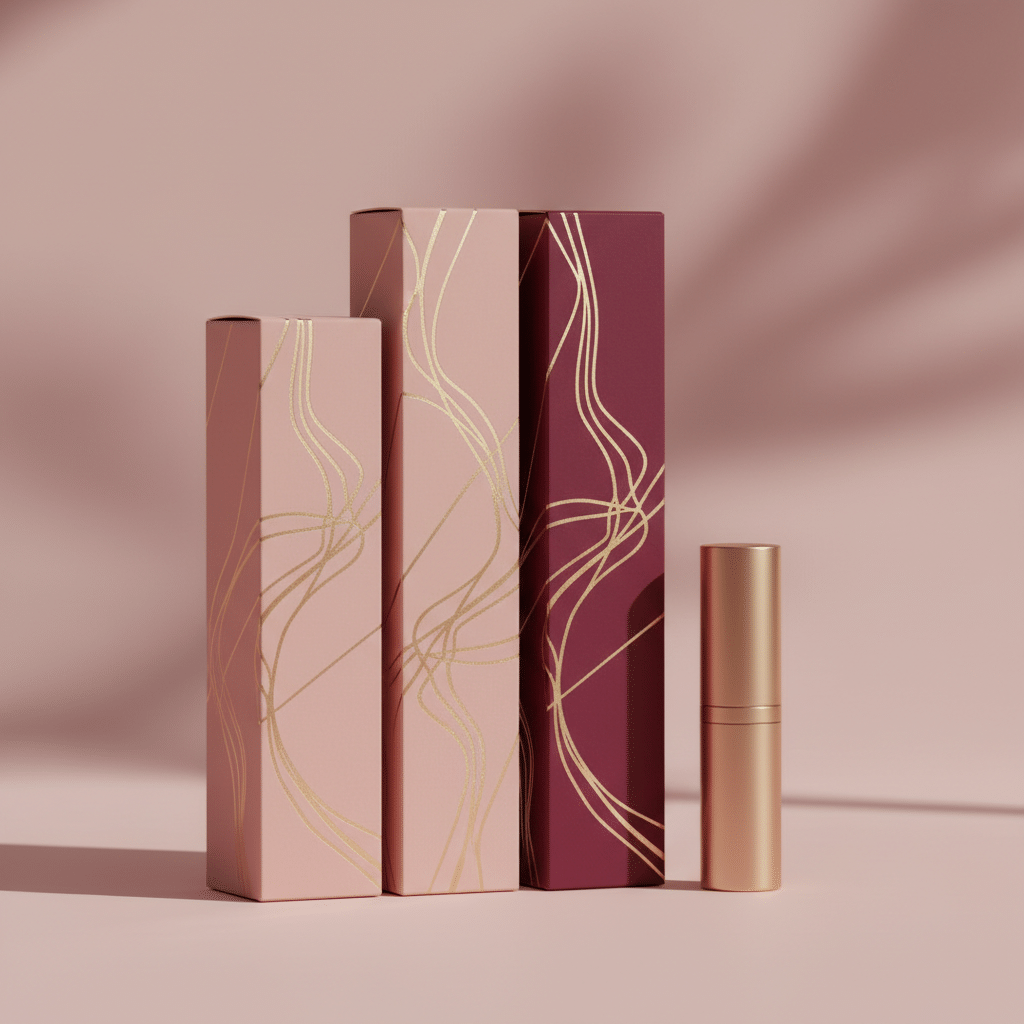
The workhorse of the beauty aisle. The top flap tucks in from the back and the bottom flap tucks in from the front, which keeps the front panel clean for your logo and product name. RTE boxes are quick to assemble, ship flat and suit almost any tall product: serum droppers, foundation bottles, perfume, lipstick and mascara. For a lipstick, a typical inside size is around 1 × 1 × 3.5 inches (2.5 × 2.5 × 8.9 cm), but always size to your actual tube.
Both flaps tuck in from the same side. The result looks tidy when the box is opened from the front and is often chosen when the carton will sit in a display or be opened in front of a customer. Function and cost are close to RTE; the choice is mostly about how the box presents when opened.
The base is pre-glued so it snaps into a locked bottom when you pop the box open, with a tuck flap on top. It holds heavier items securely and speeds up packing. Use it for glass jars of cream, larger perfume bottles, body oils and anything above a few ounces where a tuck bottom might give way.
Seal end cartons close with glued flaps instead of tucks, which makes them tamper-evident and tidy for flat products. Think eyeshadow palettes, pressed powder compacts, sheet mask multipacks and blister-card refills. Adding a tear strip makes them easy to open without scissors.
A printed sleeve slides over an inner tray. It creates a small reveal moment and gives you two print surfaces: the sleeve for branding and claims, the tray for a pattern or message. Sleeves are a favorite for palettes, brush sets and bar soaps. A sleeve can also be added around an existing box to turn a standard carton into a seasonal or limited edition.
A die-cut window, usually backed with a clear film, lets shoppers see the shade or texture before buying. It works best for products whose color sells them: lip gloss, nail polish, tinted balms and bath products. Keep the window away from score lines and leave enough solid board around it so the box stays strong.
Curved ends that push closed give pillow boxes a soft, gift-like shape. They are inexpensive, ship flat and suit minis, samples, lip balms, hair accessories and gift-with-purchase items. Custom pillow boxes start from $0.60 per box.
A countertop display box has a tear-away or fold-back lid that turns the shipping carton into a mini shelf unit holding 6, 12 or 24 units. Salons, boutiques and pharmacies use them for lip balms, lipsticks, nail polish and travel sizes. The back panel often rises above the products as a printed header.
A hinged lid with hidden magnets that closes with a satisfying snap. This is the style people picture when they think of luxury beauty packaging, and it is reusable, which keeps your brand on the vanity long after the product is used. It suits skincare regimens, fragrance and premium makeup sets, usually with a fitted insert. Custom rigid boxes start from $3 per box.
A tray slides out of a rigid sleeve, often with a ribbon pull. The slow reveal makes it a strong choice for lip kits, brush collections and influencer PR packages where the opening moment may be filmed.
A separate lid lifts off a base. Full-depth lids feel the most substantial; shallow lids show off a printed or wrapped base. This classic gift box style works well for holiday sets, fragrance duos and bath and body bundles.
A corrugated mailer with a tuck-front lid is both the shipping box and the presentation box. It is ideal for subscription boxes, launch kits and bundles sold online, and it can be printed inside for an unboxing surprise. Mailer boxes start from $0.90 per box.
If you are not sure where to start, match the box to the product’s shape and weight first, then to your brand position. This table pairs common makeup and skincare products with a sensible first choice and an upgrade option.
| Product | Practical first choice | Premium upgrade | Watch out for |
|---|---|---|---|
| Lipstick, lip gloss | Reverse tuck end | Window box or foil-stamped carton | Tight inside size so the tube does not rattle |
| Mascara, eyeliner | Slim reverse tuck end | Sleeve over a tuck end | Long, narrow boxes need stiffer board |
| Eyeshadow palette, compact | Seal end or sleeve | Rigid book-style or magnetic box | Shallow depth, so check the board does not bow |
| Foundation, serum, toner | Reverse tuck end | Tuck end with a neck insert | Glass needs a snug fit or insert |
| Cream jar | Auto-lock bottom | Lid and base rigid box | Weight on the bottom flap |
| Perfume | Auto-lock or tuck end with insert | Magnetic rigid box | Pump and cap height when measuring |
| Samples and minis | Pillow box | Small drawer box | Space for a sample label |
| Gift sets and regimens | Mailer box with insert | Magnetic or drawer rigid box | Insert design and total weight |
Skincare brands have a few extra considerations around bottle shapes and regimen sets; our cosmetic boxes for skincare guide covers sizing those in detail.
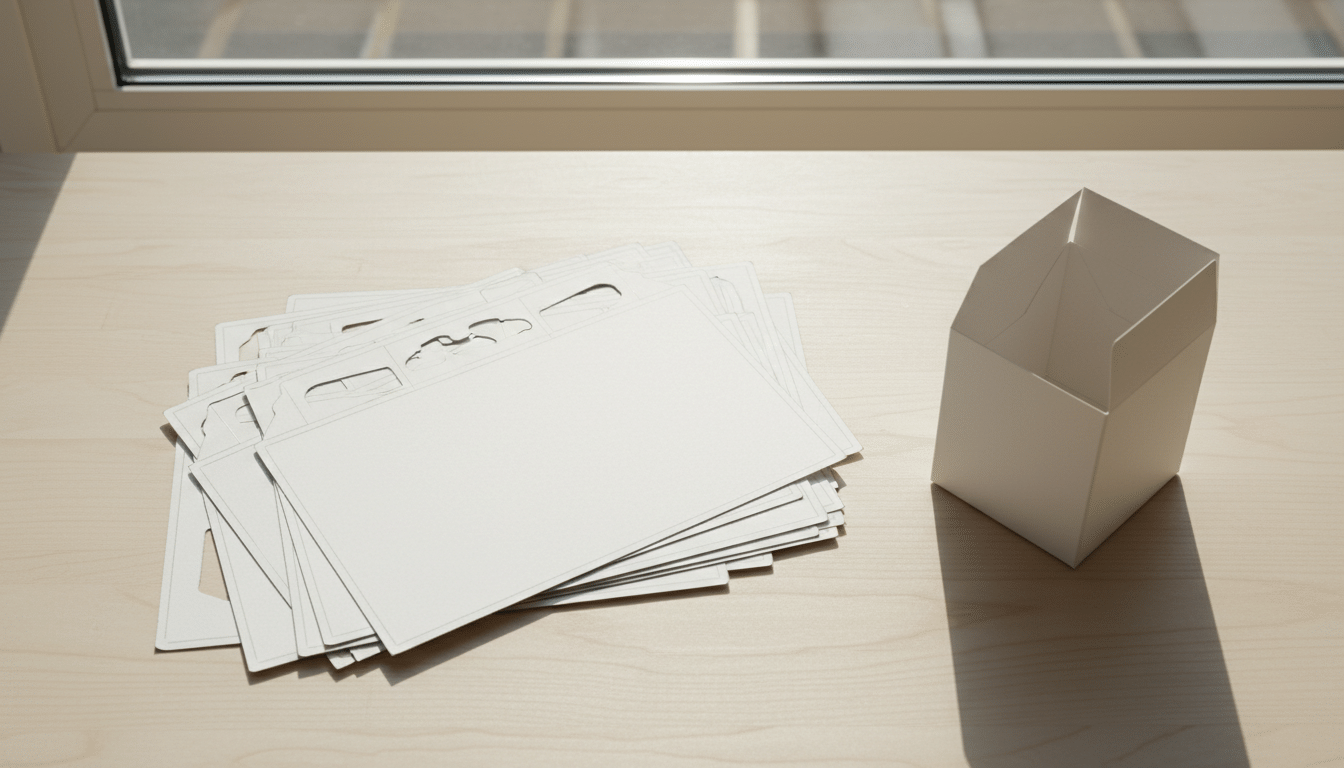
The style decides the shape; the material decides how the box feels, how well it prints and how much it protects. Paperboard thickness is measured in points (pt), where 1 pt equals 1/1000 of an inch.
| Material | Look and feel | Typical use |
|---|---|---|
| SBS (solid bleached sulfate) paperboard, 14–18 pt | Bright white, smooth, sharp print | Lipstick, mascara, serum and most retail cartons |
| Heavier SBS, 20–24 pt | Stiffer, more premium hand-feel | Larger cartons, perfume, heavier glass |
| Kraft paperboard | Natural brown, earthy, eco-forward | Clean beauty, soaps, refills |
| Rigid chipboard, about 1/16–1/8 inch (1.5–3 mm) | Heavy, solid, does not flex | Gift sets, fragrance, PR kits |
| E-flute corrugated | Thin corrugated with good print surface | Mailer boxes, subscription and launch kits |
If sustainability is part of your story, uncoated kraft boxes or recyclable paperboard without plastic film are the simplest choices. Keep in mind that some finishes, such as plastic lamination and film windows, can make recycling harder, so balance the look against your eco claims.
Finishes are where a cosmetic box goes from functional to memorable. You do not need all of them; one or two well-chosen effects usually look more expensive than many.
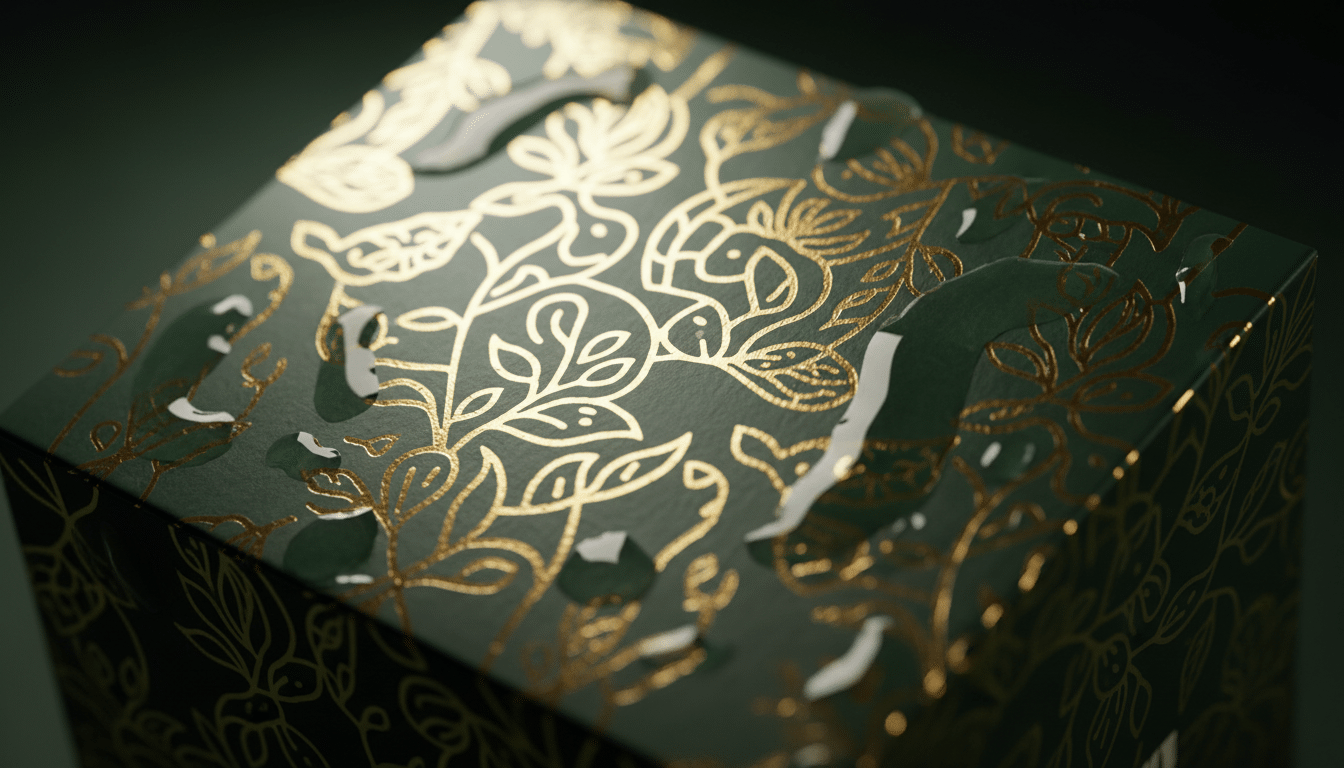
For brand colors that must match exactly across lipstick, palette and mailer, ask for color matching and request a physical proof before your first big run. Screens show colors differently from ink on board, especially pinks, nudes and reds.
Many beauty products are fragile, leak-prone or simply small enough to slide around. A few structural features solve most of those problems:
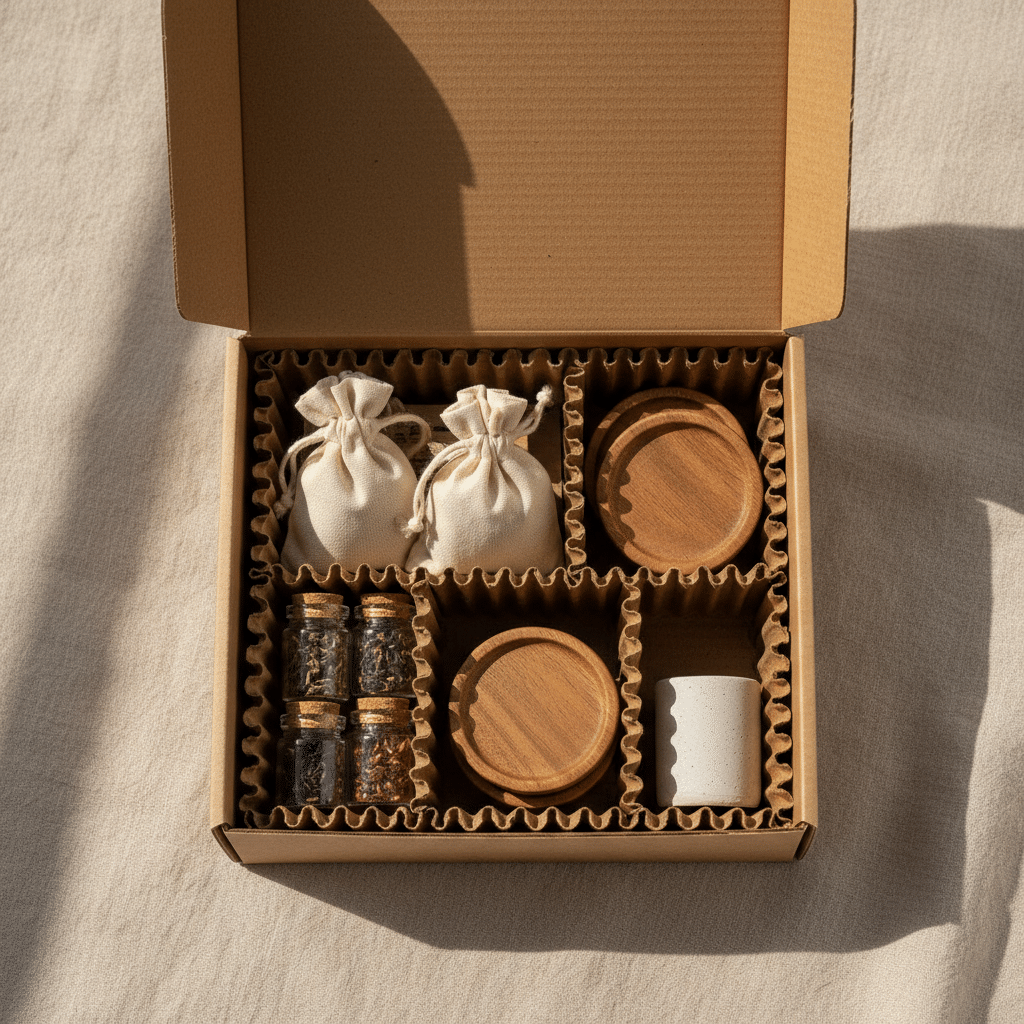
Always size the outer box around the insert rather than the bare product. Our explainer on packaging inserts walks through the options and materials.
The same lipstick may need different packaging depending on where it is sold.
Shelf packaging has a few seconds to win attention. Prioritize a strong front panel, a readable product name and shade, a barcode on a flat side panel and features that suit the fixture: hang tabs for pegs, display boxes for countertops and windows for color products. Retailers may have their own packaging requirements, so ask for any guidelines before finalizing your design.
Online, the box has to survive a parcel network before it delights anyone. Use a snug carton or insert so products do not shift, then ship inside a mailer box sized close to the contents. The unboxing moment replaces the shelf moment, so inside printing, tissue and a thank-you card do more work than a busy front panel. For lightweight, unbreakable items, a poly mailer bag can replace the outer box entirely.
Most growing brands sell in both channels. Design one retail carton that works on a shelf and pair it with a printed mailer for online orders. That keeps your SKU count low while still giving online customers a branded experience.
Pro tip: Build a box family, not a box per product. One reverse tuck end design in two or three sizes, with the shade name and color swatch changed per SKU, covers a whole lipstick or serum line, keeps your shelf presence consistent and lets you reorder quickly. Save rigid boxes for the sets and launches where the extra spend really shows.
Custom cosmetic boxes start from $0.30 per box, but the final unit price depends on the style and the choices you layer on top of it. These are the factors that move the number most:
| Cost factor | Effect on price | How to save |
|---|---|---|
| Box family | Rigid boxes cost several times more than folding cartons | Use rigid only for sets and premium SKUs |
| Size and board thickness | Bigger boxes and heavier board use more material | Size snugly and choose the lightest board that protects |
| Quantity | Unit price falls as quantity rises | Combine shades into one design and order together |
| Special finishes | Each foil, emboss or spot UV adds a step | Pick one hero effect |
| Windows and inserts | Extra materials and assembly | Use paperboard inserts instead of foam where possible |
| Inside printing | Adds a second print side | Print a simple pattern or one message |
| Rush production | Faster turnaround may cost more | Plan around the standard 10–15 business days |
For worked examples and budget ranges, see our full guide on how much cosmetic boxes cost. Shipping is free to anywhere in the USA and Canada, so you do not need to add freight to your packaging budget.
We make custom cosmetic boxes for beauty brands across both countries, with free shipping to the USA and Canada. The box styles are the same on either side of the border, but the label panels are not, so plan your artwork for each market you sell in.
Cosmetics sold in the US fall under FDA oversight and federal labeling rules. In general terms, the outer box typically needs a statement of identity, the net quantity of contents on the principal display panel in both US customary and metric units (for example, 1 fl oz / 30 mL or 0.12 oz / 3.5 g), an ingredient declaration, the name and place of business of the manufacturer, packer or distributor, and any required warnings. Federal requirements have been updated in recent years, so confirm the current rules with a regulatory specialist before printing. For online sales, shipping costs with UPS, FedEx and USPS are often based on dimensional weight in inches and pounds, which is another reason to keep cartons and mailers compact.
Cosmetics in Canada are overseen by Health Canada. Most mandatory consumer label information must appear in both English and French, and net quantity is generally shown in metric units. Ingredient listings and any required warnings also need space. Bilingual text can nearly double the copy on a small box, so slim styles like lipstick and mascara cartons may need a slightly larger size, a smaller type size within legal limits, or an outer sleeve. Canadian carriers usually calculate volumetric weight in centimeters and kilograms, so give your dimensions in metric if that is how your team ships. Check current federal requirements before you finalize artwork.
| What matters | United States | Canada |
|---|---|---|
| Regulator (general) | FDA | Health Canada |
| Label language | English | Most mandatory information in English and French |
| Net quantity units | US customary and metric (oz and g, fl oz and mL) | Metric (g, mL) |
| Design impact | Standard panel layout | More copy, so plan larger panels or a sleeve |
| Shipping measurement | Dimensional weight in inches and lb | Volumetric weight in cm and kg |
| Delivery from us | Free shipping | Free shipping |
Selling mainly in Canada? Our Canadian cosmetic boxes guide covers bilingual layouts in more depth.
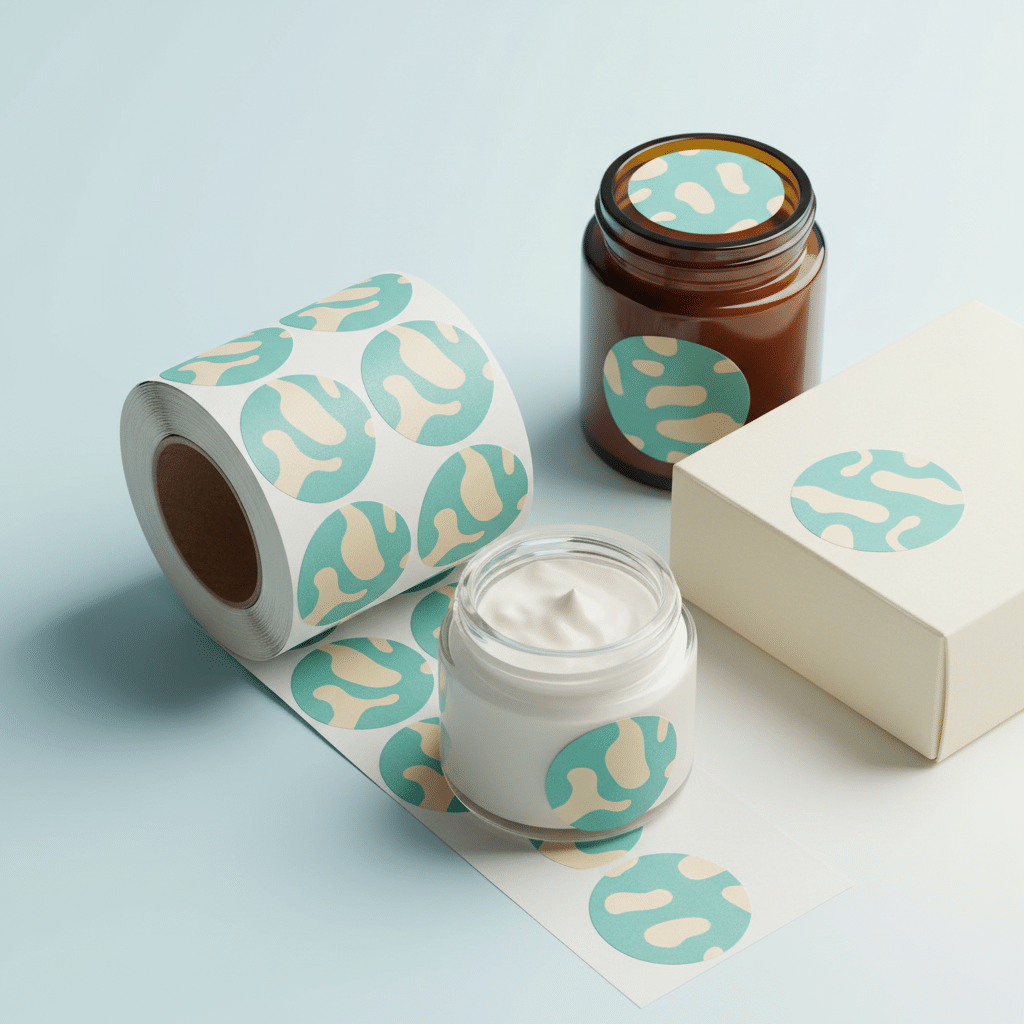
Browse every option on our custom cosmetic boxes page, or see custom product boxes for other retail cartons and custom labels for jars and bottles.
The reverse tuck end folding carton is the most widely used cosmetic box. It is inexpensive, ships flat, assembles quickly and keeps the front panel clean for branding, which is why it is used for lipstick, mascara, foundation and serum.
A rigid magnetic closure or drawer box with a fitted insert is the most popular choice for premium gift sets. If budget matters more, a printed mailer box with a paperboard insert gives a strong unboxing experience at a lower cost.
Most retail cosmetic boxes are made from SBS paperboard, usually around 14–24 pt, or kraft paperboard for a natural look. Luxury sets use rigid chipboard wrapped in printed paper, and shipping boxes use corrugated board such as E-flute.
With Custom Made Packaging, the minimum order is 30 boxes, which makes custom packaging realistic for new and small beauty brands. Unit prices fall as quantities rise, so many brands start small and scale up once a design is proven.
In general, US cosmetic packaging shows the product identity, net quantity in US customary and metric units, ingredients, the name and place of business of the responsible company and any required warnings. Rules have been updated in recent years, so check current FDA guidance before printing.
Yes, in most cases. Most mandatory consumer label information on cosmetics sold in Canada must appear in both English and French. Plan extra panel space for the second language and confirm details against current Health Canada requirements.
You receive a digital mockup within 48 hours of ordering. After you approve the design, standard production takes 10–15 business days and rush production takes 8–12 business days, with free shipping to the USA and Canada.
They are worth it when presentation drives the sale: gift sets, fragrance, luxury skincare and PR kits. For everyday single products, a well-printed folding carton with one premium finish usually gives a better return.
Get the custom quote starting from our MOQ of 30 boxes to any order volume. There will be no charges for shipping and we ensure the lowest prices with highest quality possible.