Free Delivery: 


Our facilities are now open for visits. Please contact your PIC or email us at contact@custommadepackaging.com to request a visit.
Free Delivery:
Home – Blogs – Mailer Boxes in the USA: 2026 E-commerce Buyer’s Guide
 – Blogs
by Custom Made Packaging Team – November 1, 2026 · 17 min read
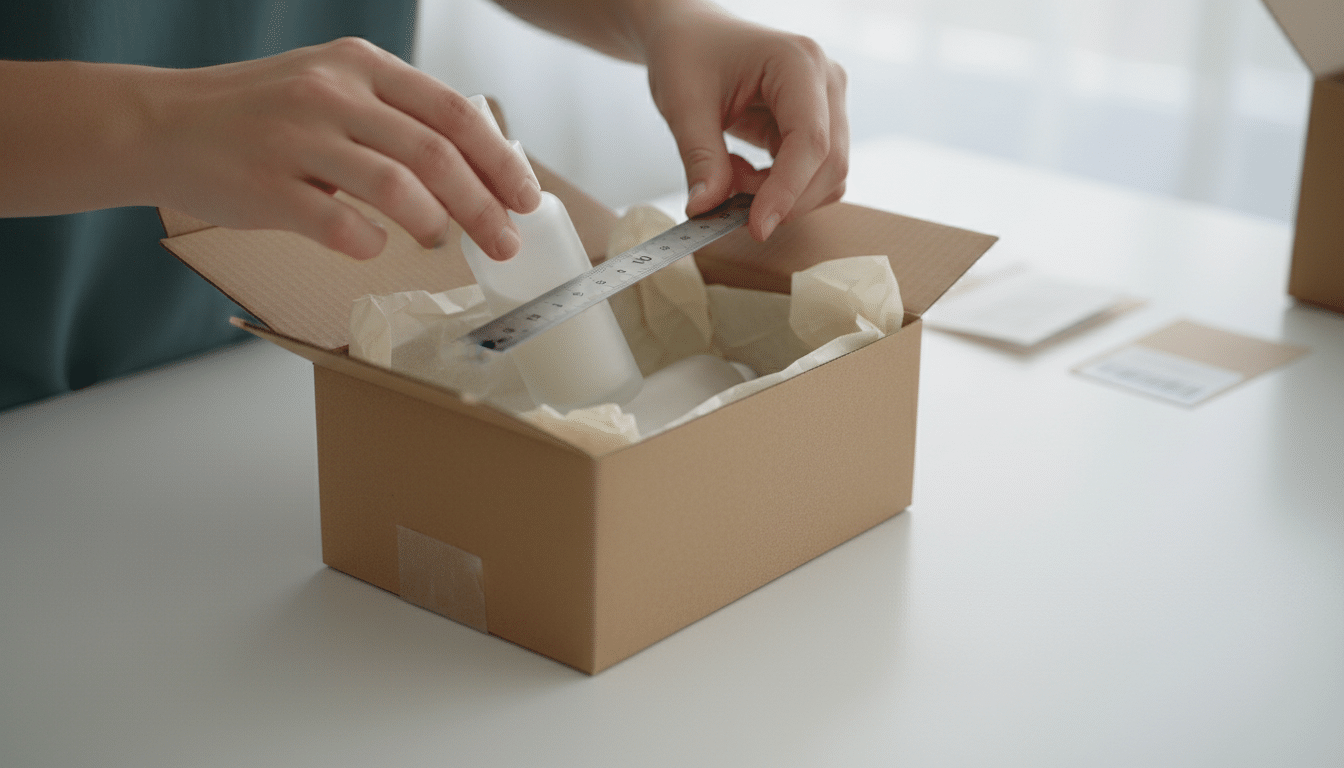
Mailer boxes are the go-to shipping package for e-commerce brands in the USA because one box does two jobs: it protects products in the mail and it delivers a branded unboxing moment without an extra outer carton. If you are buying them for the first time, the decisions that matter most are the box style, the corrugated board, the print method, the inside dimensions and how the box will be billed by USPS, UPS or FedEx.
This buyer’s guide walks through each of those decisions in plain language. You will learn which mailer box styles exist and when to use them, how flute and strength ratings work, which printing method suits your order size, how dimensional weight affects your shipping bill, what drives price, and a step-by-step checklist you can follow before you request a quote. Whether you run a Shopify store in Texas, a subscription service in Ohio or a growing brand that also ships to customers in Canada, the same principles apply.
We make custom mailer boxes for small and mid-size businesses across the United States and Canada, so the advice below is based on the questions buyers ask us most often before their first order.
Table of contents: What are mailer boxes? · Mailer box styles · Board, flutes and strength · Printing methods · Finishes, inside printing and inserts · Shipping with USPS, UPS and FedEx · Sustainable mailer boxes · Mailer boxes by industry · Cost and pricing factors · Buying checklist · Common mistakes to avoid · USA and Canada · How to order · FAQ
A mailer box is a one-piece folding box made from corrugated cardboard, with an attached hinged lid that tucks or locks closed. It is sturdy enough to travel through the postal and courier networks on its own, yet it looks and opens like a retail gift box. That combination is why mailer boxes have become the default package for direct-to-consumer brands, subscription companies and online gift shops.
If your products are soft and unbreakable, such as T-shirts, poly mailer bags can be cheaper and lighter. For anything fragile, premium or giftable, a mailer box is usually the better buy.
“Mailer box” covers several related structures. They differ in how the lid closes, how strong the walls are and how they feel when opened. Knowing the names helps you compare quotes accurately.
| Style | How it closes | Best for |
|---|---|---|
| Roll end tuck front (RETF) | Lid folds over and tucks into the front; double-wall rolled sides lock the box | Most e-commerce products, subscription boxes, gift sets |
| Roll end tuck top with dust flaps | Tuck lid plus inner flaps that keep dust and light out | Cosmetics, apparel, products that need a cleaner seal |
| Tuck top mailer (front tuck) | Simple tuck lid, single-wall sides | Lightweight items, budget-friendly runs |
| Mailer with tear strip | Tuck lid plus a tear-open zipper strip | Tamper evidence, subscription boxes, returns-friendly shipping |
| Double-locking or cherry-lock mailer | Side tabs lock the lid in place | Heavier products, boxes that travel long distances |
For most first-time buyers, the roll end tuck front is the safe choice: it is self-locking, has rigid double walls and gives the familiar “lift the lid” reveal. Choose a tear strip if you want customers to see clearly that a box has not been opened, or a locking style if your products are on the heavy side.
Mailer boxes are only one of more than 100 box styles available, so if a mailer does not suit your product, ask about product boxes, rigid boxes or poly mailers instead.
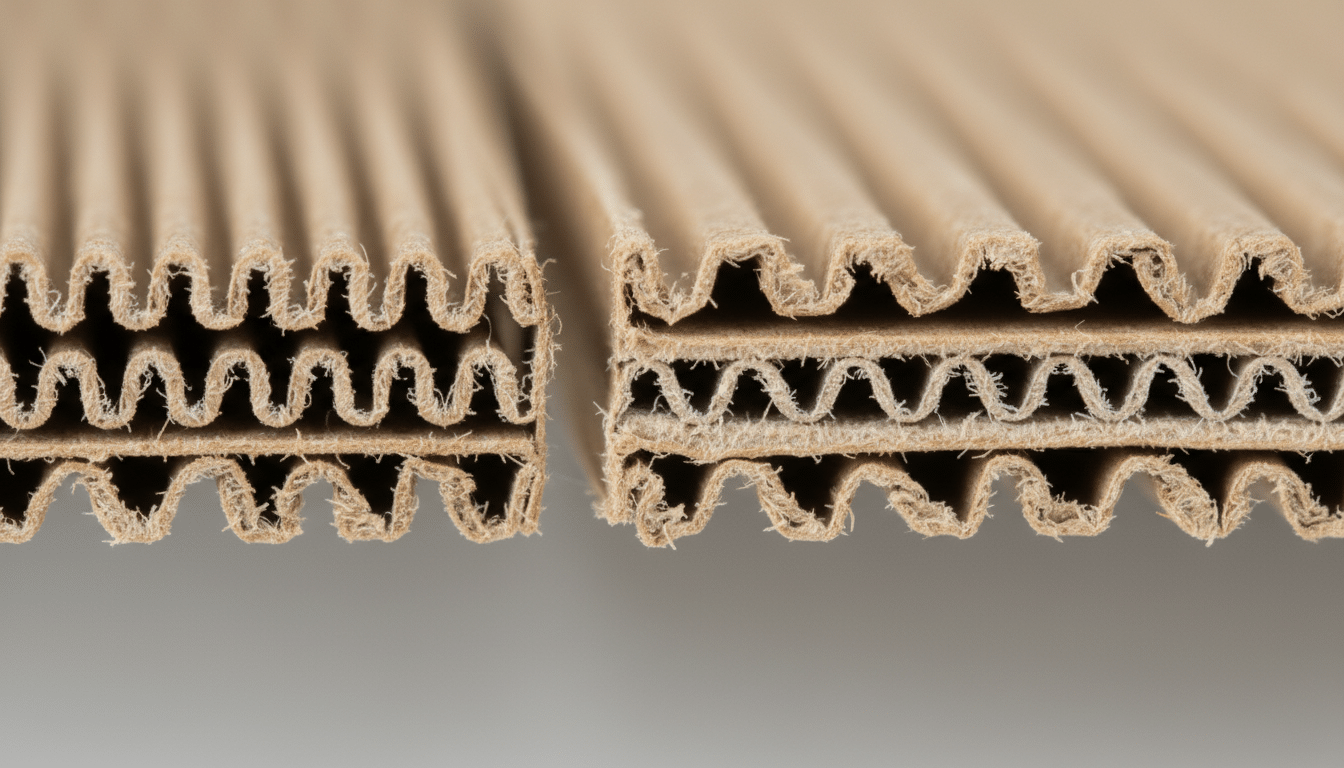
Corrugated cardboard has three layers: a flat outer liner, a wavy middle layer called the flute and a flat inner liner. The size of that flute decides how thick, strong and printable the board is. For mailer boxes, three flute profiles cover almost every need.
| Flute | Approx. thickness | Strengths | Typical mailer use |
|---|---|---|---|
| F-flute | About 1/32 in (0.8 mm) | Very thin, crisp folds, premium feel | Small, light items such as jewelry or cosmetics minis |
| E-flute | About 1/16 in (1.6 mm) | Smooth print surface, good protection for its weight | Most small and medium mailers up to a few pounds |
| B-flute | About 1/8 in (3 mm) | Higher crush and puncture resistance | Large mailers, heavier products, glass and ceramics |
You may see board described with a rating such as 32 ECT. ECT stands for Edge Crush Test, which measures how much pressure the board can take on its edge before it buckles, and it is a good predictor of stacking strength. Burst (Mullen) ratings, such as 200#, measure how much force it takes to puncture the board. Most single-wall e-commerce mailers use a standard board grade; you only need a higher rating if boxes are stacked heavily in storage or the contents are dense and heavy.
How your box is printed affects price, color quality and minimum order size. Suppliers use one of three main methods for corrugated mailers, and many will recommend the right one based on your quantity and artwork.
| Method | How it works | Strengths | Best for |
|---|---|---|---|
| Digital printing | Artwork printed directly onto the board from a digital file | No printing plates, good color, cost-effective at low volumes | Short runs, test launches, frequent design changes |
| Offset (litho-laminated) | Artwork printed on paper, then laminated onto corrugated board | Highest detail and color accuracy, photographic images | Large runs, premium brands, image-heavy designs |
| Flexographic | Rubber plates print directly onto the board | Economical for simple designs at high volumes | One- or two-color logos, very large orders |
For most small and mid-size businesses ordering a few hundred to a few thousand boxes, digital printing gives the best balance of quality and cost. It also makes it easy to update designs between orders, which is useful when you are still refining your brand or launching seasonal editions.
Design files for print should be built in CMYK, with any exact brand colors specified as Pantone (PMS) references so they can be matched as closely as possible. Supply vector logos, images at 300 dpi at actual print size, and at least 1/8 inch (3 mm) of bleed around the edges of the dieline. If you need help with layout, a dieline template shows exactly where each panel, fold and glue area sits, and our team offers free design support on every order.
Once the structure and board are set, finishing details are where a plain shipper becomes a memorable brand experience. You do not need all of them. Pick one or two that match your brand and budget.
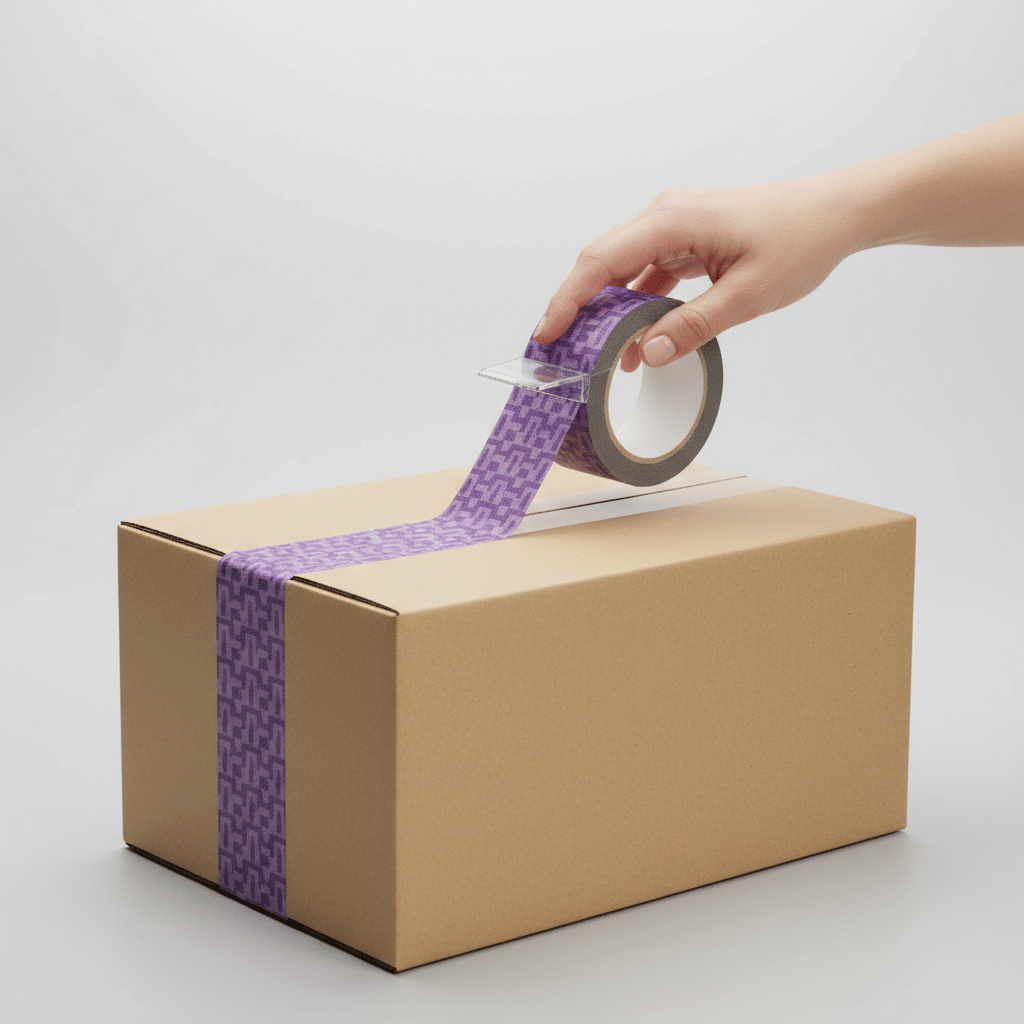
Small accessories can carry your brand further without reprinting the box. Custom branded tape seals the box and signals your brand on the doorstep, while custom labels and stickers let you seal tissue paper, mark limited editions or label different product variants inside one box design.
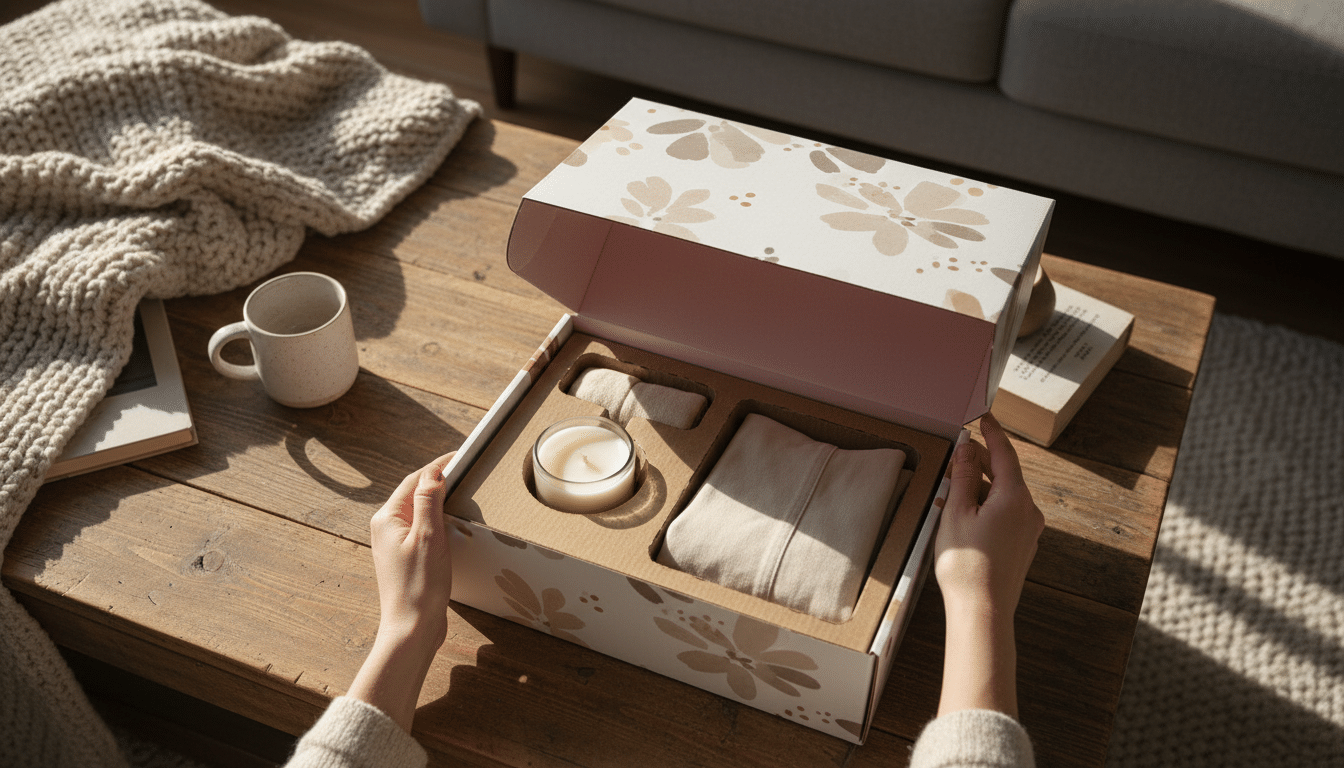
An insert is a die-cut piece of cardboard or paperboard that holds each item in a fixed position. Inserts stop bottles from tipping, keep sets organized and make the unboxing look deliberate. Size the mailer around the insert rather than the bare product. Our guide to packaging inserts explains the main options.
In the United States, the box you choose has a direct effect on your shipping bill. UPS and FedEx bill many parcels by dimensional weight, which is based on the outside size of the box rather than its actual weight. For their domestic daily rates, the common formula is length × width × height in inches divided by 139. If that number is higher than the real weight, you pay for the dimensional weight, rounded up to the next pound. USPS also applies dimensional pricing to larger parcels, generally those over one cubic foot (1,728 cubic inches), so check current rules for the service you use.
| Outside size (inches) | Outside size (cm) | Dimensional weight (÷139) | Billed weight for a 1 lb (0.45 kg) product |
|---|---|---|---|
| 12 × 10 × 6 | 30.5 × 25.4 × 15.2 | about 5.2 lb | 6 lb |
| 12 × 10 × 4 | 30.5 × 25.4 × 10.2 | about 3.5 lb | 4 lb |
| 10 × 8 × 4 | 25.4 × 20.3 × 10.2 | about 2.3 lb | 3 lb |
| 9 × 6 × 3 | 22.9 × 15.2 × 7.6 | about 1.2 lb | 2 lb |
The pattern is clear: a well-fitted, shallower mailer often drops a parcel into a lower billed weight. Your carrier contract, negotiated divisor and zones will change the exact numbers, but the principle holds for almost every e-commerce shipper. Our mailer box sizes guide shows how to measure products and how much space to leave for tissue, void fill or inserts.
Many US shoppers now expect packaging they can recycle easily. Corrugated mailers are a strong starting point because cardboard is one of the most widely recycled packaging materials in North America. To keep a box easy to recycle, avoid permanently attaching plastic windows or foam, and keep heavy plastic lamination to a minimum where you can.
Several US states and Canadian provinces have introduced extended producer responsibility (EPR) programs for packaging, which can make brands responsible for the packaging they put on the market. Requirements and timelines differ by jurisdiction, so check the current rules where you sell, especially as your volumes grow.
The right specification depends on what you sell. These are sensible starting points for common US and Canadian e-commerce categories; your supplier can fine-tune them after seeing your products.
| Industry | Suggested board | Useful features |
|---|---|---|
| Apparel and accessories | E-flute, white or kraft | Shallow depth, tissue wrap, inside print, branded stickers |
| Cosmetics and skincare | E-flute or F-flute, white | Insert to hold bottles upright, dust flaps, foil logo |
| Candles and home fragrance | B-flute or E-flute with insert | Cushioning on all sides, inner candle box, care card |
| Supplements and wellness | E-flute, white | Insert for jars, tear strip for tamper evidence |
| Coffee and specialty food | E-flute, kraft | Room for bags and tins, food-safe inner packaging |
| Subscription boxes | E-flute, white | One standard size, bold inside print, tear strip |
| Jewelry | F-flute or E-flute | Small footprint, inner gift box or pouch, foil accents |
Products that sit in their own retail cartons inside the mailer, such as custom product boxes or cosmetic boxes, should be measured as cartons, not as bare bottles or jars.
Custom mailer boxes from Custom Made Packaging start from $0.90 per box, with a minimum order of 30 boxes. Your actual unit price depends on the specification and quantity. For worked examples and price ranges, see our full guide on how much mailer boxes cost; here are the factors that move the price most.
| Cost factor | Effect on price | How to save |
|---|---|---|
| Quantity | Unit price falls as quantity rises because setup is spread over more boxes | Order a realistic quantity for 2 to 3 months instead of the bare minimum |
| Box size | Larger boxes use more board and cost more to make and ship | Size to the product plus a small allowance |
| Board grade | B-flute and specialty liners cost more than standard E-flute | Use the lightest board that protects your product |
| Print coverage | Full-color, full-coverage and inside printing add cost | Focus print where customers look first, such as the lid and inside |
| Finishes | Foil, spot UV and embossing add steps | Choose one standout finish instead of several |
| Inserts | Custom inserts add material and assembly time | Use inserts only where products would move or break |
| Turnaround | Rush production can cost more | Plan reorders before stock runs low |
Remember to compare the total landed cost, not only the box price. A slightly more expensive box that is smaller, lighter or better protected can save more on shipping and damaged-order replacements than it costs.
Use this checklist before you request a quote. It covers the details suppliers need and the decisions that most often cause delays when they are left until later.
Pro tip: Put your most important brand moment inside the lid. Customers often see the outside of a mailer for only a second on the doorstep, but they look at the inside while they unpack, photograph and share their order. A simple inside print can do more for your brand than an expensive outside finish.
We ship custom mailer boxes free to businesses anywhere in the United States and Canada. The box itself works the same in both countries, but units, carriers and labeling expectations differ, so plan for the market you ship to most.
US brands usually specify boxes in inches and pounds, and their shipping costs are shaped by USPS, UPS and FedEx rules, including dimensional weight. If your mailer box is also the retail package for a consumer product, rather than just a shipper around it, the product label generally needs a net quantity statement in both US customary and metric units, and some categories, such as cosmetics, food and supplements, have additional FDA requirements. When in doubt, check the current rules for your category.
Canadian carriers such as Canada Post and Purolator, as well as couriers operating in Canada, typically calculate volumetric weight in metric: length × width × height in centimeters divided by a carrier-specific divisor, often 5,000 or 6,000, and compared with the actual weight in kilograms. For example, a 30 × 25 × 10 cm box divided by 5,000 gives a volumetric weight of 1.5 kg. If your box carries mandatory consumer product information, most of it must appear in both English and French. Our guide to custom packaging in Canada covers this in more detail.
| What matters | United States | Canada |
|---|---|---|
| Common units | Inches and pounds | Centimeters and kilograms (inches still widely understood) |
| Main carriers | USPS, UPS, FedEx | Canada Post, Purolator, UPS, FedEx and regional couriers |
| Dimensional weight | L × W × H (in) ÷ 139 is common for UPS and FedEx daily rates | L × W × H (cm) ÷ 5,000 or 6,000 is common, varies by carrier |
| Language on consumer packaging | English | Most mandatory information in English and French |
| Net quantity on retail packaging | US customary and metric units | Metric units required |
| Box delivery from us | Free shipping | Free shipping |
Have a question first? Contact our team and we will help you choose the right style, board and size for your products.
A shipping box, often called a regular slotted carton, is a plain brown box sealed with tape and usually opened by cutting. A mailer box has an attached hinged lid that tucks or locks closed and is designed to be printed and opened like a gift. Mailer boxes combine shipping protection with a branded unboxing experience.
Yes. Corrugated mailer boxes are built to travel through US postal and courier networks without an outer carton. Use E-flute for most light and medium products and B-flute or a locking style for heavier or fragile items, and add inserts or cushioning where products could move.
Keep the outside dimensions as small as your product allows, because UPS and FedEx often bill by dimensional weight and USPS applies dimensional pricing to larger parcels. Compare billed weights across carriers with a packed sample and standardize on a few box sizes so you can negotiate better rates.
Custom Made Packaging offers custom mailer boxes from a minimum order of 30 boxes, starting from $0.90 per box. That makes it practical to test a new design or launch a product without committing to thousands of units.
Yes. Inside printing is available for mailer boxes and is one of the most effective ways to create a memorable unboxing moment. Many brands print a pattern, a thank-you message or their social media handle inside the lid.
Corrugated cardboard mailers are accepted in most curbside recycling programs in the United States and Canada. To keep them easy to recycle, avoid permanently attached plastic parts and foam, and choose paper-based inserts where possible.
A plain shipping mailer generally does not, but if the box carries mandatory consumer product information, most of that information must appear in both English and French. Check the current rules for your product category before printing.
After you approve your design, standard production takes 10–15 business days and rush production takes 8–12 business days. Your 2D and 3D mockup arrives within 48 hours of your order, and shipping is free to the USA and Canada.
Get the custom quote starting from our MOQ of 30 boxes to any order volume. There will be no charges for shipping and we ensure the lowest prices with highest quality possible.