Free Delivery: 


Our facilities are now open for visits. Please contact your PIC or email us at contact@custommadepackaging.com to request a visit.
Free Delivery:
Home – Blogs – Custom Packaging in Canada: 2026 Guide for Brands
 – Blogs
by Custom Made Packaging Team – October 30, 2026 · 14 min read
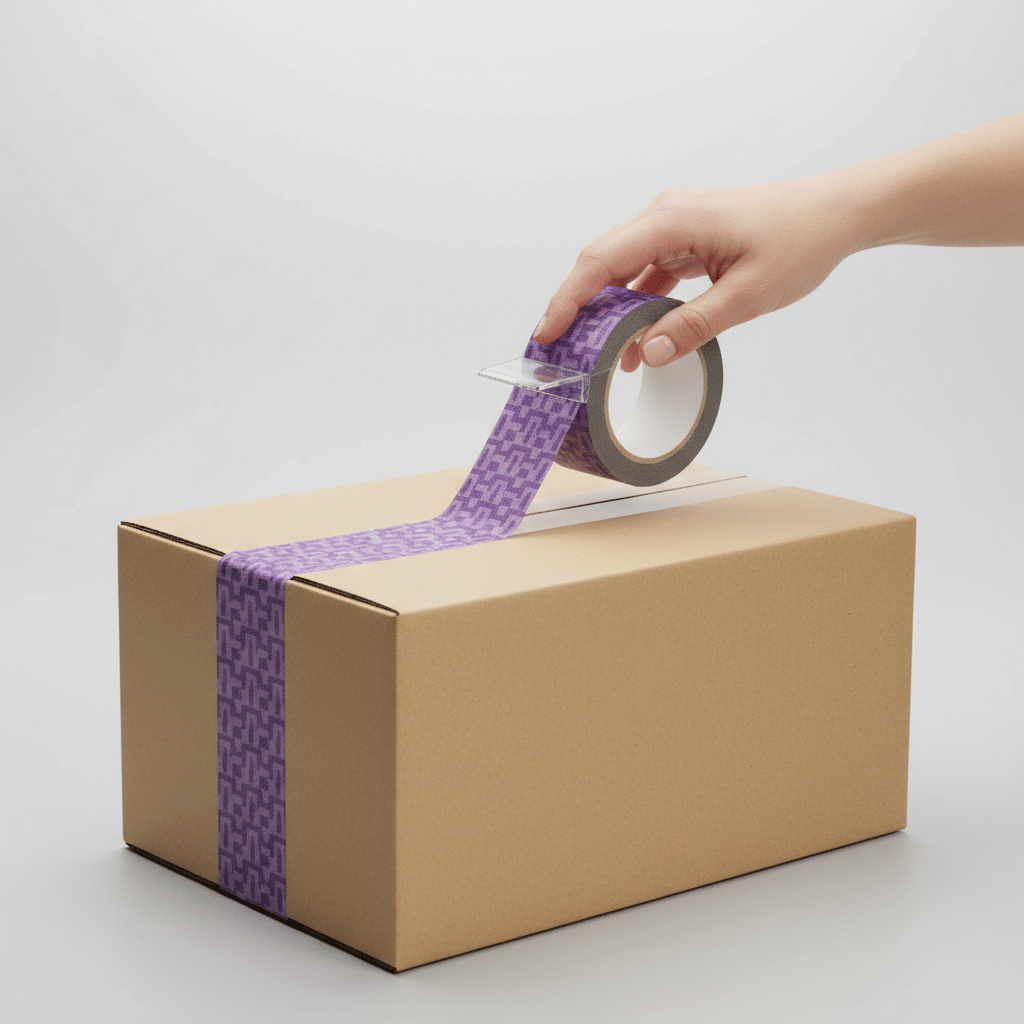
Custom packaging in Canada works the same way as anywhere else at its core: you choose a box style, material, size and print that fit your product and brand. What makes it different is the detail around it. Canadian packaging usually needs bilingual English and French label information, net quantities in metric units, sizing that works with metric volumetric weight, and a plan for provincial recycling programs. Get those right and your packaging protects products, looks great on the shelf or doorstep, and stays compliant from Vancouver to Halifax.
This guide is written for small and mid-size Canadian businesses, and for US brands that sell into Canada. You will learn which packaging types Canadian brands use most, how to choose materials and board grades, what bilingual labelling means for your artwork, how to size boxes in centimeters and inches, how shipping and volumetric weight affect your costs, what drives the price of custom boxes, and how to order with a 30-box minimum and free shipping anywhere in Canada and the USA.
If you are new to branded packaging in general, our custom packaging for small business guide covers the basics. This article goes deeper into what is specific to the Canadian market.
Table of contents: What custom packaging means in Canada · Packaging types · Materials and board grades · Bilingual labelling · Metric and imperial sizing · Shipping across Canada · Sustainability and recycling · Ideas by industry · Cost · USA vs Canada · Checklist · Mistakes to avoid · How to order · FAQ
Custom packaging is any box, bag, label or accessory made to your exact size and printed with your own design, instead of a plain stock box from a warehouse shelf. For a Canadian business it usually does three jobs at once:
The good news is that you do not need huge volumes to get started. Short-run digital and offset printing means a small brand can order a few dozen branded boxes, test them with real customers, and scale up once the design is proven.
There are more than 100 box styles, but a handful cover the needs of most small and mid-size brands. Here is how they compare. For a deeper breakdown, see our guide to 12 types of custom packaging.
| Packaging type | Best for | Why Canadian brands choose it | Starting price |
|---|---|---|---|
| Mailer boxes | E-commerce, subscription boxes, PR kits | Strong corrugated board survives long-distance shipping; printable inside and out | $0.90 |
| Product boxes (folding cartons) | Retail shelves, cosmetics, supplements, small goods | Plenty of flat panels for bilingual text and barcodes | $0.80 |
| Kraft boxes | Eco-focused brands, food, handmade goods | Natural look that signals recyclability | $0.50 |
| Rigid boxes | Luxury gifts, jewelry, premium sets | Thick board and high-end finishes | $3.00 |
| Cosmetic boxes | Skincare, makeup, fragrance | Compact cartons sized to bottles and jars | $0.30 |
| Poly mailer bags | Apparel and soft goods | Very light, which keeps postage low | $0.30 |
| Food-safe packaging | Bakeries, cafes, confectionery | Food-contact materials for direct packing | $0.50 |
Most online sellers start with custom mailer boxes for shipping and custom product boxes for retail. Beauty brands often add cosmetic boxes, and apparel brands frequently switch to poly mailer bags to save on postage.
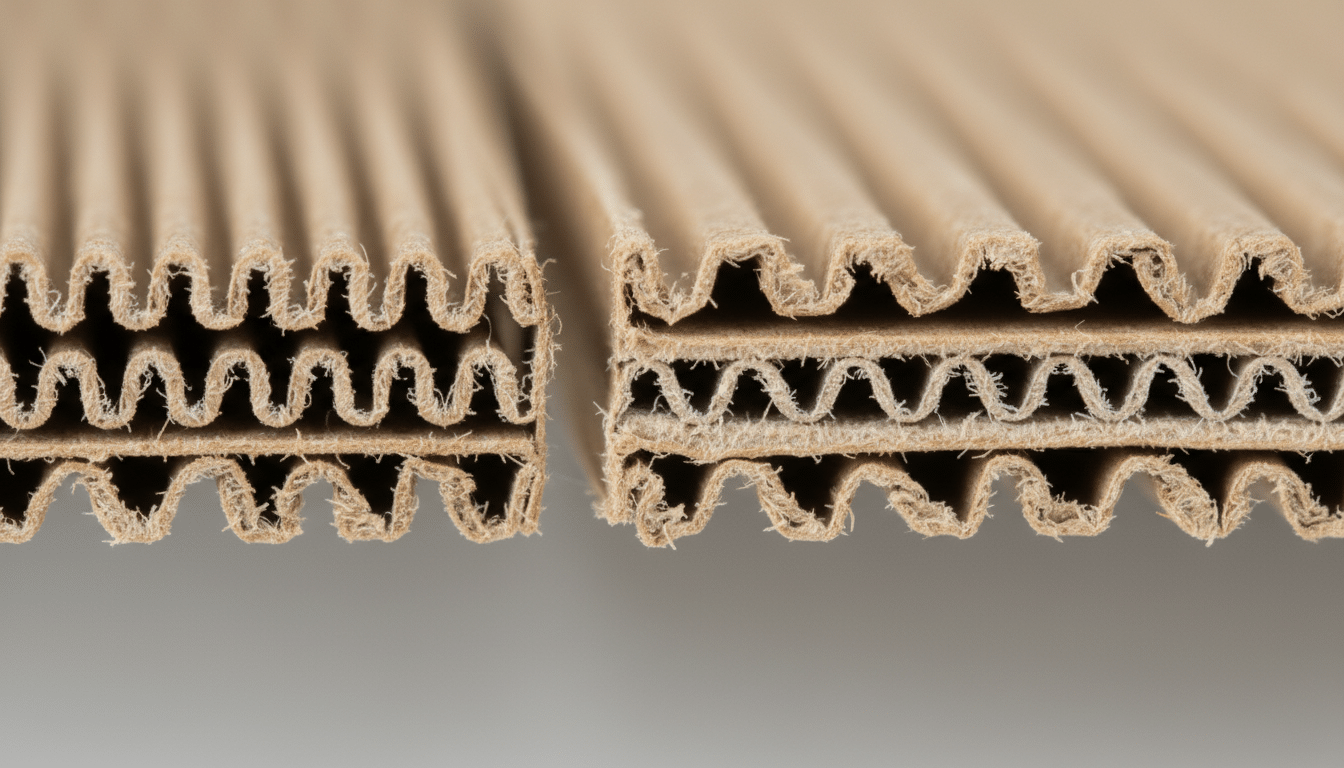
Material decides how strong your packaging is, how well it prints and how easily customers can recycle it. These are the main options:
| Material | Typical thickness | Strengths | Use it for |
|---|---|---|---|
| SBS paperboard (white) | About 14–24 pt | Bright, smooth surface for sharp, colorful print | Cosmetic boxes, product boxes, retail cartons |
| Kraft paperboard | About 14–24 pt | Natural brown look, recyclable | Eco brands, food, handmade products |
| E-flute corrugated | About 1/16 in (1.5 mm) | Light, strong, prints well | Small and medium mailer boxes |
| B-flute corrugated | About 1/8 in (3 mm) | Better crush resistance | Large, heavy or fragile shipments |
| Rigid chipboard | About 1/16–1/8 in (1.5–3 mm) | Premium feel, does not fold flat | Luxury and gift packaging |
For shipping across Canada, corrugated board is the safe default because parcels may travel thousands of kilometers and sit in cold depots. Paperboard cartons are ideal for retail and for products that travel inside a mailer. If you want a natural look with good recyclability, kraft boxes work in almost every style.
Cold, dry winter air and damp spring weather can both scuff or soften untreated board. A matte or gloss lamination or an aqueous coating adds scuff and moisture resistance. For a premium touch, foil stamping, embossing and spot UV make logos stand out, especially on cosmetic and gift packaging.
The single biggest difference between Canadian and US packaging is language. Under federal consumer packaging and labelling rules, most mandatory information on prepackaged consumer products must appear in both English and French. That typically includes the product’s common name (its identity), the net quantity and, in many cases, the dealer’s name and principal place of business. Some product categories, such as food, cosmetics and natural health products, have their own additional labelling requirements, and Quebec has its own French-language rules.
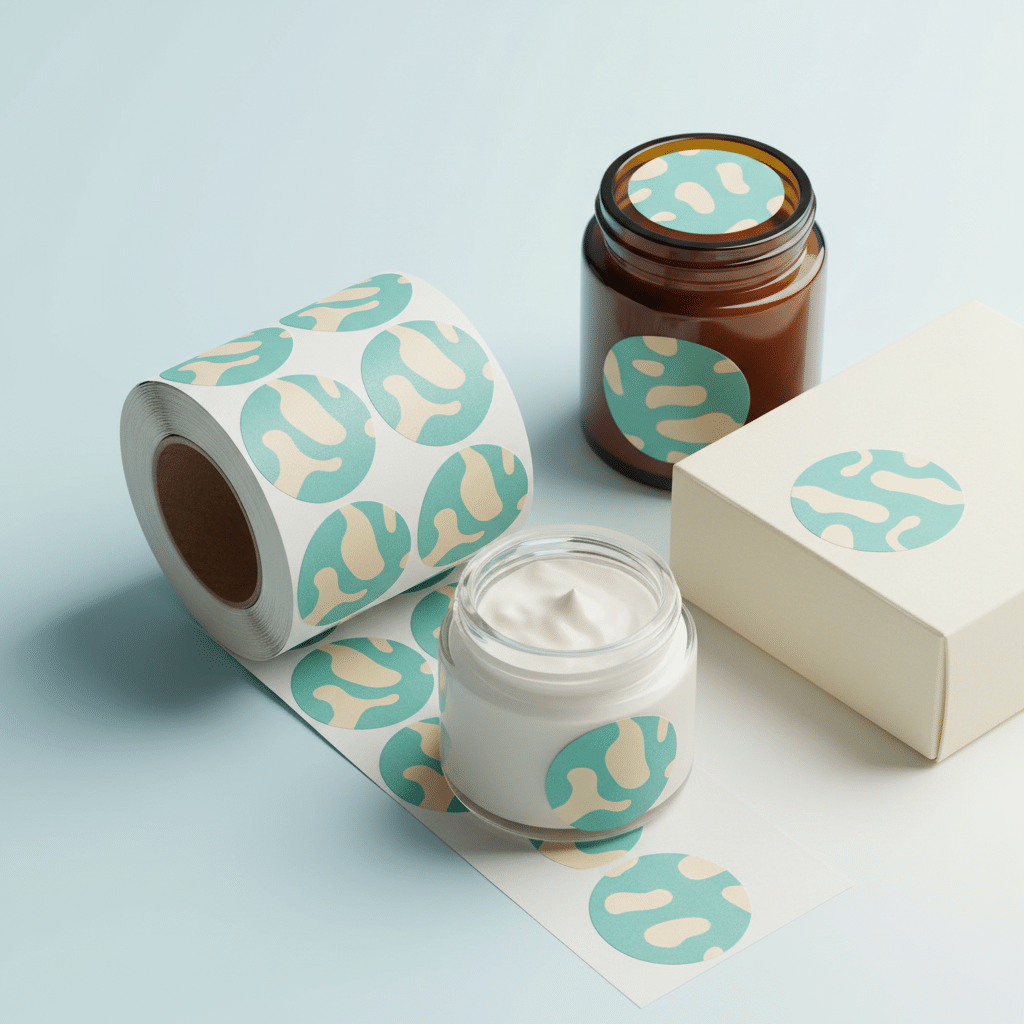
Regulations change and vary by product category, so always confirm the current requirements with the relevant federal agency or a regulatory advisor before you finalize artwork. From a packaging design point of view, these practical rules help:
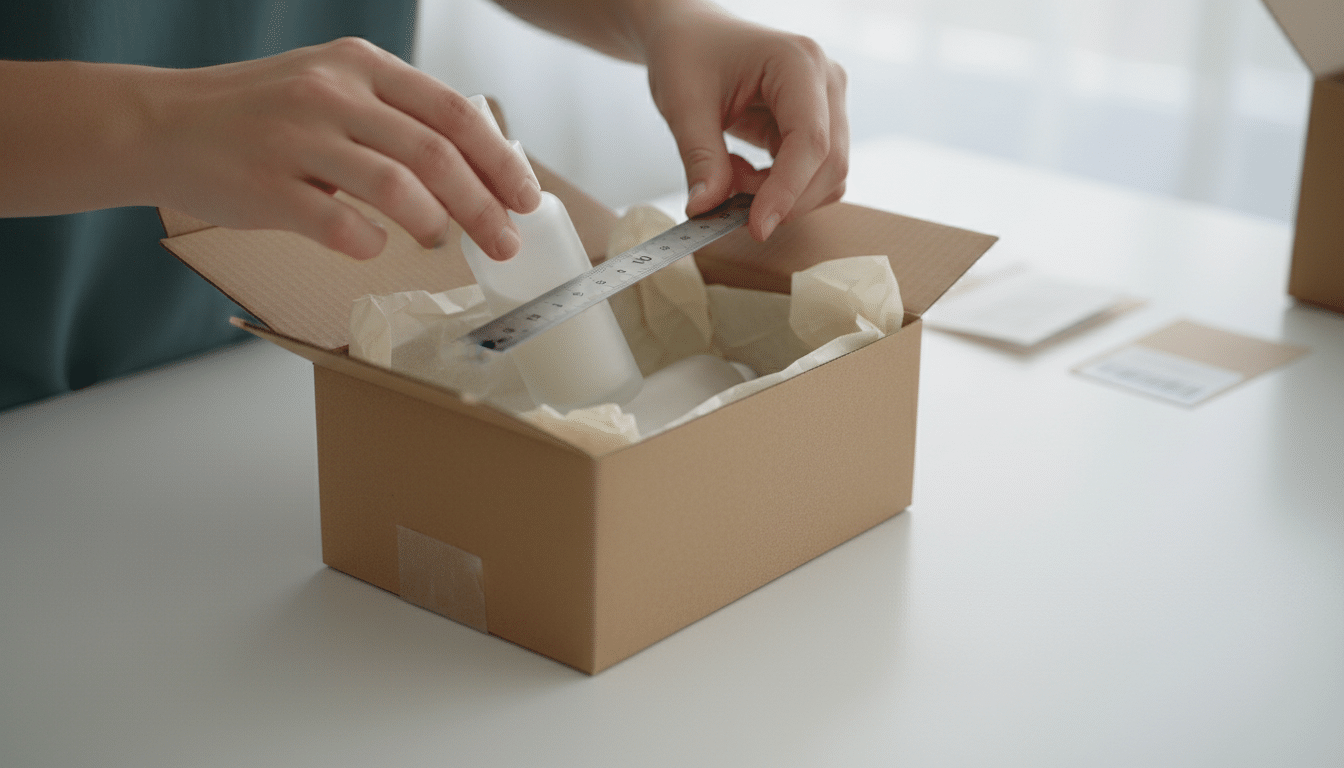
Canada is officially metric, yet many Canadian businesses still talk about boxes in inches, and US suppliers and carriers quote in inches and pounds. The easiest approach is to measure in whichever unit you prefer and give your supplier the inside dimensions in Length × Width × Depth order. We accept dimensions in inches or centimeters.
| Size band | Inside size (inches) | Inside size (cm) | Typical products |
|---|---|---|---|
| Small | 6 × 4 × 2 | 15.2 × 10.2 × 5.1 | Jewelry, skincare minis, accessories |
| Medium | 9 × 6 × 3 | 22.9 × 15.2 × 7.6 | Cosmetic sets, candles, supplements |
| Large | 12 × 9 × 4 | 30.5 × 22.9 × 10.2 | Folded apparel, subscription boxes |
| Extra large | 14 × 10 × 4 | 35.6 × 25.4 × 10.2 | Shoes, bundles, gift kits |
Add about 1/8 inch (3 mm) per dimension for a snug fit, and more if you wrap items in tissue or bubble wrap. Our mailer box sizes guide explains allowances in detail. If products need to stay in place, size the box around a custom packaging insert rather than the bare product.
Canada is a big country with long, sometimes rural delivery routes, so packaging affects both damage rates and shipping costs. Carriers such as Canada Post, Purolator, UPS and FedEx commonly compare a parcel’s actual weight with its volumetric (dimensional) weight and charge whichever is higher. In Canada, volumetric weight is usually calculated in metric: length × width × height in centimeters divided by a carrier-specific divisor, with 5,000 and 6,000 being common. Always check your carrier’s current rate guide.
| Box (outside, cm) | Volume (cm³) | Volumetric weight ÷ 5,000 | Volumetric weight ÷ 6,000 |
|---|---|---|---|
| 40 × 30 × 15 | 18,000 | 3.6 kg (about 7.9 lb) | 3.0 kg (about 6.6 lb) |
| 30 × 25 × 10 | 7,500 | 1.5 kg (about 3.3 lb) | 1.25 kg (about 2.8 lb) |
| 25 × 20 × 8 | 4,000 | 0.8 kg (about 1.8 lb) | about 0.67 kg (1.5 lb) |
If your product weighs 1 kg (2.2 lb), shipping it in the largest box above could mean paying for more than three times its real weight. Cutting just a few centimeters of depth is often the fastest way to save money on every order. Lighter formats, such as poly mailers for apparel, help too.
Cold temperatures can make some products brittle and cause liquids to expand, and parcels may sit in unheated vehicles or on porches. For glass jars, candles, liquids and cosmetics shipped in winter, use a sturdier corrugated board, a fitted insert, and sealed inner packaging. Sealing boxes with custom branded tape adds security and makes tampering more visible.
Canadian shoppers increasingly expect packaging that is easy to recycle, and several provinces operate extended producer responsibility (EPR) programs that make businesses that supply packaging to consumers responsible for its end-of-life costs. Whether and how these programs apply depends on your province, your size and how much packaging you supply, so check the current rules for each province you sell into.
Design choices that make packaging easier to recycle and simpler to report:
Avoid vague green claims such as “eco-friendly” or “100% sustainable” printed on the box unless you can back them up. Specific, accurate wording, such as “box made from recyclable paperboard”, is safer and more meaningful to customers.
Folding cartons in SBS board with foil or soft-touch finishes are the standard for retail beauty products. Leave room for a bilingual ingredient list and directions. Our cosmetic boxes in Canada guide covers this category in depth.
Anything that touches food directly needs food-contact materials. Food-safe packaging with grease-resistant board works well for cookies, pastries and chocolates. Prepackaged foods sold in Canada also have their own labelling rules, so check them before printing.
Shallow mailer boxes 2–4 inches (5–10 cm) deep fit folded garments neatly, and printing inside the lid creates a memorable reveal. For lower postage, poly mailers suit soft goods that do not need rigid protection.
Glass jars need cushioning on every side. Custom candle boxes with an insert, shipped inside a corrugated mailer, protect fragile items on long routes.
Pick one well-sized mailer for your largest typical assortment, print the outside with strong branding and the inside with a message or seasonal theme, and use paper fill to keep contents in place.
In Canada, CBD is regulated as cannabis, and cannabis products must follow strict plain-packaging rules that heavily restrict colors, logos and branding. That means branded custom CBD boxes are not an option for products sold in Canada. Licensed producers should follow Health Canada’s current cannabis packaging requirements. Branded CBD packaging is a US-market topic, which we cover in our CBD boxes in the USA guide.
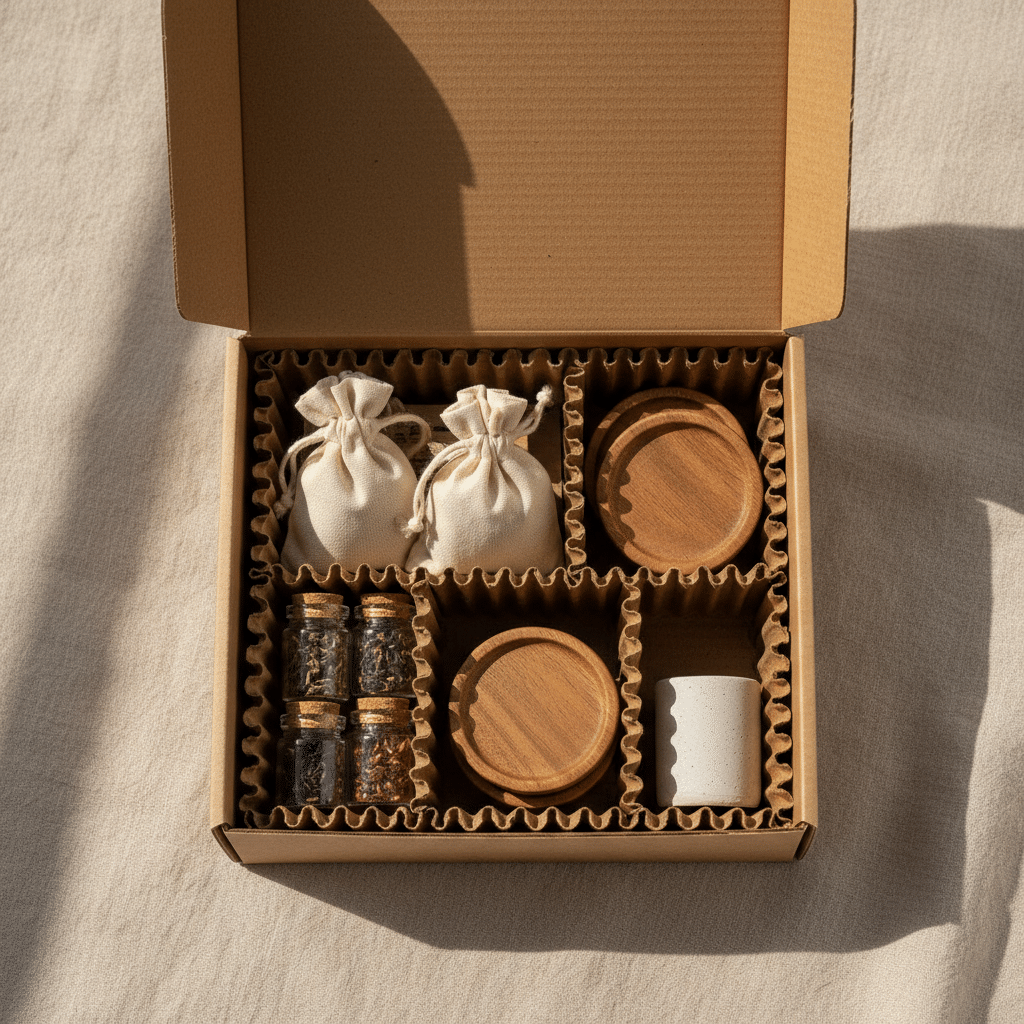
Custom packaging prices depend on the box style, size, material, printing, finishes and quantity. As a starting point, these are our starting prices per unit:
| Product | Starting price per unit | Notes |
|---|---|---|
| Cosmetic boxes | $0.30 | Compact paperboard cartons |
| Custom labels | $0.30 | Ideal for bilingual variant information |
| Poly mailers | $0.30 | Lightest shipping option |
| Kraft boxes | $0.50 | Natural, recyclable look |
| Food-safe packaging | $0.50 | For direct food contact |
| Product boxes | $0.80 | Retail folding cartons |
| Mailer boxes | $0.90 | Corrugated, printable inside and out |
| Branded tapes | $1.00 | Per roll |
| Rigid boxes | $3.00 | Premium gift packaging |
The main factors that move your price up or down:
Shipping is not an extra line on our quotes: delivery is free anywhere in Canada and the USA. For a full breakdown of one category, see how much mailer boxes cost.
Many brands sell on both sides of the border. One box can often serve both markets if you plan the artwork carefully, but it helps to know what each market expects.
US consumer packaging is generally labeled in English, and net quantity is commonly declared in both US customary and metric units (for example, 8 fl oz (236 mL)). Carriers such as UPS, FedEx and USPS calculate dimensional weight in inches and pounds, commonly dividing length × width × height by 139 for domestic retail rates. Food and cosmetics fall under FDA rules in general terms, and branded CBD packaging is possible where state law allows it.
Most mandatory label information must appear in English and French, net quantity is declared in metric units, and carriers often use metric volumetric weight. Health Canada oversees areas such as cosmetics, natural health products and cannabis, and provincial EPR programs may apply to packaging. Cannabis, including CBD, must use plain packaging.
| What matters | United States | Canada |
|---|---|---|
| Label language | English | English and French for most mandatory information |
| Net quantity units | US customary and metric | Metric (US units optional) |
| Dimensional weight | Inches and pounds, divisor commonly 139 | Centimeters and kilograms, divisors commonly 5,000–6,000 |
| Main regulators (general) | FDA for food and cosmetics | Health Canada and other federal agencies |
| Packaging end-of-life rules | Varies by state | Provincial EPR programs in several provinces |
| CBD packaging | Branded packaging possible, subject to state rules | Plain packaging required; no branded CBD boxes |
| Shipping from Custom Made Packaging | Free | Free |
A practical approach for cross-border brands: design a bilingual back panel, show net quantity in both metric and US units, and keep the front panel clean and brand-focused. That one design can usually work in both countries, subject to any category-specific rules.
Pro tip: Order your holiday packaging early. Fall and the weeks before the holidays are the busiest time of year for both printers and carriers. Approving artwork in early fall gives you time for a sample, a reprint if needed, and delivery well before peak season.
Questions before you start? Contact our packaging team and we will help you choose the right style and material.
For most prepackaged consumer products, yes. Mandatory information such as the product identity and net quantity generally has to appear in both English and French. Some categories have extra requirements and Quebec has its own French-language rules, so confirm current regulations for your product before printing.
It depends on style, size, material, printing and quantity. Our starting prices range from $0.30 for cosmetic boxes and labels to $0.90 for mailer boxes and $3 for rigid boxes, with free shipping across Canada. Request a quote with your specs for an exact price.
You can order custom boxes from just 30 units. That makes it practical to test a new design, launch a product or run a seasonal promotion without committing to thousands of boxes.
You receive a digital mockup within 48 hours. After you approve the design, standard production takes 10–15 business days and rush production 8–12 business days, followed by free shipping to your address in Canada.
Often, yes. A box with English and French mandatory text and net quantity in both metric and US units can usually serve both markets. Check category-specific rules, such as those for food, cosmetics or cannabis, before relying on one design.
No. In Canada CBD is regulated as cannabis, and cannabis products must follow strict plain-packaging rules that restrict branding. Branded CBD boxes are only relevant for markets where they are permitted, such as many US states.
Right-sized, mono-material paper packaging is usually the most practical choice. Kraft or corrugated boxes with paperboard inserts and minimal plastic lamination are widely recyclable and simplify provincial recycling program reporting.
Yes. Free design support is included with every order, and if you want a fully original concept you can also hire a professional packaging designer. We check every file for bleed, resolution and fit before production.
Get the custom quote starting from our MOQ of 30 boxes to any order volume. There will be no charges for shipping and we ensure the lowest prices with highest quality possible.