Free Delivery: 


Our facilities are now open for visits. Please contact your PIC or email us at contact@custommadepackaging.com to request a visit.
Free Delivery:
Home – Blogs – Eco-Friendly Cosmetic Boxes: 2026 Sustainability Guide
 – Blogs
by Custom Made Packaging Team – November 4, 2026 · 16 min read
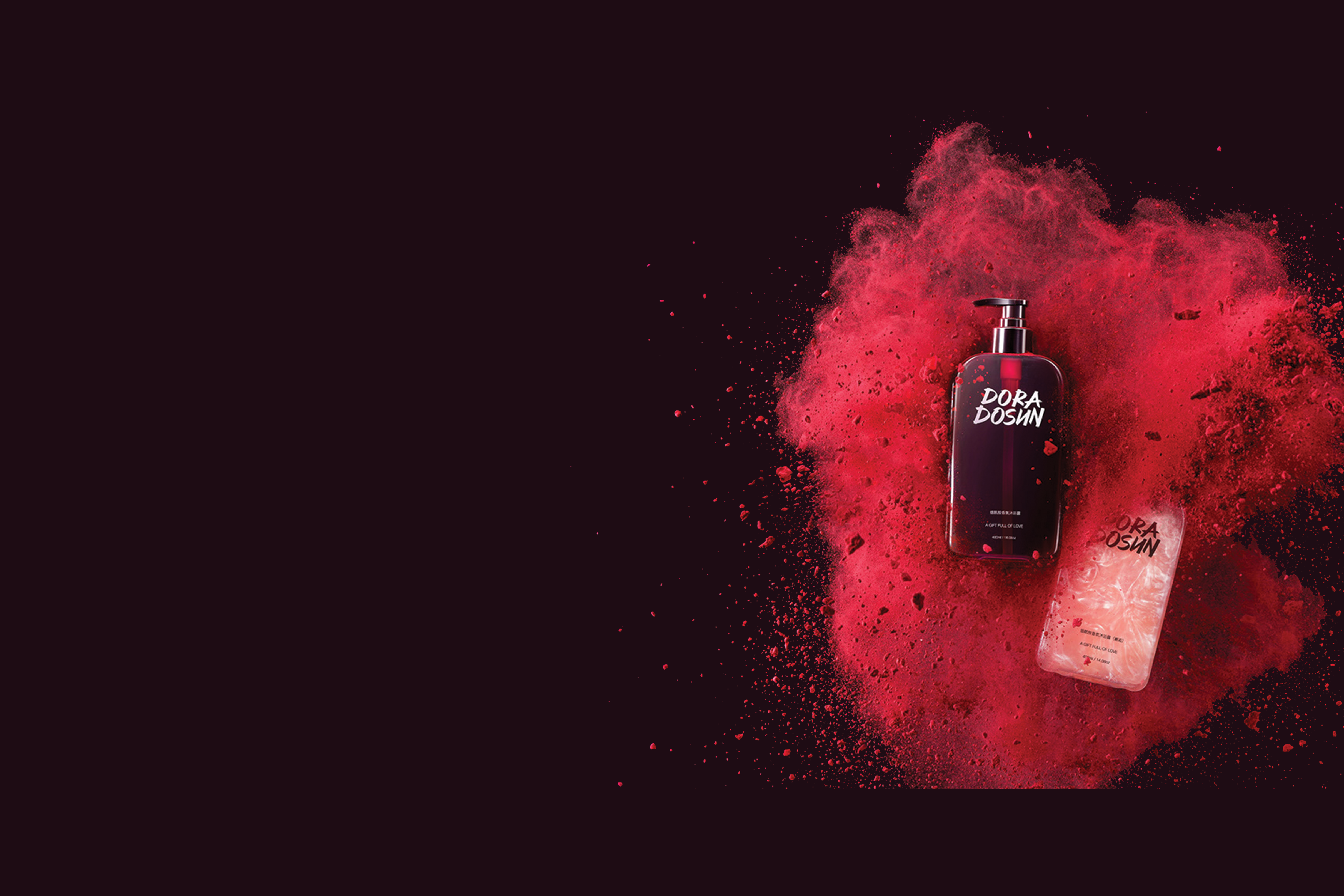
Eco-friendly cosmetic boxes are cartons made from responsibly sourced, recyclable or recycled paperboard, printed with low-impact inks and finished without plastic films, so the whole box can go into a household paper recycling bin. The quickest way to get there is simple: choose FSC-certified or recycled board, skip plastic lamination and plastic windows, keep inserts paper-based, and size the box tightly around the product. Everything else in this guide builds on those four decisions.
Beauty buyers across the United States and Canada increasingly read the back of the box before they buy, and many of them check whether the packaging is recyclable. At the same time, regulators in both countries are tightening the rules on green marketing claims. That means sustainable custom cosmetic boxes need to be both genuinely lower impact and honestly labeled.
In this guide you will learn which materials and board grades work best for skincare, makeup and fragrance, which finishes keep a box recyclable, how to replace plastic inserts and windows, how to design a premium-looking eco box, what to watch for with green claims in the USA and Canada, what drives cost, and a step-by-step checklist you can follow for your next order.
Table of contents
“Eco-friendly” is not a single material or certification. It is the result of several choices that together reduce the environmental impact of a box across its life: where the fiber comes from, how much material is used, how the box is printed and finished, how far it travels, and what happens to it after the customer opens it. A sustainable cosmetic box usually checks most of these boxes:
The good news for beauty brands is that folding cartons, the standard format for serums, creams, foundations and fragrances, are already paper-based. Making them genuinely eco-friendly is mostly about avoiding the add-ons that turn a recyclable carton into a mixed-material item.
Material is the single most important decision for eco-friendly cosmetic packaging. Most cosmetic boxes are made from paperboard, measured in points (pt), where 1 pt equals 0.001 inch. Typical retail cartons for cosmetics fall between 14pt and 24pt (about 0.36 to 0.61 mm). Here is how the main options compare:
| Material | What it is | Eco profile | Best for |
|---|---|---|---|
| Recycled paperboard (CRB) | Board made largely from recovered paper fiber, often with a white coated face | Uses recovered fiber; widely recyclable again | Everyday skincare, soaps, makeup cartons |
| FSC-certified SBS (white board) | Solid bleached virgin fiber from certified sources | Responsibly sourced; bright surface for color-critical print | Premium skincare, fragrance, color cosmetics |
| Kraft paperboard | Unbleached brown board with a natural look | Less processing, natural aesthetic, recyclable | Clean beauty, natural and organic brands |
| E-flute corrugated | Thin corrugated board, about 1/16 inch (1.5 mm) | Recyclable; strong enough to ship without an outer box | Gift sets, subscription and DTC shipping |
| Rigid chipboard (wrapped) | Thick recycled chipboard wrapped in printed paper | Durable and reusable; choose paper wraps over plastic | Luxury gift sets, fragrance, PR kits |
For most small and mid-size beauty brands, recycled paperboard or FSC-certified board covers most everyday needs, and kraft boxes are a strong choice if your brand already leans natural. If you want a keepsake that customers reuse for storage, rigid boxes made from recycled chipboard with a paper wrap can be a sustainable choice precisely because they are kept, not thrown away.
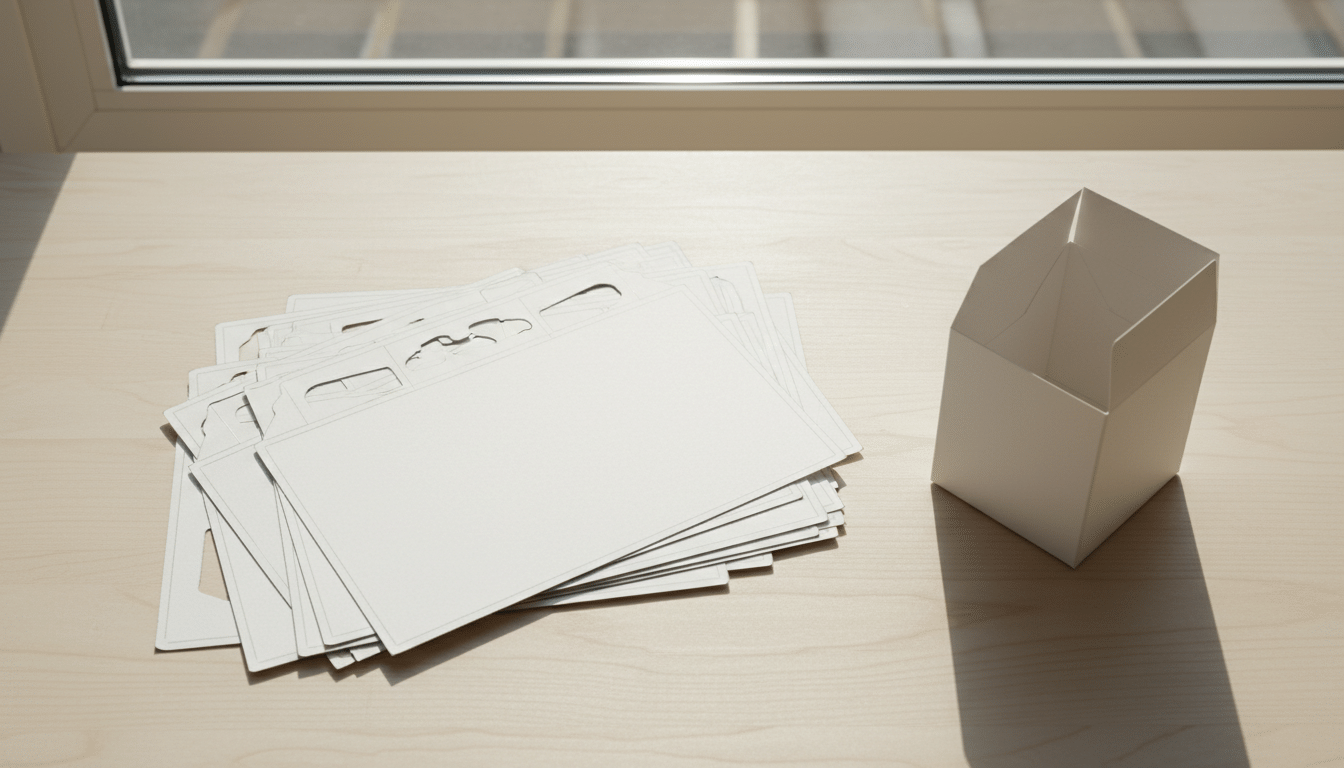
Both have a place. Recycled board keeps fiber in use and is the obvious fit for an eco message. Virgin fiber from certified forests is stronger and brighter, which matters for small, highly detailed cartons and for products where color accuracy is part of the brand. Many brands combine the two: a recycled-content outer carton with an FSC-certified virgin board for a premium flagship product.
Plant-based plastics such as PLA are sometimes marketed as compostable, but most need industrial composting facilities that many communities in the USA and Canada do not have. For outer cosmetic boxes, paper-based materials are usually the more practical and more widely recyclable choice.
The structure of a box affects how much board it uses and how easy it is to recycle. Simple folding styles with locking tabs need no glue beyond the side seam and no extra materials. For a deeper look at every option, see our guide to 12 cosmetic box styles.
| Box style | Material use | Sustainability notes | Typical products |
|---|---|---|---|
| Reverse or straight tuck end | Low | Single piece, flat-packed, easy to recycle | Serums, creams, foundation, lipstick |
| Auto-lock (crash lock) bottom | Low to medium | No tape needed; strong base for heavier jars | Glass jars, body care, larger bottles |
| Sleeve and tray | Medium | Both parts paper; tray can be reused for storage | Palettes, gift sets, sample kits |
| Mailer-style box | Medium | Ships without an outer carton, removing a layer of packaging | DTC kits, subscription boxes, bundles |
| Rigid box with paper wrap | Higher | Uses more board, but is often kept and reused | Fragrance, luxury sets, holiday gifts |
A practical rule: if a product ships direct to consumers, a printed mailer box can act as both the retail box and the shipping box, eliminating a brown outer carton entirely. If a product sits on a store shelf, a single-piece tuck end carton is usually the most efficient format.
Finishes are where many “eco” boxes quietly lose their recyclability. A carton laminated with plastic film is technically a paper-plastic composite, and many recycling facilities treat it as a contaminant or have to separate the film. Use the table below to choose finishes that protect your design without undoing your material choice.
| Finish | Recyclability | Eco-friendlier alternative |
|---|---|---|
| Plastic film lamination (gloss or matte BOPP) | Problematic in many paper recycling systems | Aqueous coating or water-based varnish |
| Soft-touch film lamination | Problematic; it is a plastic film | Soft-touch aqueous coating or uncoated textured stock |
| Aqueous (water-based) coating | Generally compatible with paper recycling | Already a good choice |
| Soy or vegetable-based inks | Generally compatible with paper recycling | Already a good choice |
| Hot foil stamping (small accents) | Small accents are usually accepted; large foil areas are less ideal | Keep foil to a logo or line, or use metallic ink |
| Embossing and debossing | No added material | Excellent way to add a premium feel |
| Spot UV | Generally accepted in small areas, but check locally | Embossing or a contrasting matte/gloss aqueous effect |

Embossing and debossing deserve special mention. They create a tactile, luxurious feel using only the board itself, with no added material. Paired with a matte aqueous coating and one small foil accent, they can make a recyclable carton feel just as premium as a laminated one.
Inserts and windows are the two components most likely to add plastic to cosmetic packaging. Both can usually be redesigned in paper. Our guide on packaging inserts explains the main insert types in detail.
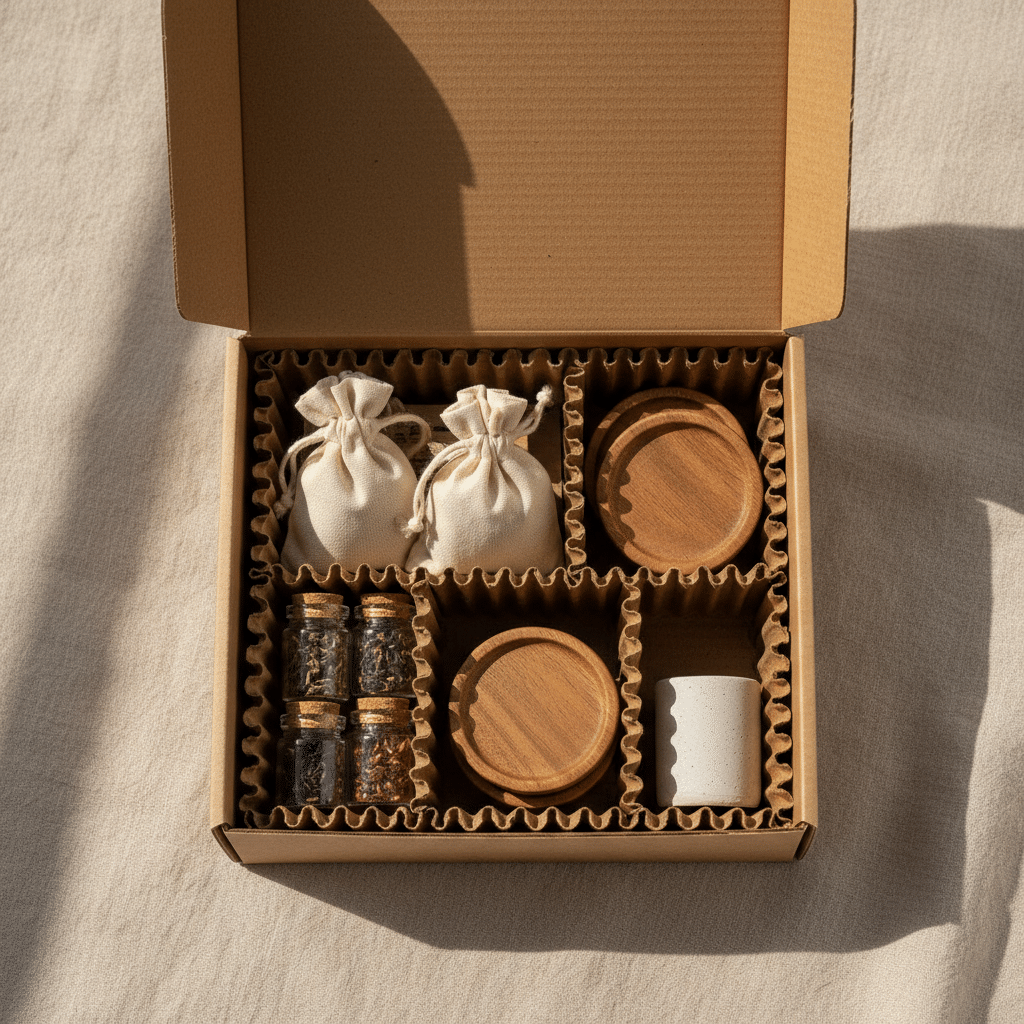
| Insert type | Material | Best for | Recyclable with the box? |
|---|---|---|---|
| Die-cut paperboard insert | Same board as the box | Single bottles, tubes, droppers | Yes, in most paper streams |
| Corrugated insert | E-flute or B-flute corrugated | Heavier glass jars, multi-product kits | Yes |
| Molded pulp tray | Recycled paper fiber | Fragile glass, fragrance, multi-piece sets | Usually, check local guidance |
| Foam or vacuum-formed PET tray | Plastic | Rarely necessary for cosmetics | No, must be separated |
Windows let shoppers see a product’s color or texture, but a clear PET film window makes the carton mixed-material. Alternatives include an open die-cut window that shows the product or inner container directly, a printed photo of the product, or a sleeve-and-tray design where the sleeve slides off to reveal the item. If a film window is essential, keep it small and tell customers to remove it before recycling.
A common worry is that eco packaging looks plain. It does not have to. The most successful sustainable beauty packaging uses restraint as a design language: confident typography, a focused color palette and tactile details. If you would like expert help, our team can design your custom box with free design support.
Large solid floods of ink use more material and can make recycled board look uneven. One or two brand colors on a natural kraft or recycled white board often look more deliberate and more premium than full-coverage four-color printing.
Kraft and uncoated recycled boards have texture and warmth. Instead of hiding them under heavy coatings, design with them: white ink on kraft, a single foil logo on uncoated board, or debossed patterns.
Printing on the inside of the box can deliver your story, usage directions or a thank-you message without a separate leaflet. Inside printing is available on mailer, kraft and product boxes, which can remove a piece of paper from every order.
Standardizing a few sizes across your range reduces waste from small runs and makeovers. Our skincare box design and sizing guide explains how to plan a coordinated range.
Pro tip: Before you print a full run, ask for a physical sample of your eco box with the exact board and coating. Recycled and kraft stocks absorb ink differently from bright white board, so colors often print darker or warmer. Adjusting your artwork after seeing a sample is far cheaper than reprinting.
Eco claims are now a compliance topic, not just a marketing one. Vague phrases such as “eco-friendly” or “planet safe” with no explanation are exactly what regulators look for. A safer approach is to make specific, provable statements about the box itself.
| Claim | What you need to back it up | Safer wording example |
|---|---|---|
| Recyclable | Recycling for that material is widely available to your customers | “Box recyclable where paperboard is accepted” |
| Made with recycled content | Supplier documentation of the recycled percentage | “Carton made with 50% recycled fiber” (use your actual figure) |
| FSC certified | A certified supply chain and permission to use the FSC label | Use the official FSC label only when it applies to your order |
| Plastic-free | No plastic in the box, insert, window, coating or tape | “Plastic-free carton and insert” |
| Compostable | Certification and access to suitable composting | Avoid unless certified; most cartons are better described as recyclable |
In the United States, the FTC’s Green Guides set out how environmental marketing claims should be qualified, and some states add their own rules on recyclability claims. In Canada, the Competition Act prohibits misleading environmental claims and, since 2024 amendments, requires environmental benefit claims to be backed by adequate and proper substantiation. These rules continue to evolve, so check current guidance or speak with a compliance advisor before printing any claim.
Your box must also carry the mandatory cosmetic label information. Plan the layout early so that eco messaging never crowds out required text. Printed custom labels are a useful backup when you need to update details between print runs.
We produce eco-friendly cosmetic boxes for brands throughout the United States and Canada, with free shipping to both countries. The core packaging choices are the same on both sides of the border, but labeling, recycling systems and units of measure differ.
Cosmetics sold in the US must follow FDA labeling requirements, including the product identity, an accurate net quantity of contents and an ingredient declaration on the outer container. Net quantity is shown in both US customary and metric units, for example “1 fl oz (30 mL).” The Modernization of Cosmetics Regulation Act of 2022 (MoCRA) added further obligations for many cosmetic businesses, so review the latest FDA guidance for your products.
Recycling access varies from city to city, which is why accurate recyclability wording matters. A growing number of states, including Maine, Oregon, Colorado, California and Minnesota, have passed extended producer responsibility (EPR) laws for packaging, and California also restricts how recyclability claims and the chasing-arrows symbol can be used. If you ship nationwide, keep your box simple and mono-material so it is recyclable in as many places as possible. When you ship with UPS, FedEx or USPS, dimensional weight is calculated in inches and pounds, so a right-sized carton saves on every parcel.
Health Canada’s Cosmetic Regulations require mandatory label information, including an ingredient list, and most mandatory consumer information must appear in both English and French. Manufacturers and importers must also notify Health Canada about cosmetics they sell, and recent updates have added fragrance allergen disclosure requirements, so confirm the current rules for your products. Plan for bilingual panels from the start: they need roughly twice the text space, which affects box size and layout.
Packaging recycling in Canada is organized largely by province, with producer responsibility programs in provinces such as Ontario, British Columbia and Quebec. Canadian carriers typically calculate volumetric weight in centimeters and kilograms, so share your dimensions in metric if that is what your team uses. A 2 × 2 × 5 inch serum carton, for example, is about 5.1 × 5.1 × 12.7 cm. For more on the Canadian market, read our Canada cosmetic boxes guide.
| What matters | United States | Canada |
|---|---|---|
| Label language | English | Most mandatory information in English and French |
| Net quantity units | US customary and metric (oz and mL/g) | Metric (mL or g) |
| Regulator | FDA | Health Canada |
| Green claim rules | FTC Green Guides plus state laws | Competition Act, including 2024 amendments |
| Recycling and EPR | Varies by state and city; EPR laws in several states | Provincial programs and producer responsibility |
| Dimensional weight | Inches and pounds (UPS, FedEx, USPS) | Centimeters and kilograms (volumetric) |
| Shipping from us | Free shipping anywhere in the USA | Free shipping anywhere in Canada |
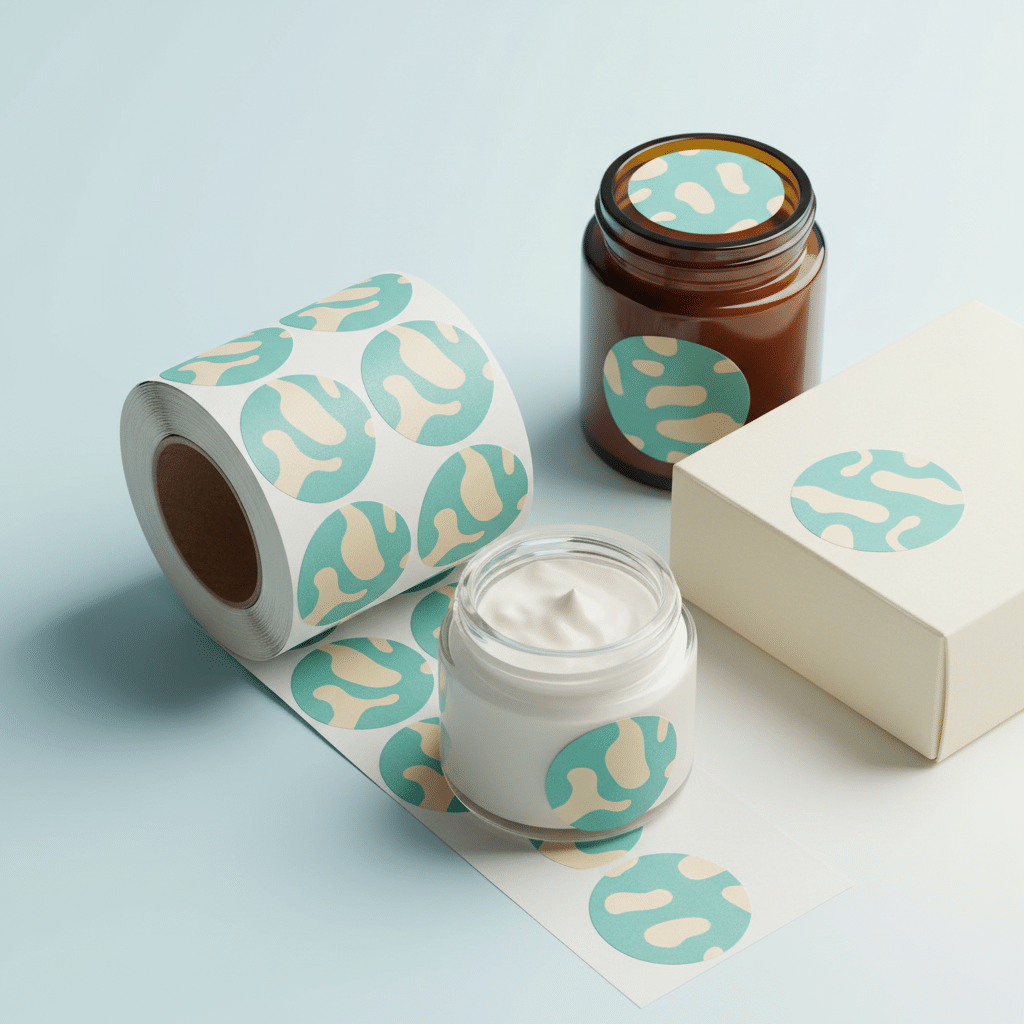
Use this checklist to move from idea to a finished, recyclable box without missing a step:
Eco-friendly cosmetic boxes do not have to cost more than conventional ones. Removing plastic lamination and windows can actually lower costs, while premium recycled or certified boards may add a little. Custom cosmetic boxes start from $0.30 per box, with a minimum order of just 30 boxes. For a full breakdown, see how much cosmetic boxes cost.
| Cost factor | Effect on price | How to keep it efficient |
|---|---|---|
| Quantity | Higher volumes lower the unit price | Order in batches that match 2-3 months of sales |
| Box size and caliper | Larger and thicker boxes use more board | Right-size the box; use the thinnest caliper that protects |
| Board type | Specialty recycled or certified grades can cost more | Use recycled board for everyday SKUs, premium board for flagships |
| Print colors and coverage | Full-coverage designs use more ink | Use one or two brand colors on natural stock |
| Finishes | Foil and embossing add setup steps | Limit to one signature finish |
| Inserts | Each insert adds material and assembly | Use simple die-cut paperboard inserts |
| Turnaround | Rush production costs more | Plan ahead for the 10-15 business day standard timeline |
Shipping is included: we offer free shipping anywhere in the USA and Canada, so the quoted price is the price you pay to get boxes to your door.
Have questions about materials or claims for your products? Contact our team and we will help you choose the right eco-friendly option.
Most are made from recycled paperboard, FSC-certified virgin paperboard or kraft board, printed with water-based or vegetable-based inks and finished with aqueous coatings. Sustainable designs also use paper-based inserts instead of foam or plastic trays.
Plain paperboard cosmetic boxes are widely recyclable with household paper. Boxes with plastic lamination, large film windows or plastic inserts are harder to recycle, so choose paper-only components if recyclability is a priority.
Kraft board is unbleached and has a natural look, but both kraft and white board can be sustainable if they come from certified or recycled sources. The finishes, inserts and box size usually matter as much as the board color.
Not necessarily. Specialty recycled or certified boards can add a little, but removing plastic lamination, windows and foam inserts often offsets that. Custom cosmetic boxes start from $0.30 per box with a 30-box minimum.
You can, but the claim must be accurate and properly qualified under the FTC Green Guides, and some states, such as California, restrict how recyclability claims and symbols are used. Review current federal and state guidance for your markets before printing.
Yes. Most mandatory consumer information on cosmetics sold in Canada must appear in both English and French. Plan the bilingual text early, because it needs more space and can affect your box size.
A die-cut paperboard insert made from the same board as the box is usually the most practical choice, since the whole package can be recycled together. Molded pulp works well for heavier or more fragile glass items.
After you approve your design, standard production takes 10-15 business days and rush production takes 8-12 business days. Shipping is free anywhere in the USA and Canada.
Get the custom quote starting from our MOQ of 30 boxes to any order volume. There will be no charges for shipping and we ensure the lowest prices with highest quality possible.