Free Delivery: 


Our facilities are now open for visits. Please contact your PIC or email us at contact@custommadepackaging.com to request a visit.
Free Delivery:
Home – Blogs – Custom Packaging Materials: 2026 Board & Stock Guide
 – Blogs
by Custom Made Packaging Team – November 5, 2026 · 18 min read
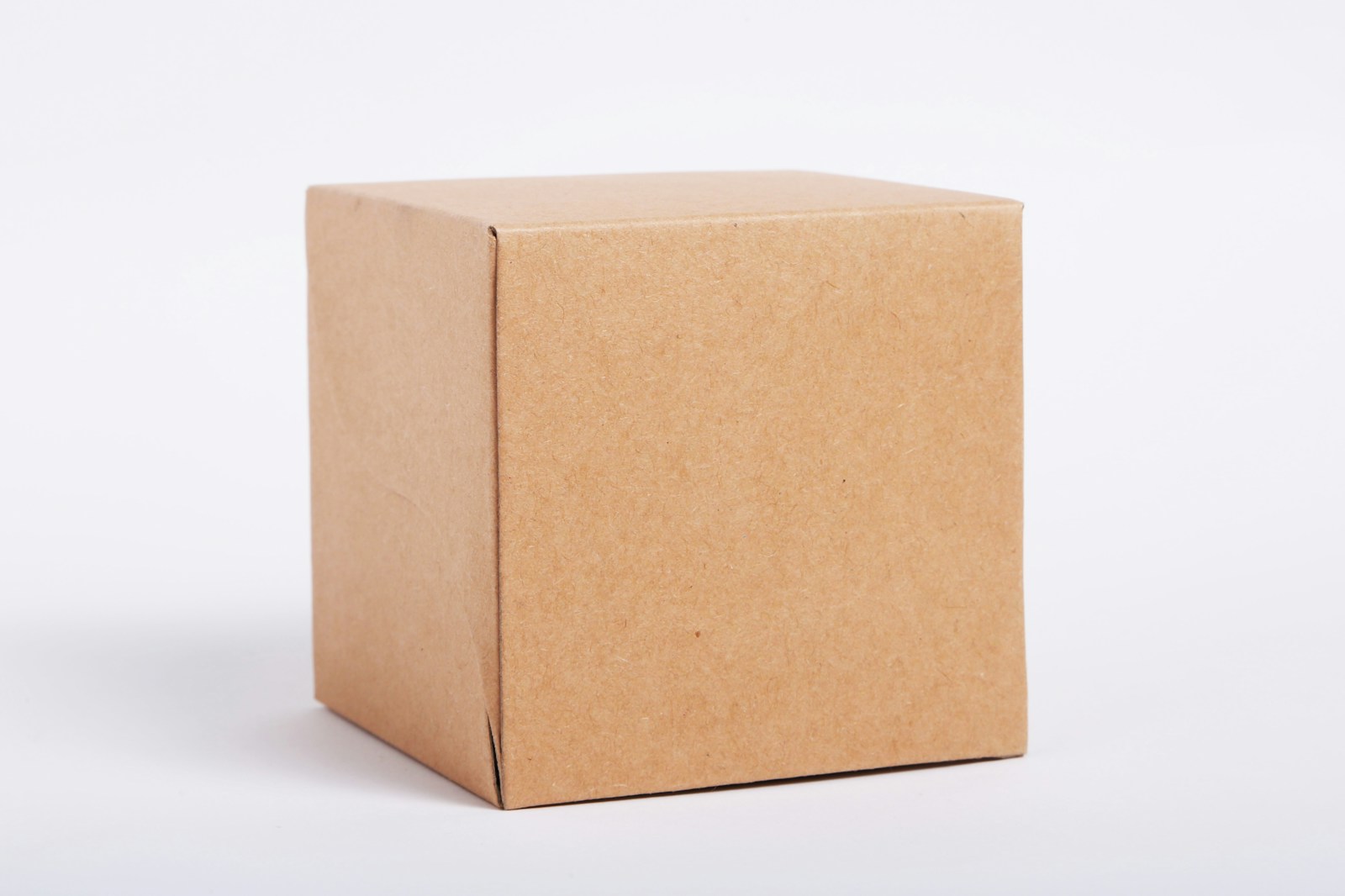
The best custom packaging materials depend on three things: how your product ships, how premium it needs to look, and what you can spend per unit. For most small and mid-size brands, that means paperboard (SBS or kraft) for retail cartons, corrugated cardboard for anything that travels through the mail, and rigid chipboard for luxury gift boxes. Poly mailers, inserts, labels and tape fill the gaps around those three core materials.
This guide explains each material in plain language: what it is made of, how thick it is, what it protects against, how it prints, what it costs relative to the alternatives and which products it suits. You will also find a step-by-step checklist for choosing a material, a breakdown of coatings and finishes, recommendations by industry and the cost factors that drive your quote.
Everything here is written for brands selling in the United States and Canada, so measurements are in inches with centimeters, weights in pounds with kilograms, and there is a dedicated section on what changes when you ship and sell on each side of the border.
Table of contents: What are custom packaging materials? · Paperboard: SBS, CCNB and kraft · Corrugated cardboard · Rigid chipboard · Poly mailers, inserts, labels and tape · Coatings, laminations and finishes · How to choose: step-by-step checklist · Best materials by industry · Recyclability and sustainability · Cost factors · USA and Canada · Common mistakes to avoid · How to order · FAQ
Custom packaging materials are the substrates a box, bag or insert is made from before it is printed, cut and folded into its final shape. When you order custom product boxes or custom mailer boxes, you are really choosing two things: a structure (the box style) and a material (the board it is made from). The structure decides how the box opens; the material decides how strong it is, how it feels in the hand, how sharply it prints and how much it costs.
Almost every custom box sold to small businesses in North America falls into one of these material families:
| Material family | Typical thickness | Main strength | Common box types |
|---|---|---|---|
| Paperboard (SBS, CCNB, kraft) | 14pt to 24pt (0.014 to 0.024 in / 0.36 to 0.61 mm) | Sharp print, low cost, light weight | Product boxes, cosmetic boxes, tuck end cartons, sleeves, pillow boxes |
| Corrugated cardboard | About 1/32 to 1/4 in (0.8 to 6.4 mm) | Crush resistance for shipping | Mailer boxes, shipping boxes, subscription boxes |
| Rigid chipboard | About 1/16 to 1/8 in (1.5 to 3 mm) | Premium feel, does not flex | Gift boxes, magnetic boxes, drawer boxes |
| Flexible plastic film | Usually 2 to 3 mil for mailers | Light, waterproof, cheap to ship | Poly mailers, pouches |
| Paper and labels | Varies | Branding at low cost | Labels, stickers, tissue, branded tape |
If you want to see how these materials turn into finished box styles, our guide to types of custom packaging compares twelve formats side by side. Here we focus on the materials themselves.
Paperboard, often called cardstock or folding carton board, is a single thick sheet of paper fiber. It is what most retail packaging on store shelves is made from: cereal cartons, perfume boxes, supplement boxes and the custom cosmetic boxes beauty brands use. It folds cleanly, prints beautifully and ships flat, which keeps storage and freight costs low.
Paperboard thickness in North America is measured in points (pt), where one point equals one-thousandth of an inch. A 16pt board is 0.016 inches (about 0.4 mm) thick. Thicker board feels sturdier and resists crushing better, but costs a little more.
SBS is made from bleached virgin fiber, so it is bright white all the way through. It gives the cleanest, most vivid color reproduction of any paperboard and is the standard for cosmetics, skincare, fragrance, supplements and premium consumer goods. Because the inside is white too, it is ideal when you want inside printing or a clean look when the box is opened.
CCNB is a recycled paperboard with a white clay coating on the printed side and a gray back. It prints well on the outside and costs less than SBS, which makes it popular for high-volume retail cartons, toys and household goods. The gray interior is the trade-off: it is fine for most products but looks less premium when a customer opens the box.
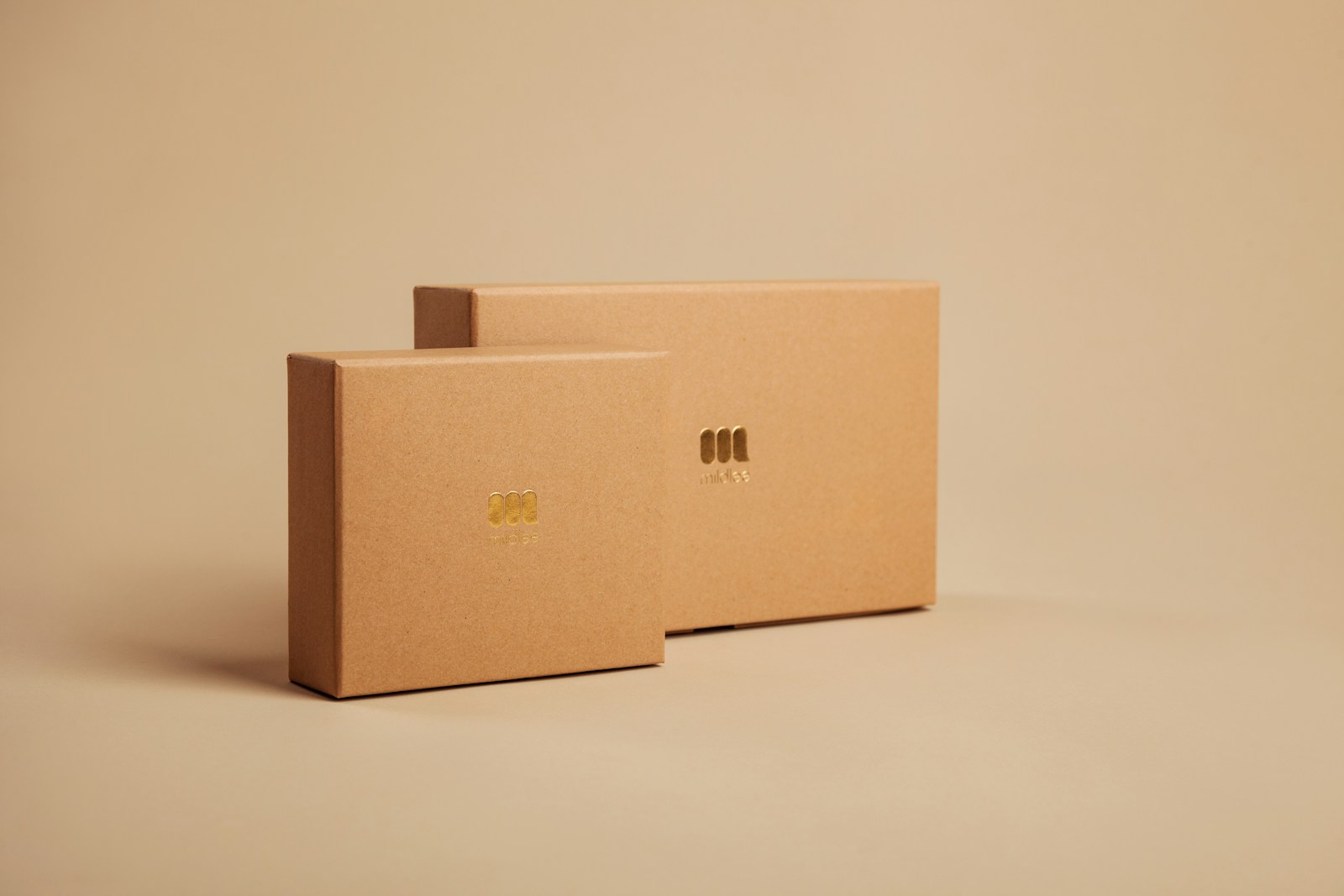
Kraft paperboard keeps the natural brown color of unbleached wood fiber. It is strong for its weight, has a natural, earthy look, and suits brands with a handmade, organic or eco-friendly identity. Ink sits differently on brown stock: dark colors look rich, but bright colors and whites look muted unless a white ink layer is printed first. Custom kraft boxes start from $0.50 per box, which makes them one of the most affordable custom options.
| Paperboard type | Color (outside / inside) | Print quality | Relative cost | Best for |
|---|---|---|---|---|
| SBS | White / white | Excellent, vivid color | Medium | Cosmetics, skincare, fragrance, supplements, CBD cartons |
| CCNB | White / gray | Very good | Low | High-volume retail cartons, household goods |
| Kraft | Brown / brown | Good, best with darker inks | Low | Eco brands, soaps, candles, food, handmade goods |
These are guidelines rather than rules. Box size matters too: a tall, narrow carton needs a stiffer board than a small cube holding the same weight.
Corrugated cardboard is made from a wavy middle layer, called the flute or medium, glued between flat liner sheets. That arch structure is what gives corrugated its strength-to-weight ratio, and it is why almost every parcel that travels through UPS, FedEx, USPS or Canada Post is shipped in corrugated packaging. If your product goes straight from your shelf to a customer’s doorstep, corrugated is usually the right material.

| Flute | Approx. thickness | Print surface | Strength | Typical use |
|---|---|---|---|---|
| F-flute | About 1/32 in (0.8 mm) | Very smooth | Light | Small premium retail and mailer boxes |
| E-flute | About 1/16 in (1.6 mm) | Smooth, great for detailed print | Good | Most custom e-commerce mailer boxes |
| B-flute | About 1/8 in (3 mm) | Good | Better crush and puncture resistance | Larger or heavier mailers, shipping boxes |
| C-flute | About 5/32 in (4 mm) | Fair | Strong stacking strength | Standard brown shipping cartons |
| Double-wall (e.g. BC) | About 1/4 in (6.4 mm) | Fair | High | Heavy, fragile or high-value goods |
For most brands, E-flute is the sweet spot: thin enough to print crisp graphics and fold into a neat roll end tuck front mailer, strong enough for apparel, cosmetics, candles in tins, books and subscription kits. Step up to B-flute for heavier jars, bundles and anything over a few pounds. Our mailer box sizes guide explains how flute choice interacts with box size.
The outer liner decides how the box looks. A white (bleached) liner gives bright, full-color print; a kraft liner gives a natural brown finish and costs less. Many brands choose a white outer liner with a kraft inner liner, or add inside printing for a branded reveal when the lid opens. Inside printing is available on mailer, kraft, CBD and product boxes.
Corrugated board in the United States is commonly rated by Edge Crush Test (ECT), which measures how much force the board withstands on its edge, or by the older burst (Mullen) test. A 32 ECT single-wall board is a common general-purpose grade for shipping. You do not need to become an engineer: tell your supplier the product weight and how it ships, and they will recommend a suitable grade.
Rigid boxes, also called set-up boxes, are made from dense chipboard (sometimes called greyboard) that is typically about 1.5 to 3 mm (roughly 1/16 to 1/8 inch) thick. The board is wrapped in printed or specialty paper and does not fold flat. That solidity is what customers associate with jewelry, watches, electronics, fragrance sets and luxury gifts.

The benefits are a heavy, premium hand feel, excellent protection against crushing and a box customers often keep and reuse. The trade-offs are higher unit cost, more storage space because boxes arrive assembled, and extra weight that can raise shipping charges. Custom rigid boxes start from $3 per box. For a deeper comparison, read rigid box vs folding carton.
Poly mailers are flexible bags made from polyethylene film. They weigh a fraction of a box, are water resistant and take up very little space, which makes them a cost-effective choice for apparel, soft goods and non-fragile items. They offer little crush protection, so they are not suited to glass, cosmetics in jars or anything that can bend. Custom poly mailers start from $0.30 each. If you are deciding between the two, see mailer boxes vs poly mailers.
Inserts hold products in place, prevent rattling and make the unboxing feel deliberate. Common insert materials include paperboard and corrugated die-cut inserts (recyclable with the box), molded pulp (made from recycled paper fiber), and foam (excellent cushioning but harder to recycle curbside). Our article on packaging inserts covers each option in detail.
Paper and film labels are the lowest-cost way to brand stock packaging or add required product information. Custom labels start from $0.30, and branded packing tape from $1 per roll, which turns any plain shipper into a branded one.
The finish is applied on top of the printed material. It changes how the box looks and feels, how well it resists scuffs and moisture, and how premium it reads to a customer. Each finish adds some cost, so choose the ones that support your brand rather than adding all of them.

| Finish | What it does | Look and feel | Good for |
|---|---|---|---|
| Aqueous coating | Water-based protective coat | Subtle, natural | Everyday cartons, kraft boxes |
| Gloss lamination | Thin plastic film on the surface | Shiny, vivid color, scuff resistant | Bold retail graphics, food and toys |
| Matte lamination | Thin non-reflective film | Modern, understated | Cosmetics, skincare, apparel |
| Soft-touch lamination | Velvety film | Luxurious, tactile | Premium beauty, electronics, gift boxes |
| Spot UV | Glossy coating on selected areas | Contrast against matte | Logos and highlights |
| Foil stamping | Metallic foil pressed onto board | Gold, silver, holographic | Luxury, fragrance, jewelry |
| Embossing / debossing | Raised or recessed areas | Tactile, dimensional | Logos and premium detail |
A practical note on recycling: plastic laminations add a thin film layer to paper-based packaging. Many recycling programs still accept laminated paperboard, but acceptance varies by local program. If recyclability is a core brand promise, an aqueous coating on uncoated or kraft board is the simplest choice.
Pro tip: Before you add a premium finish, ask where the customer first sees the box. If it arrives inside a plain shipper, invest in the retail carton. If the mailer box itself is the first impression, put your budget into its outside print and an inside message, and keep the finish simple. One well-placed foil logo usually does more than three finishes competing for attention.
Use this checklist to narrow down the right material in about ten minutes. Write down your answers and share them with your supplier when you request a quote.
Every product is different, but these pairings are a reliable starting point for brands in the most common categories:
| Industry | Recommended material | Why it works |
|---|---|---|
| Cosmetics and skincare | 18pt SBS paperboard with matte or soft-touch finish | Vivid color, clean white interior, premium feel at a low unit cost |
| Apparel | E-flute corrugated mailers or poly mailers | Mailers create a branded unboxing; poly mailers cut weight for soft goods |
| Candles | Paperboard cartons for tins, B-flute or inserts for glass jars | Glass needs cushioning and stiffer board on every side |
| Food and bakery | Food-safe paperboard or kraft with suitable coatings | Grease and moisture resistance, appropriate food-contact materials |
| Supplements | SBS or CCNB paperboard cartons | Space for clear labeling and strong shelf presence |
| CBD products (USA) | SBS paperboard cartons with inserts | Room for required label information and a professional look |
| Jewelry and watches | Rigid chipboard boxes with inserts | Keepsake quality and protection for small high-value items |
| Subscription boxes | E-flute or B-flute corrugated with inside printing | Survives shipping, delivers a branded reveal each month |
Beauty buyers judge quality by touch. SBS paperboard in 18pt to 24pt with a soft-touch or matte lamination and a single foil accent is the most common recipe. Cosmetic boxes start from $0.30, which keeps premium presentation affordable even on small runs.
In the United States, CBD boxes are usually SBS paperboard cartons, often paired with inserts for tincture bottles, built on our product box styles. Leave generous panel space for required label information, and check current federal and state rules for your product. In Canada, CBD is regulated as cannabis under strict plain-packaging rules, so branded custom CBD packaging is not an option there.
Food packaging needs materials suitable for food contact and, where relevant, grease or moisture resistance. Kraft paperboard is popular for bakeries, coffee and snack brands that want a natural look. When food touches the packaging directly, confirm with your supplier that the board and coatings are appropriate for that use.
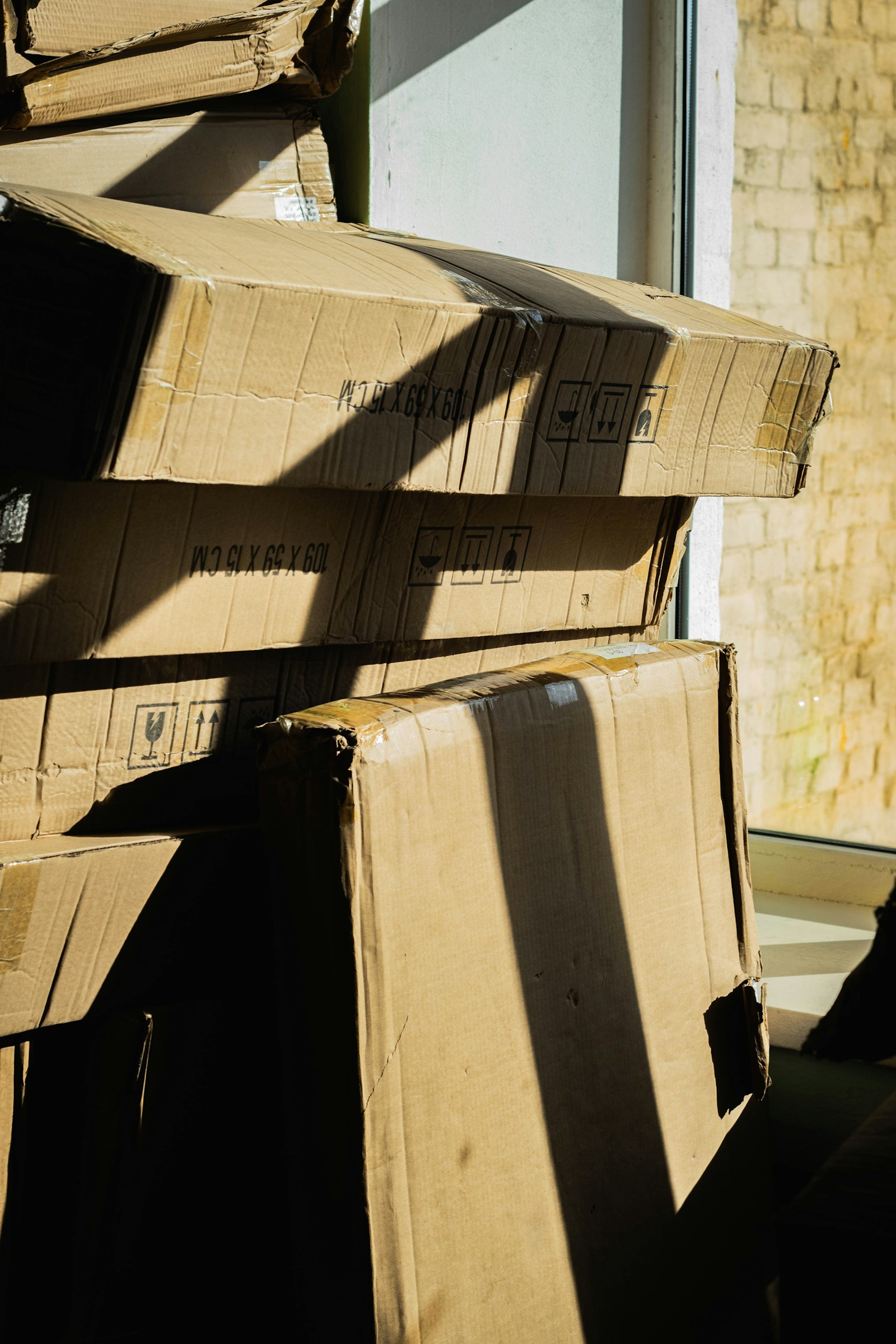
Paper-based materials, including paperboard, corrugated and kraft, are widely recycled in curbside programs across the United States and Canada. Corrugated cardboard in particular is one of the most commonly recycled packaging materials in North America. To keep your packaging as easy to recycle as possible:
For more on this topic, our eco-friendly cosmetic boxes guide shows how beauty brands balance sustainability with a premium look.
Material is one of the biggest drivers of your quote, but it is not the only one. These are the main factors that move the price per unit:
| Factor | Lower cost | Higher cost |
|---|---|---|
| Material type | Kraft or CCNB paperboard | Rigid chipboard |
| Thickness | 14pt to 16pt paperboard, E-flute | 24pt paperboard, B-flute or double-wall |
| Box size | Compact, right-sized | Large or oversized |
| Print coverage | One or two colors, outside only | Full color, inside and outside |
| Finishes | Aqueous coating | Soft-touch lamination, foil, embossing |
| Inserts | None or simple paperboard | Custom foam or multi-cavity inserts |
| Quantity | Larger runs spread setup costs | Very small runs carry more setup per box |
| Turnaround | Standard production | Rush production |
To give you a sense of starting points, here are our starting prices by box type. Your actual quote depends on size, quantity, material grade and finishes:
| Box type | Typical material | Starting price per unit |
|---|---|---|
| Cosmetic boxes | SBS paperboard | $0.30 |
| Kraft boxes | Kraft paperboard or corrugated | $0.50 |
| Food-safe packaging | Food-grade paperboard | $0.50 |
| Product boxes | SBS or CCNB paperboard | $0.80 |
| Mailer boxes | E-flute or B-flute corrugated | $0.90 |
| Rigid boxes | Chipboard with printed wrap | $3.00 |
| Poly mailers | Polyethylene film | $0.30 |
Do not forget the hidden cost of weight and size. A heavier material or a bigger box can raise every shipping label you print, so the cheapest box is not always the cheapest option overall. Our custom packaging cost guide breaks down pricing by box type in more detail.
We supply custom packaging to brands across the United States and Canada, with free shipping to both countries. The materials themselves are the same on both sides of the border, but shipping rules, measurement habits and labeling requirements differ, and those differences can influence your material choice.
US carriers including UPS, FedEx and USPS price many parcels using dimensional weight, calculated from the box’s outside dimensions in inches and compared with the actual weight in pounds. UPS and FedEx commonly divide length × width × height by 139 for domestic retail rates. That is why a slightly thinner material and a right-sized box can lower costs on every order: a switch from B-flute to E-flute, where protection allows, reduces both outside dimensions and weight.
For consumer products, US rules generally require a net quantity statement, which typically appears in both US customary and metric units. Food, cosmetic and supplement packaging fall under FDA rules in general terms, so leave enough panel space for required information and check current requirements for your category.
Canadian carriers usually calculate volumetric weight in metric: length × width × height in centimeters divided by a carrier-specific divisor, compared with the actual weight in kilograms. Check your carrier’s current rate guide, then choose materials and box sizes that keep volumetric weight close to real weight.
Most mandatory consumer label information in Canada must appear in both English and French, which means your packaging needs roughly twice the text space. That often favors a slightly larger carton panel, a wraparound label or a printed sleeve. Health Canada oversees requirements for categories such as cosmetics and natural health products, so confirm current rules for your product. And as noted above, CBD is regulated as cannabis in Canada with plain-packaging requirements, so branded CBD boxes are not available for the Canadian market.
| What matters | United States | Canada |
|---|---|---|
| Measurement habit | Inches and pounds | Centimeters and kilograms (inches also understood) |
| Carrier pricing | Dimensional weight in inches/lb (UPS, FedEx, USPS) | Volumetric weight in cm/kg with carrier-specific divisors |
| Label language | English | Most mandatory information in English and French |
| Net quantity | US customary and metric units | Metric units required |
| Material impact | Lighter, thinner board can lower billed weight | Extra panel space for bilingual text |
| CBD packaging | Branded custom boxes possible; check federal and state rules | Regulated as cannabis; strict plain packaging |
| Shipping from us | Free shipping | Free shipping |
Selling in Canada? Our custom packaging in Canada guide covers bilingual labeling and logistics in more depth.
Not sure which material fits? Contact our team with a photo and the weight of your product, and we will suggest options from our 100+ box styles.
There is no single best material. Paperboard (SBS or kraft) is best for retail product and cosmetic boxes, corrugated cardboard is best for anything shipped by carrier, and rigid chipboard is best for luxury gift packaging. Choose based on how the product ships, how fragile it is and the look you want.
Paperboard is a single thick layer of paper fiber, usually 14pt to 24pt, used for folding cartons. Corrugated cardboard has a fluted middle layer between two liners, which makes it much stronger for shipping. In everyday speech people call both cardboard, but suppliers treat them as different materials.
18pt (about 0.46 mm) suits most product and cosmetic boxes holding items up to about 1 lb (0.45 kg). Use 14pt to 16pt for very light items and 20pt to 24pt for heavier jars, glass bottles or a more premium feel.
E-flute is better for most e-commerce mailer boxes because it prints crisply and is strong enough for apparel, cosmetics and small goods. B-flute is thicker and better for heavier, larger or more fragile products. A sample is the best way to confirm.
Paper-based boxes such as paperboard, kraft and corrugated are widely accepted in curbside recycling programs in both countries. Plastic laminations, foam inserts and mixed materials can make recycling harder, and acceptance varies by local program, so check local guidance if recyclability is part of your brand promise.
In most cases, yes. Most mandatory consumer label information in Canada must appear in both English and French, so plan your packaging panels with enough space for bilingual text. Check current federal and provincial requirements for your specific product category.
Kraft paperboard, CCNB paperboard and poly mailers are typically the lowest-cost options. Cosmetic boxes start from $0.30, kraft boxes from $0.50 and poly mailers from $0.30, with orders from 30 units. Remember to factor in shipping weight as well as unit price.
Yes, and it is strongly recommended. A physical sample lets you check strength, fit, color and finish before committing to a larger run, which is especially important for heavy, fragile or food products.
The best custom packaging materials match your product’s weight, how it ships and how it is sold. SBS paperboard suits bright retail printing, kraft gives a natural look, corrugated board protects heavier items in transit, and rigid board delivers a luxury feel. Compare custom packaging materials by protection, print quality, recyclability and cost, and ask for a sample before a large order so you can see and feel the board.
Get the custom quote starting from our MOQ of 30 boxes to any order volume. There will be no charges for shipping and we ensure the lowest prices with highest quality possible.
Get a custom quote for custom boxes starting from our MOQ of 30 boxes to any order volume. Shipping is free and we ensure the lowest prices with the highest quality possible.
Request instant quote